Blog

  • Study uses motion capture to determine the best free throw shooters

    Study uses motion capture to determine the best free throw shooters

    Every basketball coach has told his players that free throws win games. A new study from the University of Kansas used innovative, markerless motion capture technology to determine the mechanics of skilled free throw shooters and better understand one of the biggest keys to success in the game.

    According to the study, skilled free throw shooters – who could make more than 70% of their shots – performed the shooting motion in a more controlled manner. They had lower knee and center of mass peaks and average angular velocities compared to non-experienced shooters. Also, skilled shooters achieved a greater release height and had less forward torso lean at the point of ball release.

    “These findings imply that the movement of basketball shooting is not as simple as some may think. Shooting efficiency cannot simply be attributed to one biomechanical variable. It is based on a mix of multiple segmental body movements performed in a controlled manner,” says Dimitrije. Cabarkapa, lead author of the study and deputy director of the Jayhawk Athletic Performance Laboratory.

    The study examined 34 men with at least four years of basketball experience, ranging from recreational to collegiate competitive levels. Each participant attempted 10 free throws with a 10-15 second rest interval between each attempt. A three-dimensional markerless motion capture system developed by the Southwest Research Institute (SwRI Enable, San Antonio, Texas), consisting of nine high-definition cameras (120 fps), was used to capture the biomechanical characteristics of free throw shooting movements and to analyse. .

    “We are very interested in analyzing basketball shooting mechanics and what performance parameters distinguish skilled and non-skilled shooters,” Cabarkapa said. “High-speed video analysis is one way we can do that, but innovative technological tools like markerless motion capture systems can allow us to dig even deeper into that. In my opinion, the future of sports science is based on the use of non-invasive and time-efficient testing methods.”

    The study, conducted at the Jayhawk Athletic Performance Laboratory, also found that when differentiating between made and missed shots by skilled free throw shooters, an overemphasis on release height could be counterproductive.

    “These findings can be metaphorically represented by some healthy habits of daily life. Exercise, drinking water and consuming enough vitamins and minerals are all very beneficial to our health. However, overdoing these things can be harmful in certain cases and can even production of the disease. the opposite effect than expected,” Cabarkapa said.

    The study, published in the journal Limits in sports and active life, was co-authored with Damjana Cabarkapa and Andrew Fry of the Jayhawk Performance Athletic Laboratory at KU; Jonathan Miller of KU’s Higuchi Biosciences Center; and Tylan Templin, Lance Frazer and Daniel Nicolella of the Southwest Research Institute.

    Using motion capture technology without markers is useful for several reasons, the authors said, because other motion capture systems that use markers to be placed on the skin or clothing have several problems, such as not staying in place and the participant’s awareness of the markers. which can change normal movement patterns. This is crucial when testing in a sport-specific environment, where efficiency is key. The use of markerless motion capture technology enables non-invasive assessment.

    Dimitrije Cabarkapa said that, to the authors’ knowledge, this is the first study to use this motion capture system to investigate the biomechanical characteristics of skilled free throw shooters. Previous research has shown that teams with better free-throw skills, especially late in the game, are more likely to win. Although the current study did not include the effects of fatigue on shooting mechanics and accuracy, researchers hope to investigate that factor in upcoming studies, as well as the effect of the presence of a defender on shooting mechanics and accuracy.

    The laboratory is part of the Wu Tsai Human Performance Alliance, a consortium of researchers investigating optimal human performance. This alliance includes Stanford University, University of Oregon, Boston Children’s Hospital, Salk Institute, University of California San Diego and KU.

    “These findings add to the work we have done in the past and to the body of scientific literature related to basketball shooting performance that we are continually expanding in our laboratory,” said Dimitrije Cabarkapa. “We have found that both the preparation and release phases of the shooting motion are critical to achieving solid levels of shooting efficiency. The implementation of innovative technology can allow us to understand the transition phase of the shooting motion and the kinematic chain in more detail Ultimately, our goal is to have an answer to the question every basketball fan wants to know: ‘Why did Steph Curry miss that shot?’”
    Source link

  • Exactech announces approval for its new 3D printed Vantage® ankle-tibial implants

    Exactech announces approval for its new 3D printed Vantage® ankle-tibial implants

    GAINESVILLE, Fla., October 26, 2023–(BUSINESS WIRE)–Exactech, a developer and manufacturer of innovative implants, instrumentation and smart technologies for joint replacement surgery, today announced the 510(k) clearance of its new 3D printed tibial implants, the Vantage® Only 3D and 3D+. This is the second recent approval for the broader Vantage Total Ankle System, following Activit-E™, a new advanced vitamin E polyethylene, which received approval from the Food and Drug Administration last month.

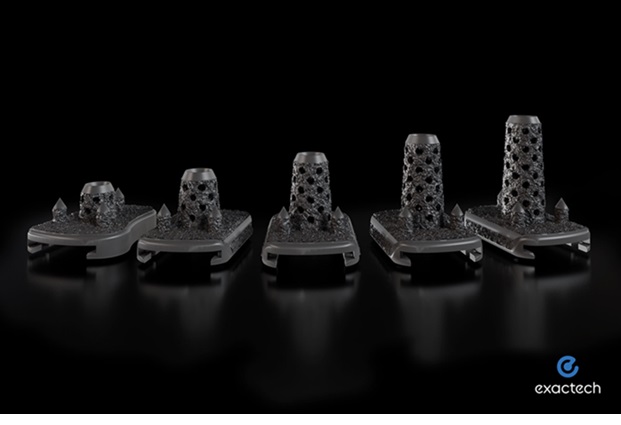
    The new implants provide orthopedic surgeons with additional tibial height options for total ankle replacement patients. Both implants are 3D printed and designed with a porous surface that mimics subchondral bone to aid in biological fixation. They are fitted with pointed pegs and a central bone cage, of varying lengths, to achieve initial fixation. The Vantage Ankle 3D builds on the design philosophy of the system’s current tibial offering and is available in a 10mm height. The Vantage Ankle 3D+ is a stem implant with options of 15, 20, 25 and 30 mm.

    “As an original member of the Vantage Ankle design team, I am excited about the next generation, state-of-the-art Vantage Ankle 3D and 3D+ tibial components,” said Mark Easley, MD, of Duke Health. “Developed through the collaborative efforts of our extensive team of expert consultant surgeons and experienced engineers, the redesigned tibial implants feature innovative, intuitive surgical technique and surgeon-friendly instrumentation.”

    The Vantage Ankle 3D and 3D+ are compatible with Exactech’s patient-specific instruments, the Vantage Ankle PSI cutting guides. 3D Systems (NYSE:DDD), manufacturer of the Vantage Ankle PSI, previously received 510(k) clearance for four additional cutting guides, two of which are specifically made for use with these new tibial implants.

    “We are laser-focused on delivering innovative solutions that our surgeons and patients need,” said Devan Carter, Exactech’s foot and ankle marketing director. “With these new additions, the Vantage Ankle now offers solutions from pre-operative planning to complex deformities, bringing us one step closer to providing a complete continuum of care.”

    Full market availability for the Vantage Ankle 3D and 3D+ is expected before the end of 2024. For more information, please contact your local Exactech representative.

    About Exactech

    Exactech is a global medical device company that develops and markets orthopedic implant devices, related surgical instruments and Active Intelligence® platform of smart technologies for hospitals and doctors. Headquartered in Gainesville, Florida, Exactech markets its products in the United States, in addition to more than 30 markets in Europe, Latin America, Asia and the Pacific. Visit www.exac.com for more information and connect with us on LinkedIn, VuMedi, YouTube, Tweet and Instagram. With Exactech by your side you have EXACTLY what you need.

    Contacts

    Samantha DiVirgilio
    Senior Manager Marketing Communications
    media@exac.com


    Source link

  • Novel nanoparticle-based system developed for the comprehensive treatment of rheumatoid arthritis

    Novel nanoparticle-based system developed for the comprehensive treatment of rheumatoid arthritis

    shutterstock 390538711 6b3c40fdd32742caa54307db3553cab1

    A team of scientists led by KOO Sagang of Seoul National University and the Center for Nanoparticle Research within the Institue for Basic Science Center (IBS), in collaboration with researchers from the Korea Institute of Science and Technology (KIST) and the Seoul National University, developed a new solution for the treatment of rheumatoid arthritis (RA).

    RA is a chronic disease that unfortunately cannot be cured. The disease causes a mix of troublesome symptoms, such as inflamed joints, harmful cytokines, and immune system imbalances, which work together to create a relentless cycle of worsening symptoms. While addressing some of these factors can provide short-term relief, others remain unresolved, leading to a frustrating cycle of remission and flare-ups.

    One of the biggest hurdles in treating RA is the inability to restore the immune system to a healthy state. This leaves the body unable to control the continued production of harmful substances such as reactive oxygen species (ROS) and inflammatory cytokines, leading to persistent inflammation and discomfort.

    Essentially, the ideal treatment for RA should not only provide immediate relief from inflammation and symptoms, but also address the cause by restoring the immune system to its normal, balanced state.

    New nanoparticle-based system as a solution

    The novel platform involves immobilizing ceria nanoparticles (Ce NPs) on mesenchymal stem cell-derived nanovesicles (MSCNVs). Both components can hinder various pathogenic factors, allowing them to work individually and together to achieve comprehensive treatment.

    Ce NPs – can scavenge the overproduction of ROS in RA-induced knee joints. They also cause polarization of M1 macrophages into M2, immediately relieving inflammation and symptoms.

    MSCNVs – deliver immunomodulatory cytokines, which convert dendritic cells (DC) into tolerogenic dendritic cells (tDCs). This consequently generates regulatory T cells for long-term immune tolerance.

    In short, this approach aims to bridge both innate and adaptive immunity to achieve short-term pain relief, and to convert the tissue environment into an immune-tolerant state to prevent recurrence of symptoms.

    Researchers confirmed the efficacy of this approach using a collagen-induced arthritis mouse model. The Ce-MSCNV system was able to comprehensively treat and prevent RA by simultaneously easing and restoring immediate T cell immunity. Supporting data suggests that improvement in conditions can be achieved after only a single dose treatment.

    The mice treated with the Ce-MSCNV combination did much better compared to the mice treated with the Ce NP or MSCNV group alone. This clearly demonstrates the synergy between anti-inflammatory agents and immunomodulation and underlines the importance of the combined therapy for effective treatment of RA. Furthermore, administration of Ce-MSCNV prior to booster injection significantly reduced the incidence and severity of symptoms, supporting the prophylactic potential of these nanoparticles.

    One of the most difficult decisions in the treatment of intractable diseases is determining how long to continue treatment. For RA, it would not be appropriate to stop treatment just because the target marker has stabilized. A safer indicator should be that the innate and adaptive components of the collapsed immune system are normalized to protect the body.”


    Koo Sagang, first author

    Koo believes that Ce-MSCNVs’ strategy of working together with different treatment mechanisms offers a unique advantage in this regard. Furthermore, she predicts that a similar approach for this purpose would also be applicable to other refractory, inflammatory and autoimmune diseases. The components within the system can also be changed. For example, depending on the type of disease, other catalysts can be used to generate ROS or other cell-derived nanovesicles. Overall, this study proves the potential of a hybrid nanoparticle system for the comprehensive treatment of autoimmune diseases and modulation of the immune system.

    Source:

    Institute for Basic Sciences

    Magazine reference:

    Koo, S., et al. (2023). Ceria-vesicle nanohybrid therapeutic agent for modulation of innate and adaptive immunity in a collagen-induced arthritis model. Nature Nanotechnology. doi.org/10.1038/s41565-023-01523-y.

    Source link

  • Put down the drink;  Alcohol use after a concussion can prolong symptoms in collegiate athletes

    Put down the drink; Alcohol use after a concussion can prolong symptoms in collegiate athletes

    Alcohol use after injury is associated with prolonged recovery from concussion in NCAA athletes

    Chang RC, Singleton M, Chrisman SPD, et al. Alcohol use after injury is associated with prolonged recovery from concussion in NCAA athletes. Clin J Sport Med. Published online 2023:1-8. doi:10.1097/JSM.0000000000001165

    https://journals.lww.com/cjsportsmed/Abstract/9900/Postinjury_Alcohol_Use_Is_Associated_With.142.aspx

    Take home message

    Collegiate athletes can experience long-lasting concussion symptoms if they consume alcohol during recovery. The severity of symptoms may not differ among those who consume alcohol during recovery.

    Background

    Concussions lead to immediate and variable symptoms that affect quality of life. Many collegiate athletes consume alcohol regularly, but there is no consensus regarding the effects of alcohol consumption after a concussion on symptoms.

    Study aim

    The authors used a prospective cohort to assess whether alcohol consumption after concussion is associated with resolution of concussion symptoms. The authors also evaluated the impact of alcohol consumption on symptom severity.

    Methods

    The authors used data from the ongoing Concussion Assessment Research and Education (CARE) Consortium. The authors analyzed data from 29 different clinical sites and 484 of 3,518 athletes with concussion. An athlete who reported consuming at least one alcoholic beverage per week during concussion recovery was considered an alcohol user. The authors used the Sport Concussion Assessment Tool 3 (SCAT3) symptom score sheet to track outcomes after concussion.

    Results

    Athletes who drank alcohol after a concussion took an average of 22 days to return to full participation in sports. This represents a 33% delay in return to play compared to those who did not consume alcohol after injury. On average, those who drank alcohol after a concussion needed about five additional days to return to full-time sports. Additionally, the more alcohol consumed after the concussion, the longer it took for symptoms to resolve. Alcohol consumption had no influence on the severity of symptoms.

    Viewpoints

    This study clarifies previous research on the relationship between post-concussion alcohol use and delayed symptom resolution. The delay in symptom resolution may contribute to deconditioning among those who have consumed alcohol after a concussion, which could hinder their willingness to contribute to team success. Interestingly, alcohol consumption after an injury does not play a role in the severity of symptoms, according to this study. This suggests that alcohol may slow the healing process rather than causing additional tissue damage. While these results are important, this study did not standardize a “drink.” Therefore, there is a possibility that different types and volumes of alcohol consumed per drink could influence symptom resolution. Furthermore, the authors focused on less than 15% of athletes with a concussion. Therefore, it will be important to replicate these findings to see if they apply to the broader athletic concussion population.

    Clinical implications

    In practice, physicians should encourage athletes diagnosed with a concussion to reduce alcohol intake or, ideally, to abstain from alcohol consumption until symptoms resolve. Clinicians should also educate athletes about the role alcohol consumption after injury plays in prolonging concussion symptoms.

    Questions for discussion

    What strategies, if any, do you use to educate athletes about alcohol consumption after a concussion? What changes do you plan to make to patient education based on this research?

    related posts

    1. Gender-specific predictors of long-term recovery from concussion
    2. Suggested answer to the most common question about concussions: How many days until I can play?
    3. Concussion: Is Submaximal Exercise Medicine?

    Written by Cade Watts
    Reviewed by Jeffrey Driban

    Evidence-based assessment of concussion course - 5 EBP CEUs

    Source link

  • Osteoporosis under a microscope and functional culinary medicine with Dr.  Monisha Bhanote, MD + BoneCoach™ – BoneCoach™

    Osteoporosis under a microscope and functional culinary medicine with Dr. Monisha Bhanote, MD + BoneCoach™ – BoneCoach™

    your bones under the microscope?

    Curious about how preventive measures can be taken change the course of osteoporosis?

    Interested in learning about functional culinary medicine and whether it can be useful in supporting strong bones?

    Then this episode is for you!

    I was on board Dr. Monisha Bhanote, a five-time board-certified physician and best-selling author. We delved deep into it together the microscopic world of bonesrevealing the causes, preventive measures and the most important nutritional value secrets that everyone with osteoporosis should know.

    Episode timeline

    0:00 – Episode begins

    1:18 – Introduction to Dr. Monisha Bhanote

    3:14 – Dr.’s professional background Bhanote

    5:29 – Discuss the importance of biopsies

    9:39 – Delving into bone cells and their components under the microscope

    10:19 – Osteoblasts, osteoclasts and osteocytes

    13:23 – Discussion about bone diseases, especially osteoporosis and osteopenia

    16:16 – Defining degenerative joint disease

    18:43 – Other important conditions observed under the microscope

    23:36 – Preventive measures and diagnostic tests to avoid osteoporosis and other extreme health situations

    25:40 – Essential nutrients for osteoporosis prevention and better bone health

    30:30 – Overview of mechanisms at the cellular level, including RANKL

    36:34 – A look at functional culinary medicine

    42:52 – How Dr. Bhanote helps her patients and where to find her

    Sources mentioned

    **Show notes @ https://bonecoach.com/drmonishabhanote-functional-culinary-medicine

    Below you will find resources from Dr. Monisha Bhanote!

    >> Connect with Dr. Bhanote here on her website

    >> View Dr.’s book here. Bhanote, The Anatomy of Wellbeing

    What can you do to support your bone health and this podcast?

    1. Press the “Subscribe” button on your respective podcast player (i.e. Apple, Google, Spotify, Stitcher, iHeart Radio and TuneIn). Never miss an episode that can help improve your bone health.

    2. Leave a review. The more positive ratings and reviews and the more subscribers we have, the more people can find us and get the answers to the questions they need. Thank you! 🙂

    3. Tell a friend about The Bone Coach Podcast or share via text, email or social. Do you know of a Facebook group where people can benefit from this information? Feel free to click any of the share buttons below.

    About Dr. Monisha Bhanote, MD:

    Dr. Monisha Bhanote, the founder Wellkulå, is a quintuple board-certified physician and best-selling author with expertise in integrative medicine, functional culinary medicine, cytopathology, and anatomic/clinical pathology.

    After graduating from Binghamton University with a double degree in chemistry and Asian studies, she received her medical degree and completed a residency at NYU Winthrop University Hospital. This was followed by three fellowships in Cytopathology at Cornell, Breast, Bone & Soft tissue Cancer at the University of Rochester, and Integrative Medicine at the Andrew Weil Center for Integrative Medicine Arizona.

    Dr. Bhanote has additional training and certifications in mindfulness-based stress reduction, plant-based nutrition, culinary medicine, Ayurveda, yoga for cancer recovery, and a therapeutic specialist in yoga medicine. She applies a whole body approach to healing.

    She is a sought-after health and wellness expert who provides both spoken and written commentary for multiple news media and publications. Her interests include nutrition and the microbiome, the role of stress and inflammation in disease manifestation, practicing mindfulness as a lifestyle, and disease prevention. Dr.’s mission Bhanote is supporting an integrative approach to evidence-based holistic wellness.

    Medical disclaimer

    The information shared above is for informational purposes only and is not intended as medical or nutritional therapy advice; it does not diagnose, treat or cure any disease or condition; it should not be used as a substitute or substitute for medical advice from physicians and trained medical professionals. If you are under the care of a healthcare professional or are currently taking prescription medications, you should discuss any changes in your diet and lifestyle or possible use of nutritional supplements with your doctor. You should not stop prescribed medications without first consulting your doctor.

    Source link

  • Warning!  Scientists are repeating old mistakes in their attempt to create a new osteoporosis drug

    Warning! Scientists are repeating old mistakes in their attempt to create a new osteoporosis drug

    A recent study has revealed a new osteoporosis drug in development. However, the direction the researchers are taking is very similar to an existing drug against osteoporosis: Evenity (romosozumab).

    The researchers promote their methodology as a revolutionary approach to drug development, even though the synthetic molecule they created closely resembles an existing osteoporosis drug.

    We will look at this new drug in development and how it compares to other medications and their side effects.

    Bio-inspired molecules built to target bone

    Researchers from several biotechnology and medical institutions have collaborated to develop new ‘bio-inspired’ molecules that improve bone regeneration in mice.

    Their research, published in the journal Biomaterials, highlights their use of computer modeling and testing to more effectively bioengineer molecules inspired by biology. They designed the synthetic compounds to interact with natural pathways related to bone remodeling.1

    The molecules, called Rationally Engineered Oligomeric Glycosaminoglycan Derivatives (reGAG), are designed to block the signaling pathways of two naturally occurring proteins: Dickkopf-1 (DKK1) and sclerostin. Both proteins inhibit the development of osteoblasts, the cells responsible for generating new bone.1

    The researchers believe that these new molecules could be used to develop new drugs that help the body regenerate bones more efficiently. Their eyes are clearly on the osteoporosis drug market. However, despite their unique development method, they have not yet discovered a new route for artificially accelerated bone growth.

    Short content

    Biotech and medical researchers have joined forces to design a new synthetic molecule that inhibits two proteins: DKK1 and sclerostin. These proteins inhibit the formation of the cells that build new bone, osteoblasts. Although the process for making these molecules is new, this mechanism of action has already been tried by other drugs.

    Romosozumab Redux

    The new molecule, reGAG, targets the protein sclerostin, which has had a controversial history in the medical industry. Sclerostin is the target of a well-known osteoporosis drug: Evenity, also known as romosozumab.

    Evenity is an injectable osteoporosis drug that inhibits sclerostin. This action results in more osteoblast formation, which leads to increased production of new bone. However, the drug stops working over time and patients must then be switched to a bisphosphonate to try to maintain the increase in bone mineral density.

    This temporary increase in bone mineral density comes at no cost. Romosozumab was originally rejected by the FDA due to the risk of heart attack. It was too dangerous to prescribe.

    However, the following year, Amgen, the pharmaceutical giant behind Evenity, resubmitted the identical drug. The FDA has approved it only for women considered to be at highest risk for fractures. Of course, the drug still carries significant risks.

    Additional studies have confirmed the heart health risks of romosozumab and directly linked it to sclerostin inhibition.2 That’s the same mechanism of action claimed in the new study, along with the inhibition of another protein called Dickkopf-1 (DKK1).

    Short content

    The new molecule reGAG inhibits sclerostin to increase bone formation. That’s the same mechanism of action as romosozumab (Eventiy), an osteoporosis drug that increases the risk of heart attack and other cardiovascular diseases.

    DKK1: More of the same

    The other protein inhibited by this newly manufactured bioinspired molecule is Dickkopf-1 (DKK1).

    Studies have shown that this protein is critical for the development of the embryonic heart, head and forelimbs. It is also critical for bone development and bone health in adults.3

    Like sclerostin, DKK1 is known to inhibit bone repair by suppressing osteoblast formation. That’s why researchers are focusing on it in addition to sclerostin. However, it remains to be seen what unintended consequences will result from inhibiting this naturally occurring protein.

    If the “bioinspired” compounds that inhibit DKK1 and sclerostin are developed into a drug, the inclusion of DKK1 inhibition could introduce new side effects to an already risky osteoporosis treatment.

    ‌‌Short content

    DKKI is a protein essential for embryonic development. Later, it helps regulate bone formation by inhibiting osteoblast formation, just like sclerostin. However, unlike sclerostin, we do not yet know the possible side effects of a drug that artificially disables this naturally occurring protein.

    What this means for you

    Although Big Pharma is constantly searching for new drugs, the results often show limited effectiveness and harmful side effects. This further highlights the importance of an integrative and natural approach to bone health.

    The Osteoporosis Reversal Program offers a holistic, drug-free program with positive changes that will result in stronger bones and better health. It takes more effort than a pill and more time than an injection, but the results are well worth it.

    Embrace a life of freedom, confidence, and independence by staying committed to your all-natural bone health regimen!

    References

    1 https://www.sciencedirect.com/science/article/abs/pii/S0142961223001138?via%3Dihub

    2 https://stm.sciencemag.org/content/12/549/eaay6570

    3 https://www.ncbi.nlm.nih.gov/pmc/articles/PMC2628360/


    Source link

  • Nutrition for better performance

    Nutrition for better performance

    Through jeff bloom AT, CSCS Ahwatukee FAST

    I often get asked by athletes, “What should I eat?” That’s a pretty vague question, and there really isn’t just one answer. However, there are some simple nutritional guidelines that can help an athlete achieve better performance. In general, athletes should eat a diet that is high in carbohydrates, low in saturated fats, and contains enough protein to rebuild the muscle breakdown that occurs during their training.

    A wooden bowl of protein-rich oats.

    Carbohydrates for energy

    Carbohydrates are our main source of energy and the fuel we need to compete at a high level. a diet that contains 60% of total calories from carbohydrates is recommended for most athletes. These carbohydrates should come from whole wheat pasta/bread, rice, potatoes, fruit and starchy vegetables.

    Protein for better performance

    All athletes know that egg white is an important nutrient for better performance, but many protein sources also contain saturated fats that should be avoided. Quality protein choices include lmeat, fish, low-fat dairy products, poultry and beans. Protein intake depends on the size of the athlete, the activity the athlete is doing and the athlete’s overall goals. A good rule of thumb is 0.5 – 0.75 g protein/kg body weight. Athletes looking to increase their muscle mass or those who experience extreme muscle wasting during their sport may require higher levels.

    011118 healthy food thinkstock600 854725402

    Good fats or bad fats?

    Fats have a bad reputation, but are also an important part of any diet. Athletes have to make ends meet 20% of their calories from fat. The key is being able to distinguish the ‘good’ fats from the ‘bad’ fats. “Good” or unsaturated fat can be found in nuts, oils and fish.

    Finding a good diet plan is a very individual process and depends on a number of variables. Following the steps above will help you build a solid nutritional foundation and get most athletes moving in the right direction. From there, with just a little adjustment, you can compete at a higher level than ever before!

    Source link

  • Aclarion Announces Signing of Commercial Agreement with Porter Hospital, an AdventHealth Facility, to Bring Nociscan Technology to Denver

    Aclarion Announces Signing of Commercial Agreement with Porter Hospital, an AdventHealth Facility, to Bring Nociscan Technology to Denver

    Porter Hospital becomes first facility in Denver to give patients with chronic low back pain access to revolutionary Nociscan technology that measures biomarkers to pinpoint the source of pain

    George Frey, MD becomes the first Aclarion KOL surgeon to use in-hospital MRI to add Nociscan data to his treatment decision process for patients with chronic low back pain

    Published clinical data shows that patient outcomes improve and costs decrease when surgical treatment is consistent with disc levels that Nociscan identifies as painful

    BROOMFIELD, CO, October 25, 2023 (GLOBE NEWSWIRE) — via NewMediaWire – Aclarion, Inc., (“Aclarion” or the “Company”) (Nasdaq: ACON, ACONW), a healthcare technology company that uses biomarkers and proprietary enhanced intelligence algorithms to help physicians identify the location of chronic low back pain, today announced their expanded presence in Colorado with AdventHealth Porter. From their Denver location, AdventHealth Porter provides exceptional medical care to patients throughout Colorado’s frontline region.

    George Frey MD, orthopedic surgeon and founder of the Colorado Comprehensive Spine Institute said, “Treating patients effectively starts with an informed understanding of where their pain comes from. In my experience with Nociscan, objectively measuring the biomarker content associated with pain in an intervertebral disc that may look healthy on an MRI adds to my knowledge of how to treat that patient. At AdventHealth Porter, we strive to provide cost-effective care of the highest quality. The published evidence makes it clear to me that adding Nociscan to our diagnostic evaluation can help us do just that.”

    Brent Ness, CEO of Aclarion, said: “In line with our strategy to bring Nociscan to a standard of care through KOL advocacy, we applaud AdventHealth Porter for bringing Nociscan technology to Denver in support of Dr. Frey to use our technology to improve results. while reducing costs. The support of pioneering leaders like Dr. Frey and AdventHealth is exactly the leadership we need to unequivocally demonstrate the superior clinical outcomes for patients that will drive payers’ coverage decisions and provide all patients with access to Nociscan technology. We thank Dr. Frey and AdventHealth look forward to the positive impact that increasing Nociscan volumes will have on the surgical outcomes of chronic low back patients in and around the Denver community.”

    “Providing exceptional care with cutting-edge treatments is a core value of our multidisciplinary care team here at AdventHealth Porter,” said Carol Bermingham, Imaging Manager at AdventHealth Porter. “We are excited about adding Nociscan to our MRI capabilities and believe that providing personalized biomarker data to treating physicians is one more investment in our commitment to providing an environment where our physicians can do their very best for their patients . Our radiology service line always strives to stay at the forefront of the technical advancement curve.”

    Chronic low back pain (cLBP) is a global healthcare problem, with approximately 266 million people worldwide suffering from degenerative spine disorders and low back pain. It is estimated that low back pain affects approximately 30 million adults in the U.S. population annually, leading to millions of doctor consultations each year.

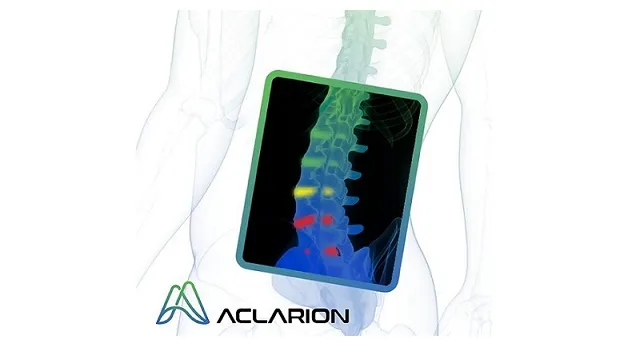
    Aclarion’s proprietary decision support tool, Nociscan, is the first evidence-based SaaS platform that helps physicians non-invasively distinguish between painful and non-painful discs in the lumbar spine. Nociscan objectively quantifies chemical biomarkers shown to be associated with disc pain. Biomarker data is fed into proprietary algorithms to indicate whether a disc may be a source of pain. When combined with other diagnostic tools, Nociscan provides critical insights into the location of a patient’s low back pain, giving clinicians clarity to optimize treatment strategies.

    About Aclarion, Inc.

    Aclarion is a healthcare technology company that uses magnetic resonance spectroscopy (“MRS”), proprietary signal processing techniques, biomarkers and enhanced intelligence algorithms to optimize clinical treatments. The company is entering the chronic low back pain market for the first time with Nociscan, the first evidence-based SaaS platform that helps physicians non-invasively distinguish between painful and non-painful discs in the lumbar spine. Through a cloud connection, Nociscan receives magnetic resonance spectroscopy (MRS) data from an MRI machine for each lumbar disc being evaluated. In the cloud, proprietary signal processing techniques extract and quantify chemical biomarkers shown to be associated with disc pain. Biomarker data is fed into proprietary algorithms to indicate whether a disc may be a source of pain. When combined with other diagnostic tools, Nociscan provides critical insights into the location of a patient’s low back pain, giving clinicians clarity to optimize treatment strategies. For more information, please visit www.aclarion.com.

    Forward-Looking Statements

    This press release contains forward-looking statements within the meaning of the Private Securities Litigation Reform Act of 1995, Section 27A of the Securities Act of 1933 and Section 21E of the Securities Exchange Act of 1934 about the Company’s current expectations about future results, performance, prospects and opportunities. Statements that are not historical facts, such as “anticipates,” “believes” and “expects” or similar expressions, are forward-looking statements. These forward-looking statements are based on management’s current plans and expectations and are subject to a number of uncertainties and risks that could materially affect the company’s current plans and expectations, as well as its future results of operations and financial condition. These and other risks and uncertainties are discussed in more detail in our filings with the Securities and Exchange Commission. Readers are encouraged to read the section entitled “Risk Factors” in the Company’s April 21, 2022 Prospectus as filed with the Securities and Exchange Commission on April 25, 2022 under Rule 424(b)(4), as well as other disclosures. included in the Prospectus and subsequent filings with the Securities and Exchange Commission. Forward-looking statements in this announcement are made as of this date and the Company undertakes no obligation to publicly update or revise any forward-looking statements, whether as a result of new information, future events or otherwise.

    Investor contacts:
    Kirin M. Smith
    PCG Advice, Inc.
    646.823.8656
    ksmith@pcgadvisory.com

    Media contacts:
    Jodi Lamberti
    SPRIG advice
    612.812.7477
    jodi@sprigconsulting.com

    Source link

  • Carriers of HLA-DRB1*04:05 have a better clinical response to abatacept in rheumatoid arthritis

    In this study, we showed that among the SE alleles, HLA-DRB1*04:05 in particular was strongly associated with the prognosis of ABT treatment. The allele frequency of HLA-DRB1*04:05 in Japanese patients with ACPA-positive RA is reported to be approximately 28%. Because each individual carries two HLA-DRB1 alleles, approximately half of ACPA-positive RA patients have at least one copy of HLA-DRB1*04:05. And HLA-DRB1*04:05 is strongly associated with the development of ACPA-positive RA, with an odds ratio of 5.023. HLA, which is innate and unchangeable throughout a person’s life, suggests that the association between HLA and treatment prognosis is not merely coincidental. In other words, the HLA genotype is the cause, which leads to favorable treatment results. Although several associations between the efficacy of SE and ABT have been reported9,10,11details at the allele level are limited, even though the significance of the specific alleles as potential biomarkers is promising.

    In this study, it was found that only HLA-DRB1*04:05 showed an association with response to ABT treatment, while HLA-DRB1*01:01 and 04:10, which share similar SE, showed no significant association. with treatment responsiveness. In addition to the effect of small sample size, the following reasons can be considered. Amino acids at positions 11, 13 and 67 of HLA-DRB1, which are different amino acid sequences than SE, are also involved in the risk of developing RA. Specifically, it was found that in DRB1*04:05 and 04:10, the valine at position 11 is the amino acid most strongly associated with RA sensitivity, while DRB1*01:01 has another amino acid, leucine, at position 11.25. Furthermore, in a study on the risk of developing RA in the Japanese population, it was shown that the risk of RA differs based on the variant of HLA-DRB1, even sharing the same HLA SE allele. It is suggested that HLA-DRB1*01:01, 04:05 and 04:10 are not bioequivalent23. Furthermore, HLA risk alleles for autoimmune diseases have been reported to significantly influence the pattern of CDR3 sequences in T cell receptors. Furthermore, CDR3 sequences modified by HLA risk alleles have been associated with the recognition of citrullinated antigens. Therefore, sequences other than SE are also believed to be associated with the development and progression of RA and other diseases26.

    SE and ACPA-positive RA are strongly associated, and ACPA is also associated with the prognosis of ABT treatment27,28. Previous reports have also shown that SE is associated with ABT outcomes, even after adjusting for the effect of ACPA9,10. In this study, both multiple regression analysis and mediation analysis suggested that the effect of the HLA-DRB1*04:05 allele was not an indirect effect mediated by ACPA (Table 4, Figure 2). The impact of SE has been reported to be stronger in ACPA-positive RA than in ACPA-positive non-RA controls29.30. In other words, SE may be involved in the pathogenesis of RA through mechanisms other than direct effects on ACPA positivity. RA risk HLA is robustly associated with CD4 T cell receptor repertoire+ T cells26.31. RA-sensitive HLA alleles, such as HLA-DRB1*04:05, are associated with autoreactive CD4+ T cells, which may be therapeutic targets for ABT.

    In this study, methotrexate use was low in the abatacept group. Because in general it has been reported that concurrent use of MTX may not increase the effectiveness of ABT. For example, in a phase III study, ABT did not induce immunogenicity associated with loss of safety or efficacy either with or without MTX32. Also in a retrospective cohort study of RA patients with similar background characteristics who underwent treatment with abatacept, concurrent MTX did not appear to influence clinical outcomes.33. Based on these findings, we believe that ABT would be a suitable treatment option in daily clinical practice in patients with contraindications to MTX.

    In this study, the association between the HLA-DRB1*04:05 allele, an SE allele, and favorable treatment outcomes was significant only in ABT-treated patients, but not in those treated with the IL-6 receptor inhibitor TCZ or a TNF drug. inhibitors. This is consistent with the association between the better prognosis with ABT and SE reported in the Early-AMPLE trial comparing ABT with the TNF inhibitor adalimumab.11. SE was also not strongly associated with the efficacy of the JAK inhibitor tofacitinib10. These findings may reflect the difference in mechanism of action between ABT, which inhibits costimulation of antigen-presenting cells, and CD4.+ T cells and IL-6 receptor inhibitors, TNF inhibitors and JAK inhibitors, which are drugs that block inflammatory cytokine signaling.

    There are several limitations to this study. First, due to the retrospective nature of this analysis, we cannot exclude the possibility of selection bias. Second, the number in each treatment group is small, so the effect of HLA alleles with small frequency or small effect size may not have been fully realized. Third, since this study was conducted in a single Japanese cohort and there are ethnic differences in the frequencies of the HLA-DRB1 allele, it is necessary to verify whether the results can be generalized to other cohorts, including other ethnic groups.

    In conclusion, we analyzed the association between HLA-DRB1 alleles and prognosis in Japanese patients with RA who initiated treatment with ABT, TCZ, and TNF inhibitors, and we showed that among SE alleles, the HLA-DRB1*04 :05 allele was associated with better outcomes with ABT. This study demonstrates the feasibility of stratifying RA patients based on disease risk HLA alleles and supports the need for a larger prospective study.

    Source link

  • New information about bone loss during menopause – better bones

    New information about bone loss during menopause – better bones

    Are you at risk of losing up to 20% of your bone in the years surrounding menopause? Women with accelerated bone loss – dubbed ‘fast losers’ in a new study – are at greater risk of developing osteoporosis and weaker bones than the average woman. The average woman loses only 8-10% of her bone mass during the three years surrounding menopause.

    This new research shows there’s an easy way to find out if you’re a “quick loser” of bot so you can take action to stop it.

    Find out if you are a “quick loser” of bones

    Researchers focused on using the N-telopeptide crosslinks test – a urine test – to help identify women most at risk for greater and faster bone loss. When you lose bone, fragments of certain bone proteins appear in the urine; these are called N-telopeptides (NTx). A woman with more NTx protein fragments in her urine is likely to undergo bone loss more quickly and is thus at greater risk of excessive bone loss during menopause.

    In the study, researchers looked at bone loss levels of NTx in about 500 early postmenopausal women, who were within 1 to 2 years of their last menstrual period. They found the following:

    • The higher the NTx level in the urine, the faster the bone loss during menopause. This makes sense: a higher rate of bone breakdown would likely translate into greater bone loss.
    • A urine NTx level above 65 nM BCE/mM Cr appeared to identify rapid bone losers reasonably well. To put this in context, the average premenopausal NTx level is 36 nM BCE/mM Cr, and I have generally found that postmenopausal women with a 50 NTx level lose ½ to 1% of bone mass per year.
    • The association between early postmenopausal NTx and rate of bone loss was stronger at the spine than at the hip. This again makes sense because the spine is metabolically active trabecular bone, which typically loses mass years earlier than the hip.
    • Furthermore, retrospectively, it was found that high urinary NTx in perimenopause was also associated with a higher rate of bone loss during the transition to menopause.

    menopause schedule 3

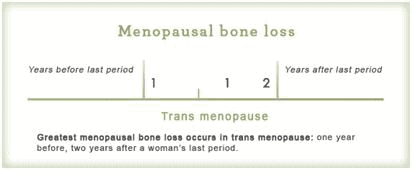
    Bone loss in menopause is not evenly distributed over the ten-year menopause period (five years before a woman’s last menstrual period and five years afterward). Most bone loss occurs over a three-year period, starting 1 year before a woman’s last menstrual period and ending 2 years after her last menstrual period – known as ‘transmenopause’.

    What does this research mean for you?

    If you notice symptoms of perimenopause such as irregular periods and hot flashes, or if you have recently (within a few years) gone through menopause, a simple test of your NTx level in urine can help you identify a tendency toward excessive bone loss .

    If you are experiencing excessive bone loss, you can take steps to find out why and correct the situation. When I work with individual clients, this is exactly the type of work I do with them.

    More information about the simple urine test can be found in my short video and accompanying manual. You can also order this test online via our online request system with our laboratory partner Evexia.

    And since you can’t really know when the year before your last period will occur until you actually have your last period, it’s a good idea to get started on a vigorous Better Bones program right away at the first signs of menstruation. perimenopause.

    Reference:

    Shieh A, et al. Urinary N-telopeptide and rate of bone loss during the transition from menopause to early post-menopause. J Bone Miner Res. 2016;31(11):2057-2064.

    Dr.  Susan BrownI am Dr. Susan E. Brown. I am a clinical nutritionist, medical anthropologist, writer and motivational coach speaker. Learn my proven 6-step natural approach to bone health in my online courses.


    Source link