download 2026 03 22T114322.978
|

YKL-40 serum levels are predicted by inflammatory state, age, and diagnosis of idiopathic inflammatory myopathies


In this study, YKL-40 serum levels are influenced by factors such as age, inflammation and diagnosis of autoimmune diseases (RA/MII)3. Currently, due to its participation in tissue remodeling and degradation, attempts have been made to use it as a biomarker in pro-inflammatory states and as an indicator of poor prognosis in inflammatory diseases.6.7. However, its usefulness is still controversial because its full biological effects are still unknown. Furthermore, the specific factors that promote its expression, as well as its interaction with the majority of cytokines and molecules involved in the development and establishment of autoimmune inflammatory diseases, are not well established.17.

YKL-40 serum levels have been reported to increase with age in various cardiovascular, metabolic and systemic inflammatory diseases3. Bojesen et al. found that serum levels of YKL-40 increased exponentially with aging. In subjects with two YKL-40 measurements ten years apart, the average increase in YKL-40 was 1.5 μg/l/year18. Regarding inflammatory diseases, increased serum levels of YKL-40 were reported in anti-neutrophil cytoplasmic antibody (ANCA)-associated vasculitis, which was hypothesized to play a role in promoting chemotaxis, tissue damage and vascular damage.19.

In RA it has been recognized as a potential candidate autoantigen. Furthermore, in these patients it is produced and secreted by monocytes differentiated into macrophages, articular chondrocytes, synovium, peripheral blood mononuclear cells (PBMCs), and endothelium.17,19,20. It has been proposed that the pathogenic mechanism of YKL-40 in RA initiates through its binding to the HLA-DR4 peptide-binding motif promoting mononuclear cell proliferation, and HLA-DM plays a key role in presenting YKL-40 to CD4+ T cells. Furthermore, antigen-presenting cells (APCs) present YKL-40 at early-stage RA sites, suggesting an association for YKL-40 in the pathogenesis of RA.20,21,22. On the other hand, differentiated DR4+ dendritic cells and macrophages are similar to APCs of synovial joints and have the potential to carry out MHC II presentation of YKL-40 epitopes, resulting in higher levels in synovial and serum.21,22. Although the pathogenic mechanism in RA has been elucidated, agents that promote YKL-40 expression in RA are still lacking. It has been associated with the development of chronic, destructive, relapsing arthritis due to its role in tissue remodeling and breakdown. . It is considered an effective marker in estimating RA disease activities and prognostic value, and may be a therapeutic target19.

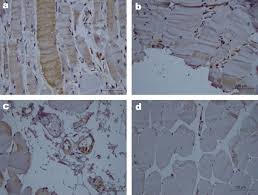
As for IIM, information is even more limited as few studies have been conducted in this regard and thus the role YKL-40 plays in this area has not yet been established. Regarding the pro-inflammatory effect and its relationship with the diagnosis and phenotype of IIM, Noguchi et al. found significantly increased serum in patients with PM/DM compared to the healthy population, as well as age-adjusted serum YKL-40 levels were significantly increased in patients with PM/DM compared to HC. In muscle biopsies, infiltration of YKL-40-positive inflammatory cells (probably macrophages) in the endomysium and perimysium was found. This suggests that cells other than CD8+ and CD4+ T cells can cause inflammation.23.

Ming-Zhu Gao et al. measured YKL-40 levels in patients with DM/PM and HI and reported significantly higher levels in patients with IIM compared to controls (51.6 vs. 27.8 ng/ml, respectively)6. In a systematic review by Cui et al. reports levels of 84.09 ng/ml in patients with PM and DM versus 27.37 ng/ml in HI24. On the other hand, Carboni et al. analyzed YKL-40 serum levels and its expression in muscle tissue in patients with ASSD. However, serum levels of YKL-40 did not correlate with other clinical, laboratory, disease status, or therapeutic parameters. Furthermore, YKL-40 was expressed by the inflammatory cells of the muscle tissue.13. Our study reinforces these results with serum levels of 187.80 ng/ml in patients with IIM versus 46.82 ng/ml in RA and 57.17 ng/ml in HI, as well as their presence mainly in inflammatory cells. This increase can be explained by inflammation, activation of macrophages, destruction of fibroblasts and existing vascular changes.

As previously mentioned, several biological effects of YKL-40 are known, such as inflammation and tissue remodeling, as well as its main sources, which, however, highlights its exacerbated expression in inflammatory diseases such as RA or SLE; some researchers have pointed out that this expression may vary depending on the disease type, which could be due to the multi-organ damage in IIM compared to RA, where the damage is mainly directed against the joints19.24. Tang et al. found that YKL-40 concentration was significantly higher in IIM patients with myocardial injury than without myocardial injury25.

In addition, YKL-40 plays a role in cardiovascular diseases such as early atherosclerosis, essential hypertension and other progressive vascular complications. In IIM patients, as in many other autoimmune diseases, serum levels of this protein have a positive association, particularly with atherosclerosis, and may predict both overall and cardiovascular mortality.5,26,27.

We wanted to know whether YKL-40 is affected by certain factors in IIM, as mentioned by Tizaoui et al. First, we compared some demographic, laboratory and clinical variables between patients with RA and IIM mentioned in Table 1. Of all After analyzing the variants, we found a significant difference in pDBP (P = 0.024) and pMBP (P = 0.035) which were higher in IIM patients. This may be due to the fact that blood vessels suffer damage in the early stages of the development of inflammatory diseases, altering blood pressure and increasing the risk of cardiovascular damage.28.29. Furthermore, the endothelial changes in IIM progress to microangiopathy, causing blood pressure changes12. Although information on exactly how the process occurs is scarce, it has been suggested that cardiovascular disease and cardiovascular risk increase mortality in IIM patients, but this is becoming controversial because a single center cross-sectional study recently reported that it risk of cardiovascular disease increases. factors in IIM patients are not significant compared to HI, but are significant in IIM if they are related to age, disease duration, duration of therapy and body composition, which could be related to our patients included in our study25.30. Although these evaluated variables were significant between these two groups, serum levels of YKL-40 were the most significant variable (P = 0.010). These were higher in IIM than in RA patients (187.80 ng/ml). vs 46.82 ng/ml, respectively).

Once we established that IIM exhibits higher serum levels of YKL-40 than RA, we examined whether serum levels of YKL-40 were influenced by age or disease duration. Our results show that only aging has a positive correlation with increased YKL-40, but not with disease duration. The reports conducted by Johansen in 2006 and Schultz 2010 have clearly shown that aging is predictive of the increase of YKL-40 in HI, but in our IIM patients the concentration of this protein is higher due to inflammation and damage to multiple organs.2.3.

We evaluated the predictive value of inflammatory state, age and diagnosis of IIM on serum levels of YKL-40 and clarified that CRP has predictive value on serum YKL-40 levels in IIM patients.P= 0.038) which corresponds to a cross-sectional survey and systematic review published by Cui andYou at the . In addition, age and the IIM diagnosis ( P=0.008AndP=0.001respectively) were found to be powerful predictors of YKL-40 serum levels24. On the other hand, we confirmed that age and IIM diagnosis have an important influence on YKL-40 concentration, because YKL-40 serum levels are the highest compared to control and RA groups, thus we know that the presence of the disease or its type influences the disease. the YKL-40 concentration. Some reports state that the YKL-40 concentration in HI is stable for many years, but increases with aging or inflammatory conditions. Other researchers reported that normal YKL-40 serum levels may be different among a healthy population. Therefore, they recommend establishing baseline values ​​for each study, because in addition to environmental factors, genetic load is another variable that can influence the expression pattern. of this protein26. We previously mentioned the pathogenic mechanism by which YKL-40 expression is mediated in RA and its possible role in IIM, but the information is still insufficient.

Regarding the in situ analysis of YKL-40 muscle expression, we observed that YKL-40 is mainly expressed in inflammatory cells rather than in muscle cells. We also observed that YKL-40 expression is associated with higher CPK serum levels and MYOACT score which are often related. to higher inflammation and muscle weakness. This observation is in agreement with the unique previous report of YKL-40 in muscle tissue made by Carboni et al.13It thus supports its role in inflammation, as well as its function as a clinical marker for poor prognosis in inflammatory diseases.

Taking into account all our findings, we demonstrated the expression of YKL-40 in both HI and in patients with RA and IIM and the possible factors that could influence its expression.
Source link

Similar Posts

  • |

    Knee pain after sex

    What if a common physical sensation is quietly shaping the quality of our most private moments? This discomfort can feel isolating. It may make us pull back from our partner. The American Osteopathic Association notes that about one-third of Americans live with joint issues that hinder daily activities. knee pain after sex This statistic reflects a wider reality. When our bodies signal distress, it often echoes in our shared life. The ache isn’t just physical. It can create an invisible barrier to intimacy. We believe understanding is the first step toward change. By exploring the reasons behind this discomfort, we can make smart adjustments. Small changes to our routine can have a big impact. Our goal is to help you move from frustration to solution. Let’s look at how to protect your physical connection and ensure your experiences remain fulfilling and joyful. Key Takeaways Joint discomfort during intimate moments is a common issue that affects emotional and physical connection. Nearly one-third of adults in the U.S. report joint-related problems that impact their daily quality of life. This physical barrier can lead to avoiding closeness, which may strain a relationship. Identifying the root cause of the discomfort is a crucial proactive step toward improvement. Simple adjustments to routines and positions can help maintain a healthy and satisfying sex life. Open communication with your partner about physical limits is essential for mutual comfort. Seeking professional guidance can provide tailored strategies for long-term relief and enjoyment. Understanding Knee Pain After Sex It’s a reality for many: seeking closeness, only to be met with a sharp, distracting sensation. This discomfort has specific roots. Knowing them helps us adapt and find relief. Common Causes and Triggers Physical intimacy involves movement and pressure. These actions can strain the joint if it’s already sensitive. A sudden twist or prolonged kneeling might be the direct trigger. Interestingly, gentle motion can be helpful. Maiken Jacobs, an orthopedic patient educator, notes that moving a joint through its range of motion can release endorphins. This is good for your condition. Acute vs. Chronic Pain Explained We must distinguish between two main types. Acute discomfort often results from sudden injuries, like a sprain. It comes on quickly and usually fades with time and care. Chronic issues stem from long-term conditions. Osteoarthritis is a common example. This ongoing pain affects mobility and daily comfort for many people. Identifying which type you’re experiencing is the first step toward smart management. It guides our approach to maintaining a fulfilling connection. Preparing for Intimacy with Knee Sensitivity A little preparation can transform our intimate moments from a source of worry into a space of comfort and connection. We focus on simple, proactive steps that address physical sensitivity head-on. The Role of Warm Baths and Epsom Salts Starting with a warm bath is a powerful ritual. Adding Epsom salt helps soothe muscles and promotes deep relaxation. Taking a warm Epsom salt bath before intimacy can proactively ease joint discomfort and help you relax. Maiken Jacobs, Orthopedic Patient Educator This practice isn’t just solitary self-care. Turning it into a shared, sensual experience with our partner helps us both unwind and set the right mood. preparing for intimacy with knee sensitivity Pre-medicating and Managing Stress Stress tightens our bodies and can heighten our perception of discomfort. Managing tension is therefore a vital part of our preparation. If we’re concerned about potential aches, seeking information from a doctor is wise. They can advise on the ideal timing for taking an anti-inflammatory to maintain comfort. Proactive planning, like using a heating pad beforehand, ensures our focus stays on connection. Preparation Method Primary Benefit Key Consideration Warm Epsom Salt Bath Soothes muscles & promotes relaxation Can be a shared ritual with a partner Consulting a Doctor Personalized timing for medication Provides expert guidance for safety Stress Management Reduces tension that worsens discomfort Includes deep breathing or meditation…

  • |

    Relationship between exercise intensity and risk of infection

      So far, there is no clarity on how exercise intensity affects the emission and concentration of aerosol particles in exhaled air. Using a new experimental setup, a research team from Munich has shown that aerosol emissions increase exponentially with intensive physical exertion – so that indoor sports activities result in a higher risk of…

  • Knee Osteoarthritis: Signs to See a Doctor

    Welcome to our comprehensive guide on knee osteoarthritis. If you are experiencing knee pain, it’s important to understand the signs that indicate when to see a doctor. Knee osteoarthritis is a common condition that affects the knee joint, causing symptoms such as pain, stiffness, and swelling. Left untreated, it can worsen over time and impact…

  • |

    What not to do after knee replacement

    Is your post surgery routine secretly working against your healing? Many believe the hardest part is over once they leave the hospital, but the real challenge often begins at home. Your stay after a knee replacement surgery is brief, typically just one to four days. This quick transition home makes your daily choices incredibly powerful for your recovery process. knee replacement recovery We see a common thread: patients who understand which activities to avoid experience fewer setbacks. They enjoy a smoother path back to mobility. Protecting your new joint requires more than just patience. It demands smart, informed action from the very start. Every person heals at their own pace. Setting realistic expectations is a cornerstone of a successful outcome. Our guide focuses on the crucial missteps that can delay your progress. We provide clear insights to help you navigate this important time confidently. Key Takeaways The initial weeks at home are critical for protecting your new knee joint. Knowing which specific actions to avoid is key to preventing pain and complications. Recovery speed varies; patience with your body’s timeline is essential. Informed choices during daily activities directly support a smoother rehabilitation. A successful outcome relies on more than just the surgery itself. Clear guidelines help you build confidence and regain mobility safely. Understanding Knee Replacement Recovery Recovering from joint surgery is as much a mental challenge as it is a physical one. The recovery process involves both your body’s healing and your emotional adjustment. This journey begins right after your procedure, often with a hospital stay of one to four days. knee replacement recovery journey Recognizing the Physical and Emotional Journey It is normal to feel some pain and discomfort as your body adapts. This is part of the healing process. Your mobility will improve gradually with time and consistent effort. Emotional ups and downs are common during this period. Staying positive and patient actively supports your rehabilitation. Every small step forward is a meaningful victory. The Role of a Multidisciplinary Care Team Your surgeon, physical therapist, and doctor form a dedicated care team. They work together to guide your joint health and overall recovery. Open communication with them is vital….

  • Going to the gym affects you in more ways than one

      Resistance exercise increases gastrointestinal symptoms, markers of intestinal permeability, and damage in resistance-trained adults. Hart TL, Townsend JR, Grady NJ, Johnson KD, Littlefield LA, Vergne MJ, Fundaro G. Med Sci Sports Exerc. May 25, 2022. doi: 10.1249/MSS.0000000000002967. E-publishing prior to printing. https://pubmed.ncbi.nlm.nih.gov/35612399/ Take home message Men subjectively and objectively show more signs of gastrointestinal…

  • Sex after knee replacement

    Is it true that most people regain an active intimate life after major joint surgery? This question is on the minds of many, yet it’s rarely discussed in the doctor’s office. We believe honest information is the first step toward healing. Recent data shows a hopeful picture: 84% of people in the United States who have had this procedure are sexually active. sex after knee replacement recovery Chronic joint pain from conditions like arthritis can severely limit physical closeness. It often dampens desire and comfort. A successful knee replacement aims to remove that barrier. Our guide provides clear insights. We focus on how to safely resume activity while protecting your new joint. Understanding your recovery journey empowers you to move forward with confidence. You are not alone in your concerns. By addressing them early, you can better prepare for a return to comfort and connection with your partner. Key Takeaways Most patients successfully return to an active intimate life following their procedure. Open communication with your healthcare provider and partner is crucial for a smooth transition. Using careful positioning and taking things slowly helps protect your new joint. Relief from chronic pain can significantly improve overall comfort and libido. Planning and gradually resuming activities lead to safer and more satisfying outcomes. Addressing your questions and anxieties early in the process reduces stress. Improved physical well-being directly boosts your confidence and quality of life. Understanding the Impact of Knee Replacement on Sexual Health The connection between physical mobility and intimate well-being is profound, yet frequently overlooked in medical consultations. Chronic discomfort from conditions like arthritis doesn’t just hinder walking. It can make finding comfortable positions for closeness a real challenge. How Knee Replacement Affects Mobility and Pain Debilitating joint pain severely limits movement. A study in the Journal of Arthroplasty found knee pain and the inability to kneel are primary factors limiting physical intimacy. Research indicates 70% of individuals with osteoarticular knee problems report a loss of libido due to these issues. knee replacement mobility pain The main goal of a knee replacement is to eliminate this source of constant pain. Successful surgery aims to restore your range of motion. The Importance of Discussing Intimacy with Your Surgeon Having an open dialogue with your medical team is vital. Your surgeon can offer personalized advice on resuming intimacy based on your specific case. Some people worry their new joint might be damaged. Modern implant design makes dislocation during normal movements highly unlikely. Factor Before Procedure After Recovery Pain Level High, chronic Significantly reduced Mobility Limited, stiff Improved range of motion Comfort in Positions Difficult, painful More adaptable Libido Often decreased Typically improves Addressing these limitations helps you transition from a life dominated by pain. You can move toward enjoying physical connection without fear. Safe Strategies and Positions for Resuming Intimacy A careful approach to intimacy can protect your new joint while fostering closeness with your partner. We focus on gentle techniques and supportive setups. safe positions after knee surgery…

Leave a Reply

Your email address will not be published. Required fields are marked *