FIFA Tournament Knee Recovery Timeline: A Complete Guide for Players and Coaches
Understanding the FIFA tournament knee recovery timeline is essential for any player, coach, or sports medical professional navigating the high-pressure world of competitive soccer. Did you know that professional soccer players return to the pitch in an average of just 41.1 days after meniscus surgery, compared to a staggering 258.1 days for ACL reconstruction? That single statistic captures just how much the type of knee injury determines whether a player misses a match or an entire season.
Key Takeaways
| Question | Answer |
|---|---|
| How long does ACL recovery take for a FIFA tournament player? | Typically 9 to 12 months, often ruling out participation in the current tournament cycle. |
| What is the fastest knee injury recovery for a professional soccer player? | A mild meniscus strain or grade I ligament sprain can resolve in 2 to 6 weeks. |
| Can a player recover from knee pain in time for a FIFA tournament? | It depends on the diagnosis. Minor knee pain from overuse may clear in days; structural damage takes months. |
| What is chondromalacia patella and does it affect tournament availability? | Yes. Chondromalacia patella causes cartilage softening under the kneecap and may sideline a player for 4 to 8 weeks. |
| What is a PCL injury recovery timeline? | A PCL knee injury typically requires 4 to 12 weeks for non-surgical recovery, or 6 to 9 months post-surgery. |
| Are women’s players affected differently by knee recovery timelines? | Yes. The median ACL recovery for elite women’s soccer players is approximately 292 days, close to the male average. |
| When should a player see a doctor about knee pain? | If the knee hurt during a sudden movement, involves swelling, or does not improve in 48 hours, seek immediate evaluation. |
Why Knee Injuries Are the Most Common FIFA Tournament Concern
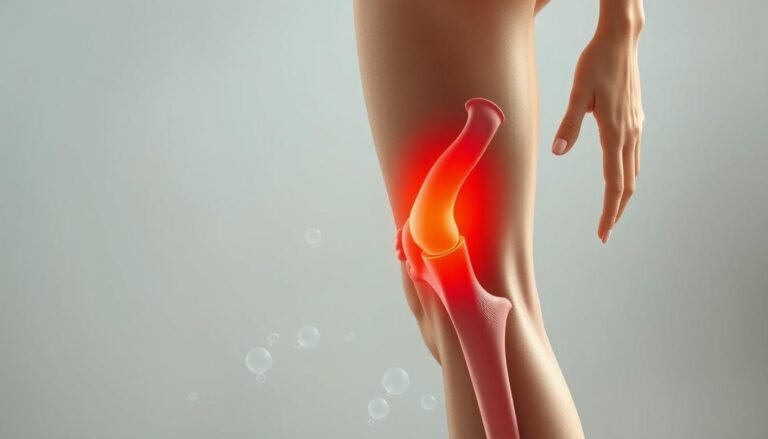
The knee is the most frequently injured joint in professional soccer, and this pattern is especially pronounced during FIFA tournaments where players compete at peak intensity over compressed schedules.
The combination of high-speed sprints, sudden directional changes, and physical contact creates a perfect environment for both acute and overuse knee pain. Understanding the landscape of possible injuries helps teams plan effectively before and during competition.

Traumatic knee events, including those caused by collisions, bad landings, or sudden pivots, account for a large share of tournament exits. For a detailed breakdown of how these events unfold, see our resource on traumatic knee injuries in sports.
- ACL (Anterior Cruciate Ligament) tears are the most severe, often season-ending
- Meniscus tears vary widely, from minor partial tears to complex surgical cases
- PCL (Posterior Cruciate Ligament) injuries are less common but still impactful
- Ligament sprains (Grade I-III) form a spectrum from mild to severe
- Patellar tendinopathy is a frequent overuse condition during tournament preparation
- Chondromalacia patella affects cartilage health and causes chronic knee discomfort
ACL Injury: The Longest Path in the FIFA Tournament Knee Recovery Timeline
When a player’s knee hurt during a cutting movement and they collapse to the ground holding it, coaches often dread the inevitable diagnosis. An ACL rupture is the most devastating injury on the FIFA tournament knee recovery timeline.
ACL reconstruction surgery requires full ligament graft integration, which takes 9 to 12 months in most professional cases. Extensive details about bracing and post-surgical support are covered in our guide on ACL injury and knee brace options.
ACL Recovery Phases for Soccer Players
- Acute Phase (Weeks 1-2): Reduce swelling, control knee pain, begin gentle range-of-motion work
- Early Rehabilitation (Weeks 3-8): Quadriceps activation, gait training, proprioception exercises
- Strength Building (Months 3-6): Progressive resistance training, cycling, pool running
- Sport-Specific Training (Months 6-9): Agility drills, controlled running, gradual ball work
- Return-to-Play Evaluation (Months 9-12): Functional testing, psychological readiness, match simulation
This data underlines why the FIFA tournament knee recovery timeline for ACL injuries goes beyond just physical healing. Players must also rebuild explosive capacity and mental confidence before returning to elite competition.
Meniscus Tears: The Most Variable Knee Recovery Timeline in FIFA Soccer
Unlike ACL injuries, meniscus tears present a wide range of outcomes on the FIFA tournament knee recovery timeline. A minor partial tear may resolve with conservative management in 4 to 6 weeks, while a complex tear requiring surgical repair can take 4 to 6 months.
Our detailed resource on torn meniscus injuries covers the full spectrum of diagnosis types and treatment options available to competitive athletes.
Meniscus Recovery Options and Timelines
| Treatment Type | Estimated Recovery Time | Tournament Feasibility |
|---|---|---|
| Conservative (rest, physio) | 4 to 8 weeks | Possible if tournament is 6+ weeks away |
| Arthroscopic meniscectomy | 4 to 6 weeks (avg. 41 days) | Possible for mid-tournament recovery |
| Meniscus repair surgery | 4 to 6 months | Unlikely for current tournament |
The knee pain associated with a meniscus tear typically presents as joint-line tenderness, especially during twisting or squatting movements. Players who report that their knee hurt during a rotation without contact should always undergo MRI evaluation before returning to training.
Ligament Injuries Beyond the ACL: PCL and Collateral Ligament Recovery
Not all ligament damage follows the same FIFA tournament knee recovery timeline as an ACL rupture. The PCL and collateral ligaments often carry a more favorable prognosis, especially for Grade I and II sprains.
For a comprehensive look at how different ligament structures are affected in soccer, visit our guide on ligament knee injuries.
PCL Recovery in the Context of FIFA Tournaments
The PCL injury often occurs from a direct blow to the front of the bent knee, common in sliding tackles. PCL injuries are graded similarly to ACL damage:
- Grade I PCL sprain: 2 to 4 weeks recovery, tournament participation often possible
- Grade II PCL sprain: 4 to 8 weeks, possible with intensive rehabilitation
- Grade III PCL rupture: 6 to 9 months post-surgery, season-impacting
Knee pain from a PCL injury tends to localize at the back of the joint. Players often report that their knee hurt when walking down stairs or during deceleration movements, two hallmark signs of posterior ligament involvement.
Collateral Ligament (MCL and LCL) Recovery
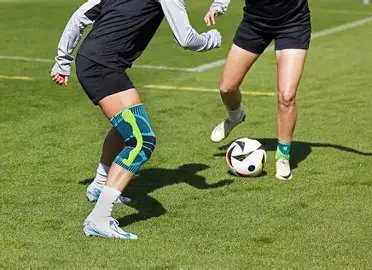
MCL sprains are among the most common knee injuries in soccer and carry one of the best recovery timelines. Grade I and II MCL injuries resolve in 3 to 6 weeks with appropriate bracing and physiotherapy, making tournament participation feasible in many cases.
LCL injuries are less common but require similar management. When the knee was struck on the inside and the player reports outer knee pain, LCL involvement must be considered.
Knee Pain Management During FIFA Tournament Preparation
Effective knee pain management during the lead-up to a FIFA tournament can prevent minor issues from becoming major structural injuries. A proactive approach to knee health is just as important as the treatment plan after a player gets hurt.
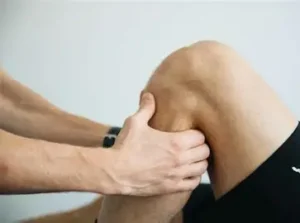
Our comprehensive resource on knee pain in athletes provides detailed guidance on assessment, treatment, and prevention strategies.
Signs That Knee Pain Requires Immediate Medical Attention
- The knee hurt during a non-contact movement with a popping sound
- Rapid swelling within the first hour of injury
- Inability to bear weight on the affected leg
- Sensation of joint instability or “giving way”
- Locking or catching sensations inside the knee
Any player experiencing these symptoms should receive an urgent orthopedic evaluation. Delaying diagnosis during a FIFA tournament preparation window can convert a treatable injury into a career-altering event.
Women’s FIFA Tournament Knee Recovery Timeline: Key Differences
Female soccer players face a statistically higher rate of ACL injuries than their male counterparts, a factor that significantly affects how teams plan the FIFA tournament knee recovery timeline for women’s squads.
Research shows that hormonal fluctuations, biomechanical differences, and quadriceps-to-hamstring strength ratios all contribute to elevated ACL injury risk in women. The recovery timeline, however, is broadly comparable to men.
For women’s teams preparing for a FIFA World Cup or continental tournament in 2026, squad management must account for this 9 to 10 month window when scheduling pre-competition training cycles. A player whose knee was injured in September 2025 would be targeting a return in June or July 2026 at the earliest.
Comprehensive Knee Recovery Timeline Reference Guide for FIFA Tournaments
Having a clear reference chart helps medical staff make quick decisions about player availability during tournament preparation. The following table summarizes the full FIFA tournament knee recovery timeline by injury type.
| Injury Type | Non-Surgical Timeline | Surgical Timeline | Tournament Impact |
|---|---|---|---|
| Grade I Ligament Sprain | 1 to 3 weeks | N/A | Minimal – miss 1-2 matches |
| Grade II Ligament Sprain | 3 to 6 weeks | N/A | Moderate – may miss group stage |
| Meniscus (partial, conservative) | 4 to 8 weeks | 41 days avg (meniscectomy) | Moderate – tournament possible |
| PCL Rupture (Grade III) | N/A | 6 to 9 months | High – season-impacting |
| ACL Rupture | N/A | 9 to 12 months | Severe – full tournament loss |
| Meniscus Repair | N/A | 4 to 6 months | High – majority of tournament lost |
| Chondromalacia Patella | 4 to 8 weeks | Variable | Moderate – manageable with treatment |
For a fuller understanding of all the knee conditions that affect tournament availability, visit our comprehensive guide to understanding, managing, and overcoming knee pain.
Return-to-Play Criteria: When Is the Knee Ready for FIFA Competition?
Returning to a FIFA tournament is not simply about completing a set number of recovery weeks. Medical teams use objective criteria to confirm that the knee is genuinely ready for elite competition.
Standard Return-to-Play Tests Used in Professional Soccer
- Limb Symmetry Index (LSI): The injured knee must reach at least 90% strength compared to the uninjured side
- Single-leg hop tests: Distance, triple hop, and cross-over hop scores must be within 10% of the uninjured side
- Functional movement screening: No compensation patterns or biomechanical asymmetries during sport-specific tasks
- Absence of knee pain: Zero pain on a numerical rating scale during running and cutting
- Psychological readiness: ACL-RSI or equivalent psychological readiness questionnaire completed
Many players who complete the physical rehabilitation still report that the knee hurt during high-speed direction changes. This residual symptom is a clear sign that full return-to-play criteria have not yet been met.
Preventing Knee Injuries During FIFA Tournament Preparation
The best FIFA tournament knee recovery timeline is the one that never needs to be activated. Prevention programs have proven highly effective at reducing knee injury rates in professional soccer.
FIFA’s own FIFA 11+ warm-up program has been shown to reduce knee injury incidence by up to 50% when implemented consistently. The program includes strength work, balance training, and neuromuscular control exercises specifically targeting knee stability.
Key Prevention Strategies for Competitive Soccer Players
- Neuromuscular training: Regular balance and proprioception drills to reduce ligament stress
- Hamstring strengthening: Eccentric exercises like Nordic curls protect against ACL and PCL injury
- Load management: Monitoring training volume to prevent overuse knee pain accumulation
- Correct landing mechanics: Teaching proper deceleration and jump-landing technique
- Pitch and equipment checks: Using appropriate footwear and ensuring playing surfaces are safe
Players who consistently manage their workload and address early signs of knee pain are far less likely to face a tournament-altering injury. The time invested in prevention is always shorter than the FIFA tournament knee recovery timeline for a serious structural injury.
Conclusion
The FIFA tournament knee recovery timeline is one of the most consequential factors in determining a player’s tournament fate. From a 1 to 3 week minor ligament sprain to a 9 to 12 month ACL reconstruction, the spectrum of possible outcomes is enormous.
Understanding the differences between injury types, recognizing when the knee hurt warrants urgent care, and following evidence-based rehabilitation protocols are all critical steps in giving players the best chance of returning to competition. Whether the concern involves meniscus damage, ligament injuries, or persistent knee pain with no clear structural diagnosis, the path forward always begins with accurate diagnosis and a structured plan.
In 2026, sports medicine continues to advance, with biological augmentation, accelerated rehabilitation protocols, and wearable monitoring technology all helping to push recovery timelines shorter than ever. Even so, the single most important factor remains patient compliance and the willingness to follow the full FIFA tournament knee recovery timeline without shortcuts.
For further reading on specific injury types and treatments, explore our guides on knee pain in athletes and our broader resource on overcoming knee pain comprehensively.
Frequently Asked Questions
How long does it take to recover from a knee injury for a FIFA World Cup?
The FIFA tournament knee recovery timeline varies by injury type. Minor sprains resolve in 1 to 6 weeks, meniscus surgery averages 41 days, and ACL reconstruction requires 9 to 12 months. Accurate diagnosis is the first and most important step in determining tournament availability.
Can a soccer player play in a FIFA tournament with a torn meniscus?
In some cases, yes. A partial meniscus tear treated conservatively or with arthroscopic meniscectomy can allow a player to return in 4 to 6 weeks. However, a complex meniscus repair requiring full healing of the tissue will sideline a player for 4 to 6 months, typically ruling out the current tournament.
What is the difference between ACL and PCL recovery time for professional players?
ACL reconstruction typically requires 9 to 12 months, while a Grade III PCL rupture following surgery has a 6 to 9 month timeline. Both are serious injuries, but the PCL often carries a slightly shorter recovery trajectory due to better blood supply to the posterior ligament region.
Why do my knee hurt after FIFA tournament training but not during games?
This pattern is common with overuse conditions like patellar tendinopathy or chondromalacia patella. The warm-up effect of a match temporarily reduces symptoms, while post-training stiffness and knee pain reflect cumulative tissue irritation. Persistent symptoms should be evaluated by a sports medicine physician.
Is it safe to return to FIFA competition after ACL surgery in less than 9 months?
Most sports medicine guidelines advise against returning in less than 9 months due to elevated reinjury risk. Graft maturation requires sufficient time regardless of how strong the knee feels. Returning too early is one of the leading causes of re-rupture in professional soccer players.
What knee injuries are most common in the FIFA World Cup 2026?
ACL tears, meniscus injuries, and ligament sprains are historically the most reported knee injuries in FIFA tournaments. In 2026, teams are investing more heavily in load monitoring and prevention programs to reduce the incidence of these injuries during the competition period.
How can I tell if my knee pain is serious enough to stop FIFA tournament training?
If the knee hurt suddenly during movement, if there is significant swelling, instability, or inability to fully straighten or bend the joint, training should stop immediately and medical evaluation sought. Persistent knee pain lasting more than 72 hours without improvement also warrants a clinical assessment before training resumes.