
Understanding Knee Anatomy
Knee Ligaments
Anterior Cruciate Ligament (ACL)
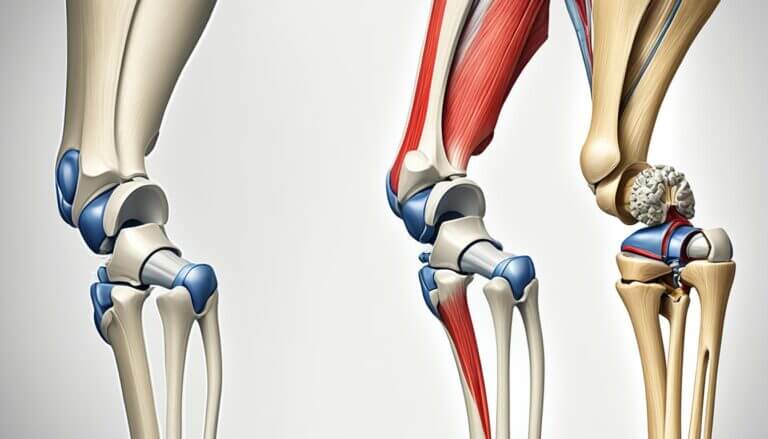
The ACL crosses from the back of the femur to the front of the tibia, preventing hyperextension and excessive forward motion of the tibia. ACL tears are a common sports-related knee injury. Non-contact, sudden changes in speed and pivoting are frequent causes of ACL tears. Symptoms include knee instability or “giving way.” ACL reconstruction surgery is often needed to restore knee stability.
Lateral Collateral Ligament (LCL)
The LCL reinforcement on the outer knee connects the femur to fibula, providing lateral stability and resisting varus forces. LCL injuries cause pain and tenderness on the outside aspect of the knee. Grade 1 and 2 sprains may heal with bracing and rehab. Complete LCL ruptures require surgical repair or reconstruction.
Knee Muscles
Quadriceps
This four-part muscle group on the front of the thigh straightens and controls bending of the knee. The rectus femoris attaches to the iliac spine of the pelvis. The vastus medialis, lateralis, and intermedius connect the femur to the patellar tendon. The quadriceps must be balanced and flexible to prevent knee injuries.
Hamstrings
The biceps femoris, semimembranosus, and semitendinosus flex the knee and counterbalance the quadriceps. Hamstring strains are common in sports due to overuse or sprinting/jumping moves. Tight hamstrings contribute to knee pain and injuries, so regular stretching is key. Strengthening exercises are also important.

One Comment