Stay Active: Tips for Maintaining Mobility Remote Work
With the rise in remote work due to the COVID-19 pandemic, it is important to prioritize maintaining mobility and staying active while working remotely. Working from home offers flexibility and convenience, but it also poses challenges to physical activity and movement. In this section, we will explore expert tips and strategies for staying active and maintaining mobility while working remotely.
Key Takeaways:
- Make physical activity a priority in your remote work routine to maintain mobility.
- Research shows that regular physical activity improves mood, reduces stress, and boosts productivity.
- Incorporate simple exercises and activities into your workday, such as walking, standing during calls, and scheduling midday workouts.
- Break up sitting time by standing every 30 minutes, using a standing desk, and performing small exercises and stretches.
- Prioritize your health and well-being while embracing the remote work lifestyle.
The Benefits of Physical Activity During Remote Work
Engaging in regular physical activity while working remotely offers numerous benefits for mental health, productivity, and overall well-being. Research shows that physical activity can improve mood, reduce stress, increase energy levels, and enhance productivity. Incorporating exercise and movement into your remote work routine can help you manage stress and maintain a healthy work-life balance.
Physical activity has a profound impact on mental health. Regular exercise releases endorphins, which are known as “feel-good” hormones that can elevate mood and create a sense of well-being. By engaging in physical activity during remote work, you can combat feelings of stress, anxiety, and depression, allowing you to focus more effectively on your work tasks.
Moreover, physical activity has been shown to increase productivity. When you engage in exercise, blood flow to the brain increases, leading to improved cognitive function and enhanced concentration. Taking breaks to engage in physical activity can help you improve your focus and mental clarity, enabling you to work more efficiently and effectively.
“Physical activity has a profound impact on mental health. Regular exercise releases endorphins, which are known as ‘feel-good’ hormones that can elevate mood and create a sense of well-being.”
Additionally, physical activity can help you effectively manage stress. Regular exercise can reduce the release of stress hormones such as cortisol while increasing the production of neurotransmitters like serotonin, which are responsible for regulating mood and promoting relaxation. By incorporating physical activity into your remote work routine, you can effectively reduce stress levels and improve your overall well-being.
Managing stress through physical activity is particularly important during remote work, as it can help you strike a balance between your personal and professional life. Engaging in exercise and movement can serve as a boundary between work and leisure, allowing you to transition between the two more effectively. By setting aside time for physical activity, you can establish a routine that promotes work-life balance and prevents burnout.
The mental health benefits of physical activity during remote work include:
- Improving mood and creating a sense of well-being
- Reducing stress, anxiety, and depression
- Increasing energy levels and enhancing productivity
- Promoting relaxation and improving sleep quality
Simple Exercises and Activities for Remote Workers
As remote workers, it’s important for us to prioritize our health and incorporate movement into our workday. By staying active and maintaining mobility, we can improve our overall well-being and work productivity. Here are some simple exercises and activities that you can easily integrate into your daily routine:
- Start your day with a walk: Take advantage of your flexible work schedule by incorporating a brisk walk or jog into your morning routine. Not only will this help you stay active, but it will also energize you for the rest of the day.
- Stand during video and phone calls: Instead of sitting for prolonged periods, try standing while participating in video conferences or phone calls. Standing engages your muscles and helps prevent the negative effects of excessive sitting.
- Schedule midday workouts: Set aside time during your lunch break or midday slump for a quick workout session. Whether it’s a yoga routine, bodyweight exercises, or a dance workout, incorporating physical activity into your day can boost your energy levels and enhance your focus.
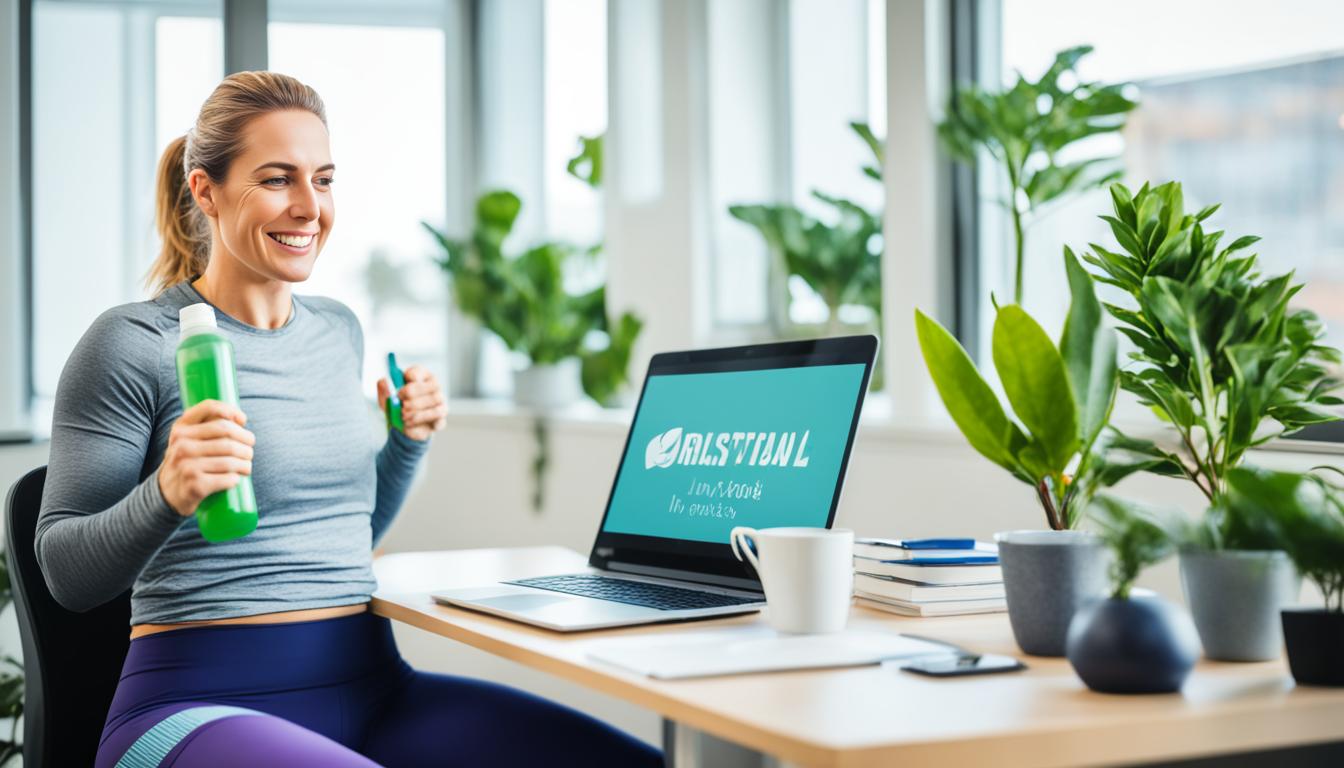
- Use office equipment for exercises: Get creative with your surroundings! Use your office chair for tricep dips, do squats while waiting for files to download, or use water bottles as makeshift dumbbells for quick arm exercises.
- Set reminders to get up and move: It’s easy to get absorbed in our work and forget to take active breaks. Set reminders on your phone or computer to prompt you to stretch, do a few jumping jacks, or take a short walk around your workspace.
- Incorporate squats into your regimen: Squats are a simple yet effective exercise that targets multiple muscle groups. Incorporate squats throughout your day, such as when you’re waiting for your coffee to brew or during commercial breaks while watching TV.
- Take advantage of stretches and recovery: Dedicate a few minutes each day to stretch your muscles and promote flexibility. Simple stretches, such as neck rolls, shoulder stretches, and seated spinal twists, can help alleviate muscle tension and improve your posture.
Remember, finding ways to stay active and incorporate movement into your workday is essential for our physical and mental well-being. By implementing these simple exercises and activities, you can maintain mobility, enhance your productivity, and achieve a healthier work-life balance.

Strategies for Breaking Up Sitting Time
One of the challenges of remote work is the tendency for prolonged sitting and sedentary behavior, which can have negative effects on our health and overall well-being. To combat this, it is crucial to find strategies to break up sitting time and incorporate movement into our home office setups. By making conscious efforts to move and reducing sedentary behavior, we can maintain mobility and reduce the risks associated with prolonged sitting.
Incorporating Movement Into Your Home Office Setup
Creating an ergonomic and movement-friendly home office setup is essential for reducing sedentary behavior and promoting physical activity. Consider the following tips:
-
- Invest in a standing desk or use a makeshift standing setup:
Incorporate a standing desk into your home office setup to allow for periods of standing while working. If a standing desk is not available, you can use a high table or countertop to achieve a similar effect.
-
- Use an adjustable chair:
Ensure that your chair is adjustable and provides proper support for your back and posture. Take breaks to perform simple exercises or stretches to alleviate muscle tension.
-
- Position your computer at eye level:
Adjust the height of your computer screen to eye level to avoid straining your neck and promote good posture.
-
- Set up a designated exercise area:
Create a small exercise space in your home office where you can do quick workouts or stretching exercises during breaks.
Simple Exercises and Stretches to Incorporate into Your Routine
Performing small exercises and stretches throughout the day can help break up sitting time and promote movement. Consider incorporating the following into your routine:
-
- Take active breaks:
Set reminders to take short breaks every 30 minutes to stand up, stretch, or walk around. Use this time to do a quick exercise, such as squats or lunges.
-
- Do desk exercises:
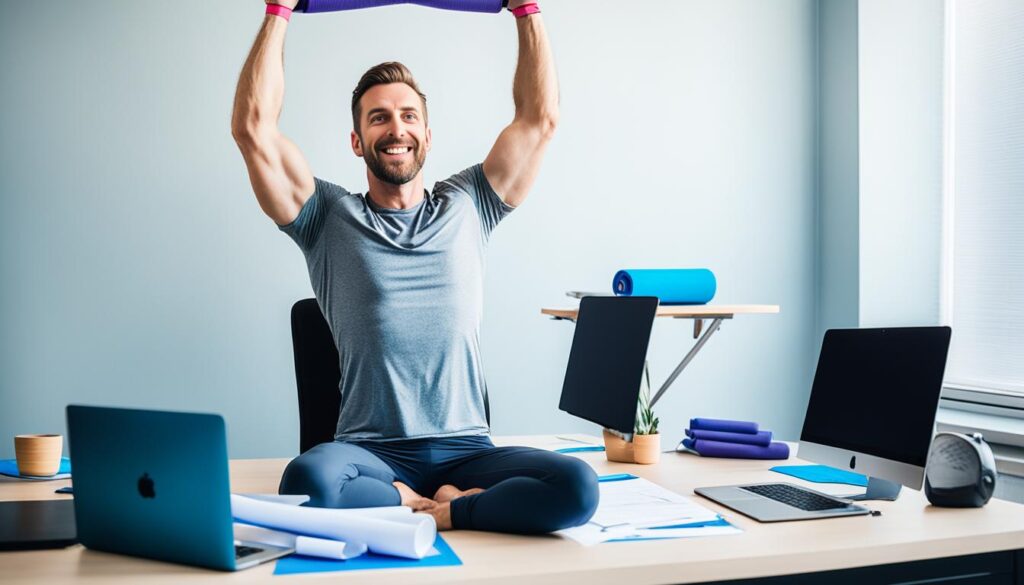
Perform desk exercises such as shoulder rolls, leg lifts, or seated twists to engage your muscles and improve circulation.
-
- Stretch regularly:
Stretching is vital for maintaining flexibility and preventing muscle stiffness. Incorporate simple stretches for your neck, shoulders, back, and legs into your routine.
-
- Try yoga or Pilates:
Consider practicing yoga or Pilates during your breaks or after work. These activities help improve strength, flexibility, and mind-body connection.
Incorporating these simple strategies and exercises into your remote work routine can make a significant difference in reducing sedentary behavior and promoting movement. Aim to create a balance between sitting and standing, and always listen to your body’s needs. Remember, small actions can lead to big results in maintaining mobility while working remotely.
| Benefits of Incorporating Movement into Your Remote Work Routine | Strategies for Incorporating Movement |
|---|---|
| Increases energy levels | Take short breaks every 30 minutes |
| Improves concentration and focus | Use a standing desk or makeshift standing setup |
| Reduces the risk of musculoskeletal issues | Perform desk exercises and stretches |
| Enhances productivity and creativity | Set up a designated exercise area in your home office |
| Improves mood and reduces stress | Try yoga or Pilates during breaks or after work |
Conclusion
Maintaining mobility while working remotely is essential for our overall health and well-being. Although remote work provides flexibility, it also presents challenges when it comes to physical activity and movement. However, by prioritizing physical activity, incorporating exercises and active breaks into our workday, and finding strategies to break up sitting time, we can stay active and maintain mobility while working remotely.
It is crucial to remember that our health and well-being should always take precedence, even when embracing the remote work lifestyle. By making conscious efforts to prioritize physical activity, we can not only maintain mobility, but also improve our work-life balance as remote workers. Engaging in regular physical activity has mental health benefits, such as reducing stress, improving mood, and increasing energy levels. Additionally, incorporating exercise into our remote work routine can enhance productivity and help us manage stress effectively.
There are various simple exercises and activities that we can incorporate into our daily routine to stay active while working remotely. From starting the day with a walk to scheduling midday workouts or using office equipment for exercises, there are countless ways to maintain mobility throughout the day. It’s also important to set reminders to get up and move, incorporate squats and stretches, and take advantage of recovery periods to prevent the negative effects of prolonged sitting.
In conclusion, prioritizing physical activity and incorporating movement into our remote work routine is key to maintaining mobility while working remotely. By adopting these remote work health tips, we can not only maintain our physical well-being but also achieve a healthy work-life balance as remote workers. Let us continue to prioritize our health and well-being while embracing the benefits and flexibility of remote work.
FAQ
How can I maintain mobility while working remotely?
To maintain mobility while working remotely, incorporate regular physical activity into your routine. Take breaks to stretch and move around, schedule midday workouts, and try standing or walking during video calls.
What are the benefits of physical activity during remote work?
Physical activity during remote work offers numerous benefits, including improved mood, reduced stress, increased energy levels, and enhanced productivity. It also helps manage stress and maintain a healthy work-life balance.
What are some simple exercises and activities I can do as a remote worker?
As a remote worker, you can start your day with a walk, use office equipment for exercises, set reminders to get up and move, and incorporate squats and stretches into your routine. These simple activities can help you stay active and maintain mobility.
How can I break up sitting time during remote work?
Breaking up sitting time is crucial during remote work. Stand up every 30 minutes, use a standing desk or create a makeshift standing setup, and perform small exercises and stretches. These strategies can help reduce the negative effects of prolonged sitting.
Why is maintaining mobility important while working remotely?
Maintaining mobility while working remotely is crucial for overall health and well-being. It helps reduce the risks associated with sedentary behavior and ensures you stay active and healthy while embracing the remote work lifestyle.