
A Comprehensive Guide to Knee Anatomy, Morphology, Function, and Common Issues
The knee is arguably the most important and complex joint in the human body. It bears our weight, allows movement and flexibility, and absorbs tremendous impact forces. Understanding knee anatomy and function is crucial for keeping your knees healthy and recovering from injury.
This in-depth knee guide covers everything you need to know about knee anatomy, morphology, function, and common problems. Read on to learn how your knees work so you can keep them in top shape!
Knee Joint Anatomy
The knee joint connects three bones: the femur (thighbone), tibia (shinbone), and patella (kneecap). These bone structures provide the foundation of the knee.

Knee joint components:
- Femur
- Tibia
- Patella
- Joint capsule
- Cartilage
- Synovial membrane
- Menisci
- Ligaments
- Tendons
- Muscles
- Nerves and blood vessels
The ends of the femur and tibia are covered in articular cartilage, a smooth substance that protects the bones and allows them to glide smoothly against each other.
The whole knee joint is surrounded by a joint capsule lined with synovial membrane. This produces synovial fluid that lubricates the joint and reduces friction.
There are two menisci between the femur and tibia – the medial meniscus and lateral meniscus. These C-shaped discs of cartilage act as cushions or shock absorbers in the knee.
Ligaments connect bones and provide stability to the knee:
- Anterior cruciate ligament (ACL)
- Posterior cruciate ligament (PCL)
- Medial collateral ligament (MCL)
- Lateral collateral ligament (LCL)
Tendons connect muscles to bones. The quadriceps and patellar tendons are key structures that straighten the knee.
Powerful muscles like the quadriceps and hamstrings control knee movement. Smaller muscles provide additional support.
Nerves carry messages between the knee and brain to facilitate movement. The knee joint also has a rich blood supply to provide nutrients.

Knee Morphology
Knee morphology refers to the shape and form of the knee joint structures. Here are some key morphological features:
- The femur has two rounded condyles that sit on the flat tibial plateau. This shape allows the knee to flex, extend, and rotate.
- The patella is a triangular sesamoid bone embedded within the quadriceps tendon. It protects the knee joint and increases quadriceps leverage.
- Menisci are crescent-moon shaped discs between the femur and tibia. This distributes body weight and provides congruency.
- Collateral ligaments run vertically on the medial and lateral knee to resist side-to-side motion.
- Cruciate ligaments cross each other inside the joint to enable rotation while limiting front-to-back translation.
- Muscles like the quadriceps have large attachment sites for strong contraction leverage.
- Articular cartilage is smooth and dome-shaped over bony surfaces to facilitate gliding.
- The synovial membrane lines the joint capsule and folds into crevices for lubrication access.
Understanding the shape and alignment of knee structures is critical when diagnosing injuries or dysfunction.
Knee Joint Function and Biomechanics
The complex anatomy of the knee allows for specialized motions and weight bearing functions.
Main Knee Functions
- Flexion and extension for walking, running, and jumping
- Slight internal and external rotation for foot positioning
- Weight bearing as the body’s central support joint
- Shock absorption to reduce impact loading
Knee Flexion and Extension
The femur and tibia rotate against each other to produce knee flexion and extension. This hinge-like motion ranges from 0° when straight to over 140° during deep flexion.
Key structures involved in knee flexion:
- Hamstrings – Flex the knee by pulling the tibia posteriorly
- Gastrocnemius – Flexes knee through its connection with the hamstrings
- Popliteus – Rotates femur internally during flexion
Key structures for knee extension:
- Quadriceps – Straighten the knee by pulling the patella and tibia anteriorly
- Soleus – Assists knee extension via synergy with the gastrocnemius
Knee Rotation
The knee joint can rotate slightly inward and outward when flexed to position the foot and lower leg. This is mediated by:
- Popliteus – Internally rotates the femur
- Iliotibial band – Facilitates external femoral rotation
Rotational stability is provided by the cruciate ligaments and collateral ligaments.
Shock Absorption and Impact Reduction
The knee joint structures work together to reduce damaging impact forces:
- Menisci – Act as shock absorbers between the femur and tibia
- Cartilage – Compresses to cushion bone articulation
- Ligaments – Provide dynamic restraint to overloaded joints
- Muscles – Eccentrically contract to dissipate energy
Proper knee biomechanics are essential for absorbing up to 6 times your body weight during activities like jogging!
Common Knee Problems and Injuries
Due to its complexity and heavy use, the knee joint is susceptible to various injuries and pathologies. Some of the most common knee problems include:
Sprains and Strains
- Medial collateral ligament (MCL) sprain – Overstretching or tearing of the MCL from impact or twisting. Causes inner knee pain and laxity.
- Lateral collateral ligament (LCL) sprain – Injury to the LCL from hyperextension or direct trauma. Results in outer knee pain.
- Patellar tendon strain – Overload and inflammation where the tendon attaches to the tibia. Causes anterior knee pain.
- Quadriceps/hamstring strain – Muscle overuse leading to partial tears and weakness. Hampers knee stability.
Meniscal Injuries
- Meniscus tear – Occurs when abruptly twisting or rotating the knee. Torn menisci cause pain, catching, locking, and swelling.
- Discoid meniscus – An abnormal thickened meniscus prone to tearing. More common medially.
- Degenerative meniscal tear – Fraying and deterioration seen with aging. Associated with osteoarthritis.
Ligament Tears
- ACL tear – Sudden change in direction tears the ACL. Instability, pain, and swelling follow.
- PCL tear – Hyperextension injury that strains or tears the PCL. Posterior knee pain and laxity result.
Patellofemoral Problems
- Patellar dislocation – The patella dislocates laterally from the femoral trochlear. Causes intense pain.
- Patellofemoral pain syndrome – Anterior knee pain from improper patellar tracking. Aggravated by climbing stairs.
- Patellar tendinitis (jumper’s knee) – Overuse injury of the patellar tendon. Leads to inflammation and localized pain.
Arthritis
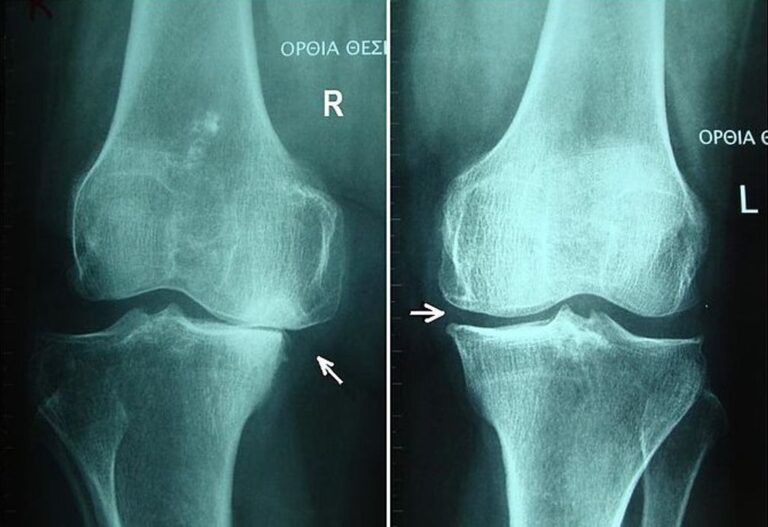
- Osteoarthritis – Degenerative joint disease causes knee cartilage to thin and wear down. Results in stiffness, swelling, and activity limitations.
- Rheumatoid arthritis – Autoimmune condition that inflames the knee joint linings. Manifests as pain, warmth, and joint destruction over time.
Osgood-Schlatter Disease
- Tibial tubercle apophysitis – Inflammation where the patellar tendon inserts into the tibial tubercle. Common in adolescents during growth spurts.
Treatment Options for Knee Injuries
Treating knee injuries and conditions aims to reduce pain, resolve any instability, prevent re-injury, and restore function. Treatment options may include:
- RICE – Rest, ice, compression, and elevation for acute knee injuries.
- Medications – NSAIDs, analgesics, corticosteroid injections to relieve pain and inflammation.
- Bracing – Provides external knee support and stability during ligament injuries.
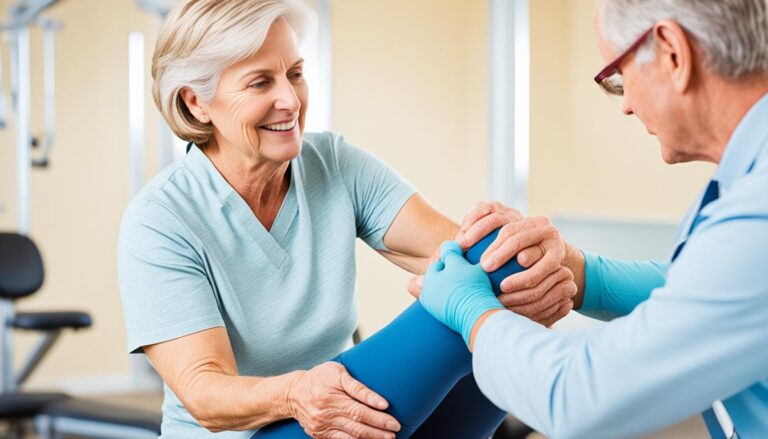
- Physical therapy – Stretches, strengthening, neuromuscular retraining, manual therapy, and modalities to facilitate recovery.
- Surgery – Necessary for severe ligament/meniscus tears, joint repairs, or realignment procedures.
- Alternative medicine – Acupuncture, massage, cryotherapy, prolotherapy injections are complementary options.
The best treatment approach depends on the specific knee condition as well as patient factors like age, activity level, and expectations.
Knee Injury Prevention Tips
You can help avoid many common knee injuries and keep your knees healthy with these proactive prevention measures:
- Maintain appropriate strength, flexibility, and endurance through exercise. Emphasize hamstrings, quads, glutes, calves, hip abductors.
- Use proper biomechanics and technique when exercising, running, jumping, or performing manual labor. Avoid locking knees fully straight.
- Warm up adequately before activities and sports with dynamic stretches. Cool down and stretch afterwards as well.
- Wear supportive footwear designed for your sport or workplace conditions. Replace shoes regularly.
- Tape or brace knees as needed for extra support during activity. Especially helpful following prior injury.
- Lose excess weight to reduce stress on the knees during weight bearing.
- Listen to your body pain signals. Rest and recover from activities that aggravate the knees.
- Ensure any knee injuries are fully rehabilitated before returning to sports or strenuous work tasks.
Key Takeaways
- The knee joint is formed by the articulation of the femur, tibia, patella, and associated soft tissue structures.
- Normal knee function involves flexion/extension, slight rotation, shock absorption, and weight bearing ability.
- Key knee structures include bones, articular cartilage, menisci, ligaments, tendons, muscles, and nerves/blood vessels.
- Proper knee morphology like rounded condyles and angled ligaments facilitates biomechanics.
- Sprains, strains, arthritis, tendinitis, and ligament tears are common knee problems.
- Rehab, medications, bracing, surgery, and preventive measures can help manage knee issues.
Protecting your knees through strength, flexibility, proper mechanics, and smart training is crucial for longevity. Understanding fundamental knee anatomy and biomechanics provides great insight into keeping this vital joint healthy!
Frequently Asked Questions About the Knee Joint
Here are answers to some frequently asked questions about knee anatomy, function, injuries, and care:
What are the four bones of the knee?
The four bones that form the knee joint are the femur, tibia, fibula, and patella. The femur is the thigh bone, the tibia is the shin bone, and the patella is the kneecap. The fibula runs parallel to the tibia but does not directly articulate with the knee.
What does the ACL do?
The anterior cruciate ligament (ACL) runs diagonally through the middle of the knee to prevent the tibia from sliding forward in relation to the femur. ACL tears are unfortunately very common knee injuries, especially in sports that involve pivoting.
Why does my knee make a cracking or popping sound sometimes?
Occasional cracking or popping sounds are fairly normal in the knee and generally nothing to worry about. This can occur from tendons sliding over bony bumps or gases releasing from the fluid-filled joint spaces during movement.
What causes knee buckling?
Knee buckling or instability has multiple potential causes, including ligament tears, meniscus tears, knee arthritis, knee cap tracking problems, muscle weakness, and nerve injuries. Having a sudden giving out of the knee should be evaluated by a medical professional.
What are the symptoms of a meniscus tear?
Common symptoms of a torn meniscus include knee pain, swelling, catching or locking during activity, and a feeling that the knee may give out. Tenderness along the joint line and limited range of motion are also possible.
How long does it take to recover from knee surgery?
The recovery time after knee surgery depends on the specific procedure performed. Minor arthroscopic surgery may require only 2-4 weeks for return to normal activities, while major reconstructive surgery can take 4-9 months for full recovery. Following all post-op protocols can optimize results.
What are the best knee exercises?
Some of the best knee exercises to strengthen the structures around the joint include: quad sets, straight leg raises, heel slides, knee extensions, hamstring curls, squats, lunges, and calf raises. Low-impact exercises like swimming and cycling are also great knee-friendly options.
What causes knee osteoarthritis?
Knee osteoarthritis develops from wear and tear to the joint over time. Contributing factors include aging, obesity, joint injury, repetitive impact, muscle weakness, and misalignment. Genetics can also play a role in the degeneration of the knee cartilage, synovium, and underlying bone.
How can I tell if I sprained my MCL?
Symptoms of a grade 1 or 2 MCL knee sprain include pain on the inner knee, swelling, and tenderness over the MCL. There is usually no joint instability. A complete MCL tear can cause significant inner knee instability with valgus force. Imaging or physical exam by a doctor can confirm an MCL sprain.
I hope this comprehensive guide gives you a great overview of knee anatomy, biomechanics, injuries, treatment, and prevention tips to keep your knees in good working order for life! Let me know if you have any other knee-related questions.


One Comment