Asanas for Knee Pain Relief: Top Yoga Poses
At some point in our lives, many of us experience knee pain. Whether it’s due to sitting for long periods, arthritis, injuries, or obesity, knee pain can be debilitating and affect our daily activities. To find relief, we often turn to natural remedies that promote healing and improve joint flexibility.
Yoga, a popular practice known for its mind-body benefits, offers a range of poses specifically designed to alleviate knee pain. By targeting the muscles surrounding the knee joint, these yoga asanas can strengthen the area, improve balance, and reduce pressure on the knees.
Here are seven highly effective yoga poses that can provide relief from knee pain:
Key Takeaways:
- Yoga poses can help reduce knee pain and improve joint flexibility.
- The muscles around the knee joint play a crucial role in knee pain relief.
- Bridge Pose, Triangle Pose, Chair Pose, Child’s Pose, Peaceful Warrior Pose, High Lunge, and Low Lunge are highly effective for relieving knee pain.
- These poses strengthen the muscles around the knee, improve balance, and reduce knee pressure.
- It’s important to practice yoga poses with proper form and breathing techniques.
Bridge Pose
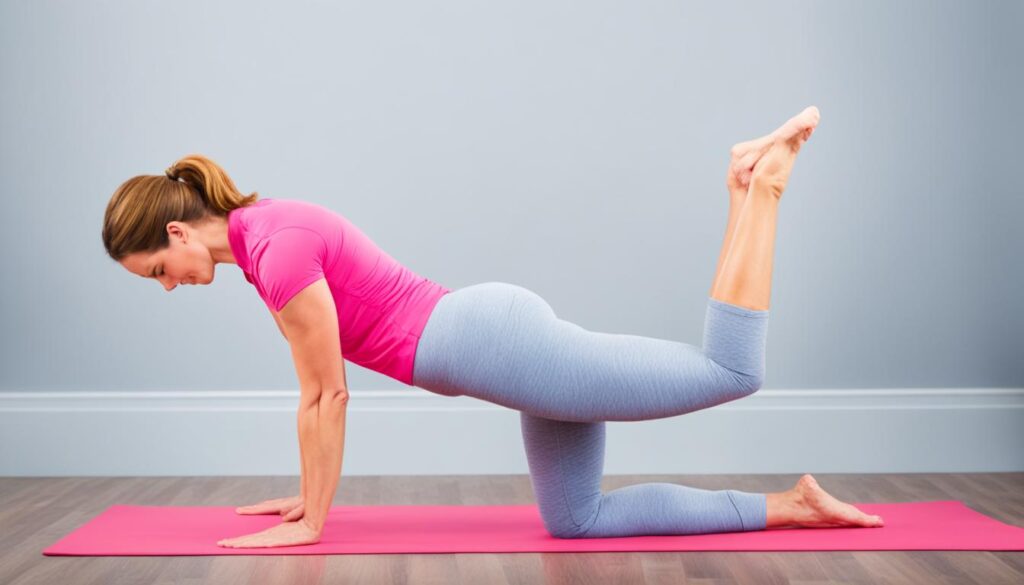
Bridge pose, also known as Sethu Bandhasana, is a highly beneficial yoga pose for strengthening the muscles around the knee joint and energizing the body. This pose involves lifting the hips and knees while lying on your back, with the hands and shoulders providing support. Bridge pose can be an effective exercise for reducing knee pain, promoting flexibility, and improving overall joint health.
How to Practice Bridge Pose
To practice Bridge pose:
- Lie down on your back with your knees bent and feet flat on the ground, hip-width apart.
- Place your arms alongside your body, with palms facing down.
- Gently press your feet into the ground, engage your glutes, and lift your hips off the mat.
- Interlace your fingers underneath your body and press your arms into the ground for extra support.
- Allow your chest to open up towards the sky, but keep your chin tucked in slightly to maintain a neutral neck position.
- Breathe deeply and hold the pose for several breaths, gradually increasing the duration of the hold as you build strength and flexibility.
- To release, gently lower your hips back down to the mat.
Remember to practice proper breathing techniques while holding the pose. Inhale deeply through the nose, expanding your belly, and exhale slowly through the mouth, releasing any tension in the body.
“Bridge pose can be a wonderful addition to your yoga practice if you’re looking to relieve knee pain and improve overall joint stability. Remember to listen to your body and modify the pose as needed. With regular practice, you’ll experience increased strength and flexibility in your knees and reap the many benefits of this rejuvenating pose.” – Yoga Instructor
Bridge pose, or Sethu Bandhasana, is an essential yoga asana for individuals seeking relief from knee pain. By incorporating this pose into your regular practice, you can strengthen the muscles around the knee joint, improve joint stability, and experience greater overall well-being.
Triangle Pose
Triangle pose, or Trikonasana, is a powerful yoga asana that offers numerous benefits for knee pain relief. This pose fine-tunes the tissues around the knee, promoting efficient functionality and supporting joint health. By improving balance and alignment, Triangle pose helps strengthen the muscles surrounding the knee joint, leading to increased stability and reduced pain.
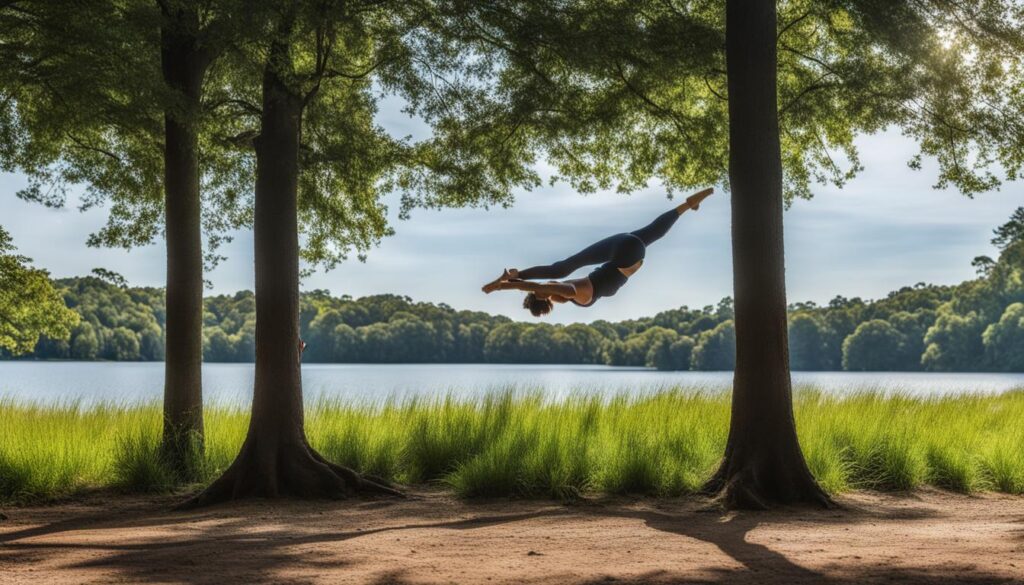
To practice Trikonasana, begin by standing with your feet wide apart. Extend your arms parallel to the ground, forming a straight line with the shoulders. Then, gently bend your torso to the right side, keeping the left leg firm and straight. Place your right palm on the floor beside the outer edge of your right foot. As you hold the pose for at least 10 seconds, focus on the stretch and the elongation of the spine. Repeat the same sequence on the other side, bending the torso to the left and placing the left palm on the floor.
| Benefits of Triangle Pose | Steps to Practice Trikonasana |
|---|---|
| – Improves balance and alignment | 1. Stand with feet wide apart |
| – Strengthens the muscles around the knee joint | 2. Extend arms parallel to the ground |
| – Supports joint health | 3. Bend torso to the right side |
| – Increases stability | 4. Place right palm on the floor beside the outer edge of the right foot |
| 5. Hold for at least 10 seconds | |
| 6. Repeat on the other side |
Chair Pose
| Benefits | Instructions |
|---|---|
|
|
Chair pose, also known as Utakatasana, is a powerful yoga pose that provides relief for knee pain. By shifting the body weight to the hip sockets, this pose reduces knee pressure and strengthens the hamstrings and quadriceps. Chair pose is an excellent way to improve balance and stability, which can also help alleviate knee discomfort. To practice Chair pose, start by standing with your feet apart. Slowly bend your knees, lowering your hips as if sitting on an invisible chair. As you sink deeper into the pose, raise your hands upwards. Hold this pose for at least 5 seconds, breathing steadily throughout the practice. Repeat the pose as desired, gradually increasing the duration over time for enhanced benefits.
Child’s Pose
Child’s pose, or Balasana, is a resting posture that helps release tension in the body. This simple yoga pose can be effective for knee pain relief, particularly in old age.
To practice Child’s pose, sit on your feet with knees apart, bend forward, lower forehead to the ground, and stretch arms in the same direction touching the ground. Focus on maintaining steady breathing in this posture.
Child’s pose provides a gentle stretch for the hips, thighs, and ankles while promoting relaxation and stress relief. By gently stretching the muscles around the knee joint, Balasana can help alleviate knee pain and discomfort. This pose also allows for deep breathing, which can calm the mind and foster a sense of tranquility.
“Child’s pose is a wonderful posture for finding comfort and grounding in your yoga practice. It encourages a sense of surrender and peacefulness, allowing the body and mind to relax,” says yoga instructor Emily White.
Peaceful Warrior Pose
Peaceful Warrior pose, or Veerasana, is an excellent yoga posture for joint pain relief. This pose helps stabilize the knee joints and tones the muscles around them, promoting strength and stability.
To practice Peaceful Warrior pose:
- Stand with your feet hip-distance apart.
- Extend your arms straight out to the sides, parallel to the ground.
- Slowly bend your right knee forward while stretching your left leg backward.
- Keep your gaze forward and hold the posture for at least 10 seconds.
- Repeat the pose with the other knee, ensuring you maintain balance and stability.
Peaceful Warrior pose is a powerful asana that not only improves joint health but also enhances overall body alignment. Incorporating this pose into your yoga practice can provide relief from joint pain and promote a sense of calmness and balance.
High Lunge
High lunge, or Ashwa Sanchalanasana, is a powerful yoga pose that offers numerous benefits for knee pain relief and overall strength. By incorporating high lunge into your yoga practice, you can improve balance, stability, and flexibility in the legs, back, arms, and core muscles.
To perform high lunge, start by stepping your left foot back into a deep lunge position, keeping the right knee bent at a 90-degree angle. Engage your core muscles and raise your arms overhead, palms facing each other. Gaze forward and hold the pose for at least 10 seconds, focusing on your breath.
High lunge not only stretches the muscles around the knee joint but also strengthens them, providing much-needed support for knee stability. Regular practice of this pose can help alleviate knee pain and enhance overall physical function.
Remember to maintain proper form while performing high lunge. Keep your front knee aligned with your ankle, and avoid letting it extend beyond your toes. If you have any knee issues or discomfort, you can modify the pose by reducing the depth of the lunge or using props for support.
Practice high lunge on both sides to ensure balance and symmetry in your yoga practice. Alternating between the left and right sides will help improve strength and flexibility in both legs, contributing to overall knee health.
Integrate high lunge into your yoga routine to experience the benefits it offers for knee pain relief and strengthening. Regular practice of this powerful pose can enhance your overall well-being and contribute to a healthier, more flexible body.
Conclusion
Incorporating specific yoga poses into your daily routine can be an effective way to find relief from knee pain. Yoga helps strengthen the muscles around the knee joint, improve balance and alignment, and reduce knee pressure. By practicing the recommended yoga poses, such as Bridge Pose, Triangle Pose, Chair Pose, Child’s Pose, Peaceful Warrior Pose, High Lunge, and Low Lunge, you can alleviate knee pain and increase joint flexibility.
Remember to listen to your body and modify the poses as necessary. Pay attention to your breathing and practice mindfulness during each pose. It is also important to complement your yoga practice with other natural remedies for knee pain, such as maintaining a healthy weight, avoiding prolonged sitting, and practicing good posture. These lifestyle changes can further support your knee health.
If knee pain persists or worsens despite your efforts, it is crucial to consult with a healthcare professional for a proper diagnosis and personalized treatment plan. They can provide further guidance and recommend additional therapies or interventions to address your specific condition.
FAQ
What are some effective yoga poses for knee pain relief?
Some effective yoga poses for knee pain relief include Bridge Pose, Triangle Pose, Chair Pose, Child’s Pose, Peaceful Warrior Pose, High Lunge, and Low Lunge.
How does Bridge pose help relieve knee pain?
Bridge pose, also known as Sethu Bandhasana, strengthens the muscles around the knee joint and energizes the body. It is an effective yoga exercise for reducing knee pain when practiced with proper breathing techniques.
What is the purpose of Triangle pose in relieving knee pain?
Triangle pose, or Trikonasana, fine-tunes the tissues around the knee to function efficiently. This pose improves balance, alignment, and strengthens the muscles around the knee joint.
How does Chair pose reduce knee pressure?
Chair pose, or Utakatasana, shifts the body weight to the hip sockets and reduces knee pressure. This pose strengthens the hamstrings and quadriceps while improving balance.
Can Child’s pose be effective for knee pain relief?
Yes, Child’s pose, or Balasana, is a resting posture that can help release tension in the body. It can be effective for knee pain relief, particularly in old age.
What is the purpose of Peaceful Warrior pose in managing knee pain?
Peaceful Warrior pose, or Veerasana, helps stabilize the knee joints and tone the muscles around them. This pose also improves balance and stability.
How does High Lunge help with knee pain relief?
High lunge, or Ashwa Sanchalanasana, improves balance, stability, and strengthens the legs, back, arms, and core muscles. This pose is highly effective for knee pain relief when practiced with proper form.
Is yoga a natural remedy for knee pain relief?
Yes, incorporating specific yoga poses into your daily routine can be an effective way to find relief from knee pain. Yoga helps strengthen the muscles around the knee joint, improve balance and alignment, and reduce knee pressure.
What are some other natural remedies for knee pain?
In addition to yoga, other natural remedies for knee pain include maintaining a healthy weight, avoiding excessive sitting, and practicing good posture.
When should I consult a healthcare professional for knee pain?
If knee pain persists, it is crucial to consult with a healthcare professional for a proper diagnosis and personalized treatment plan.