Top Exercises for Knee Pain Relief After 50
Around 46% of people over 50 experience knee pain, and it can significantly impact daily activities and quality of life. Whether caused by arthritis, prior injury, or overuse, finding effective exercises to alleviate knee pain and improve knee strength and flexibility is crucial for maintaining an active lifestyle. In this article, we will explore the best exercises for knee pain after 50, focusing on knee pain relief and overall knee health.
Key Takeaways:
- Incorporate exercises that improve knee mobility, strength, and flexibility into your routine.
- Consult with a physiotherapist or healthcare professional before starting any exercise program for knee pain relief.
- Consistency is key – perform these exercises regularly to maximize their benefits.
- Listen to your body and modify or adjust exercises as needed to avoid pain or discomfort.
- Combine exercises with other methods of knee pain relief, such as weight management and using supportive footwear.
Lying Knee Bend
The lying knee bend is a great exercise for improving mobility in the knee. To perform this exercise, lie down and bend the sore leg by sliding the foot along the floor or bed towards you as far as possible. Hold this pose for two seconds before stretching out the leg again.
Did you know? Lying knee bends are effective knee pain exercises that can help improve knee mobility.
Hamstring Stretch
Tight hamstrings can worsen knee pain. To alleviate the discomfort and improve knee flexibility, incorporating hamstring stretches into your routine can be beneficial. Here’s how to properly perform the hamstring stretch:
- Lie down on your back with both legs extended straight in front of you.
- Wrap a towel, belt, or band around the bottom of one foot.
- Straighten the leg with the wrap and raise it into the air.
- Using your arms, gently pull the wrap to find a deep yet comfortable stretch along the back of your leg.
- Hold the stretch for 30 seconds, focusing on maintaining proper breathing.
- Afterward, switch sides and repeat the stretch with the other leg.
This hamstring stretch helps relieve tension in the hamstrings, reducing strain on the knee joint. It is important to perform this stretch regularly to improve knee flexibility and aid in knee pain relief.

Why Is the Hamstring Stretch Important?
Stretching the hamstrings helps lengthen and loosen these muscles, which can contribute to enhancing knee flexibility and reducing knee pain. The hamstring muscles play a crucial role in knee movement and stability. When the hamstrings are tight or shortened, they can put additional stress on the knee joints, leading to discomfort or exacerbating existing knee pain.
Regularly incorporating hamstring stretches into your exercise routine can improve knee flexibility, alleviate knee pain, and promote overall joint health.
| Benefits of Hamstring Stretch | How to Perform the Hamstring Stretch |
|---|---|
|
|
Quadriceps Stretch
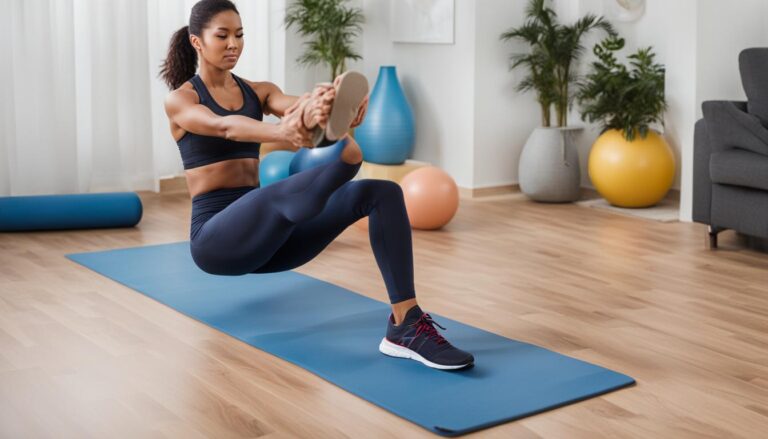
The quadriceps stretch is an effective exercise for relieving knee pain. By stretching the quadriceps muscles, you can improve flexibility and reduce discomfort in the knee joint. To perform this stretch, follow these steps:
- Position yourself close to a wall or use a chair for stability.
- Ensure your feet are shoulder-width apart.
- Bend one knee, bringing your foot up towards your glutes.
- Take hold of the ankle and gently tug it towards your glutes as far as comfortably possible.
- Hold the stretch for thirty seconds.
- Switch legs and repeat the stretch on the other side.
This stretch specifically targets the quadriceps muscles, which play a crucial role in knee stability and function. By incorporating the quadriceps stretch into your routine, you can enhance the overall health of your knee joints and experience relief from pain.

Stretching the quadriceps can help alleviate knee pain and improve flexibility in the knee joint.
Seated Knee Extension
The seated knee extension is a gentle exercise that can help stretch the knee and improve flexibility. This exercise is particularly beneficial for individuals with knee pain who want to manage their discomfort effectively. To perform the seated knee extension, follow these steps:
- Place two chairs opposite each other, creating a space for you to sit.
- Sit on one chair, keeping your back straight and your feet flat on the floor.
- Take your sore leg and place the foot on the chair opposite, with the knee bent.
- Gently straighten your leg as far as possible without causing pain or discomfort.
- Hold this position for 10 seconds, feeling the stretch in your knee.
- Repeat the exercise 4-5 times on the same leg before swapping to the other leg.
The seated knee extension provides a controlled stretch to the knee joint, allowing for increased range of motion and improved flexibility. Remember to listen to your body and stop the exercise if you experience any pain. Consult with a healthcare professional before starting any new exercise routine or if you have any concerns about your knee health.
“The seated knee extension is an effective exercise for individuals looking to manage knee pain and improve knee flexibility.”
| Benefits of Seated Knee Extension | Precautions |
|---|---|
|
|
Additional Tips
Here are some additional tips to enhance your seated knee extension exercise:
- Start with a low range of motion and gradually increase it as you feel more comfortable.
- Focus on maintaining proper posture throughout the exercise, keeping your back straight.
- Engage your core muscles to support your spine and provide stability during the movement.
- Breathe deeply and regularly throughout to promote relaxation and reduce tension in the muscles.
Conclusion
Regular exercise is essential for alleviating knee pain after 50. By incorporating the recommended knee pain exercises for over 50 mentioned in this article, you can improve the mobility, strength, and flexibility of your knee joint, ultimately reducing discomfort and enhancing your overall quality of life. It is important to remember that before starting any exercise routine, it is advisable to consult a physiotherapist who can offer personalized guidance and ensure the exercises are suitable for your specific condition.
By engaging in knee pain relief exercises regularly, you can strengthen the supporting muscles around the knee joint, improve joint stability, and reduce the risk of future injuries. Additionally, increasing knee flexibility through these exercises can help you regain a wider range of motion, enabling you to perform daily activities with greater ease and comfort.
For effective knee pain management exercises, consistency is key. Make an effort to include these exercises in your daily or weekly routine. Over time, you may experience the benefits of reduced knee pain, enhanced mobility, and improved overall knee health. Take control of your knee pain and prioritize your well-being by incorporating these effective exercises into your lifestyle today.
FAQ
What are the best exercises for knee pain relief after 50?
The best exercises for knee pain relief after 50 include the lying knee bend, hamstring stretch, quadriceps stretch, and seated knee extension.
What is the lying knee bend exercise?
The lying knee bend is an exercise where you lie down and slide the foot of your sore leg along the floor or bed towards you as far as possible, holding the position for two seconds before stretching out the leg again.
How can I stretch my hamstrings to relieve knee pain?
To stretch your hamstrings, lie down with both legs straight in front of you and wrap a towel, belt, or band around the bottom of one foot. Straighten that leg and raise it into the air, pulling the wrap with your arms to find a deep but comfortable stretch along the back of your leg. Hold for 30 seconds before switching sides.
What is the quadriceps stretch?
The quadriceps stretch is an exercise where you position yourself close to a wall or use a chair for stability. Ensure your feet are shoulder-width apart and bend one knee, bringing your foot up towards your glutes. Take hold of the ankle and gently tug it towards your glutes as far as comfortably possible. Hold for thirty seconds before switching legs.
How can I perform a seated knee extension exercise?
To perform a seated knee extension exercise, place two chairs opposite each other and sit in one chair with one foot on the chair opposite, with the knee bent. Gently straighten the leg as far as possible before it becomes too painful. Hold for 10 seconds and repeat 4-5 times before swapping legs.
What should I do before starting any knee pain relief exercise routine?
It is important to consult a physiotherapist before beginning any knee pain relief exercise routine to ensure it is suitable for your specific condition and needs.