Complete Soccer Player Knee Warm Up Routine: Protect Your Knees Before Every Match
A proper soccer player knee warm up routine is one of the most important injury-prevention tools available to athletes at every level. Research shows that high adherence to the FIFA 11+ program results in a 57% lower injury risk compared to low-adherence teams, which proves that what you do before stepping onto the pitch directly determines how well your knee holds up under the demands of the game.
Whether you are a recreational player or a competitive athlete, skipping your knee warm up can leave you vulnerable to serious injuries that sideline you for weeks or months. Understanding how to prepare your knee correctly takes only a few minutes but delivers lasting benefits throughout every training session and match.
Key Takeaways
| Question | Answer |
|---|---|
| How long should a soccer knee warm up take? | A complete soccer player knee warm up routine takes 10 to 20 minutes and should never be rushed or skipped. |
| What exercises should be included? | Dynamic stretches, muscle activation drills, light jogging progressions, and neuromuscular control exercises are all essential components. |
| Does warming up prevent knee pain? | Yes, a structured warm up significantly reduces the risk of knee pain and acute injuries by increasing blood flow and joint lubrication. |
| What knee injuries are most common in soccer? | ACL tears, meniscus injuries, patellar tendinitis, PCL injuries, and ligament sprains are among the most frequent soccer-related knee injuries. |
| Should I warm up if my knee hurts? | Mild stiffness often improves with a gentle warm up, but sharp or persistent knee pain should be evaluated by a medical professional before activity. |
| Is static or dynamic stretching better for the knee? | Dynamic stretching is far more effective as a pre-match warm up because it activates muscles and increases range of motion without reducing explosive power. |
| Where can I learn more about knee injuries? | Our comprehensive guide to understanding and overcoming knee pain is a great starting point for deeper research. |
Why Soccer Players Need a Dedicated Knee Warm Up Routine
Soccer places extraordinary stress on the knee joint. Sprinting, cutting, jumping, tackling, and landing all create significant forces through the knee in rapid succession.
Without a structured soccer player knee warm up routine, cold muscles and stiff joints cannot absorb these forces effectively. This dramatically increases the likelihood of a serious injury during the first few minutes of play.
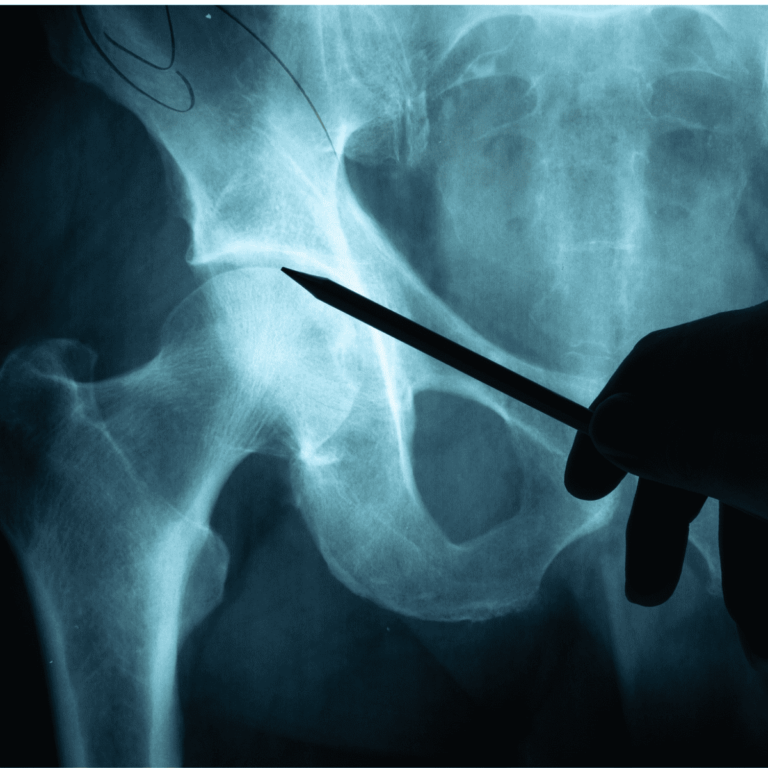
The knee is a complex hinge joint supported by four major ligaments, two menisci, and a network of tendons and muscles. When any of these structures are loaded without adequate preparation, the results can range from minor knee pain to career-threatening tears.
A dedicated warm up routine raises core body temperature, increases synovial fluid production within the joint, and primes the neuromuscular pathways that protect the knee during dynamic movement.
Understanding Knee Anatomy and Soccer Injury Risks
Before building an effective warm up, it helps to understand exactly what structures you are protecting. The knee contains four primary ligaments: the ACL, PCL, MCL, and LCL. Each one plays a critical role in keeping the joint stable during movement.
The two menisci act as shock absorbers between the femur and tibia. The patellar tendon connects the kneecap to the shinbone and is heavily loaded during kicking and jumping. Learning about common ligament knee injuries can help you appreciate why each exercise in your warm up matters.
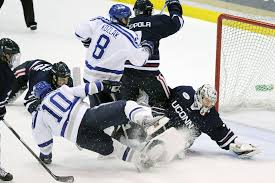
Soccer-specific movements like sudden direction changes put extreme rotational stress on the ACL. Landing from headers or corners can compress the menisci with forces many times your body weight.
Proper warm up prepares every one of these structures for the demands ahead. Players who skip this step often find themselves dealing with persistent knee pain that becomes harder to manage over time.
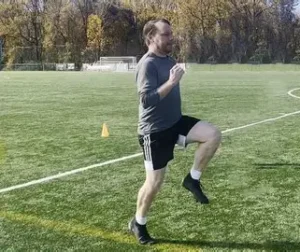
The Complete Soccer Player Knee Warm Up Routine: Step by Step
A well-structured soccer player knee warm up routine follows a logical progression from low-intensity general movement to sport-specific activation. Below is a complete routine you can implement immediately.
Step 1: General Cardiovascular Activation (3-5 Minutes)
Begin with light jogging at roughly 50% of your maximum effort. This raises your core temperature and starts increasing blood flow to the muscles surrounding the knee.
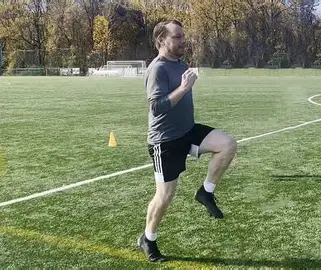
Alternate jogging with high-knee marching and butt kicks to begin gently loading the hip flexors, quadriceps, and hamstrings. These muscle groups directly control knee stability during play.
Step 2: Hip and Glute Activation (3 Minutes)
The glutes are the knee’s primary protectors. Weak or inactive glutes force the knee inward during cutting and landing, which is a leading cause of ACL injuries.
Perform lateral band walks, clamshells, and glute bridges before every session. These exercises switch on the muscles that keep the knee aligned correctly under load.
Step 3: Dynamic Knee Mobilization (3 Minutes)
Leg swings, walking lunges, and leg cradles gently take the knee through its full range of motion. This step is critical for producing synovial fluid that lubricates the joint surfaces.
Moving through full knee flexion and extension prepares the cartilage for the compression forces it will experience during the match. This directly helps reduce cartilage-related knee pain that players with chondromalacia patella are particularly prone to.
Step 4: Neuromuscular Control and Balance Drills (3 Minutes)
Single-leg balance holds, lateral shuffles, and single-leg mini squats train the brain-to-muscle communication pathways that protect the knee during unexpected movements. These drills are the most commonly skipped part of any warm up and also the most important for injury prevention.
Research consistently shows that players who include balance and coordination work in their warm up experience fewer traumatic knee injuries. If you are unfamiliar with traumatic knee injuries, understanding how they happen can motivate you to never skip this step.
Step 5: Sport-Specific Acceleration and Deceleration (3 Minutes)
Finish with short sprint progressions, change-of-direction drills, and controlled jumps with soft landings. These movements replicate game actions at increasing intensity so your knee is fully prepared when the whistle blows.
Focus on landing mechanics during jumping drills. Soft, bent-knee landings dramatically reduce the peak forces transmitted through the joint.
This infographic breaks down a quick 5-step knee warm-up routine designed for soccer players to prevent injuries and improve mobility. Use it before training or matches.
Dynamic Stretches for Your Soccer Knee Warm Up Routine
Dynamic stretching is the gold standard for pre-activity preparation. Unlike static stretching, dynamic movements maintain muscle tension and power output while increasing flexibility and joint readiness.
The following dynamic stretches work particularly well in a soccer player knee warm up routine:
- Walking knee hugs: Pull each knee toward your chest while walking forward, stretching the glutes and hip external rotators that stabilize the knee.
- Leg swings (front to back): Hold a post for balance and swing each leg through a full arc, warming up the hamstring and hip flexor attachments above the knee.
- Lateral leg swings: Swing each leg side to side across the body to open the hip abductors and adductors that control knee tracking.
- Walking lunges with rotation: Step into a lunge and rotate your torso toward the forward knee, activating hip stability and knee control simultaneously.
- Inchworms: Walk your hands out to a plank position and walk your feet forward, stretching the entire posterior chain from hamstrings to calves.
- Quad pulls while walking: Pull each foot toward your glute while balancing momentarily on the opposite leg, directly warming the quadriceps attached to the kneecap.
Each of these movements should be performed for 10 repetitions or 15 meters of distance. The goal is controlled movement, not rushed repetitions.
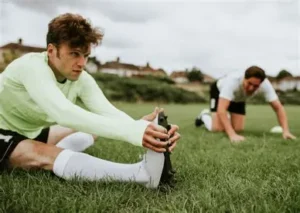
Strength Activation Exercises That Protect the Knee
Warm up activation exercises build on the dynamic stretching phase by specifically targeting the muscles that bear the greatest load during soccer. The quadriceps, hamstrings, and hip abductors are the three most important muscle groups for knee protection.
Quadriceps Activation
Mini squats performed to 30-45 degrees of knee flexion activate the vastus medialis oblique (VMO), the teardrop-shaped muscle on the inside of the thigh that controls kneecap tracking. Poor VMO activation is a leading contributor to both knee pain and patellar issues.
Perform 2 sets of 15 mini squats before progressing to deeper movements.
Hamstring Activation
Nordic hamstring curls performed slowly and under control are among the most evidence-supported exercises for reducing hamstring-related knee injuries in soccer. Even partial range of motion versions performed during warm up provide measurable protection.
Include 2 sets of 8 slow, controlled reps in your routine.
Hip Abductor Activation
Lateral band walks and side-lying clamshells target the gluteus medius, the muscle most responsible for preventing knee valgus collapse during landing. This collapse pattern is the primary mechanism of ACL tears in soccer players.
Players who experience frequent knee instability should explore our resource on ACL injuries and knee brace options for additional support strategies.
How to Recognize Knee Pain During Your Warm Up Routine
Knowing the difference between normal warm up discomfort and warning signs of injury is critical for every soccer player. Knee pain that is sharp, localized, or accompanied by swelling is never something to play through.
Normal sensations during warm up include mild stiffness that gradually loosens, a sense of tightness in the hamstrings or calves, and general fatigue in cold muscles. These sensations should improve within the first 5 to 10 minutes of movement.
Concerning symptoms include clicking or locking sensations within the knee, sharp pain on the inner or outer joint line, pain under or around the kneecap that worsens with bending, and any feeling of the knee “giving way.” If any of these occur, stop your warm up immediately.
Our detailed resource on knee pain causes and patterns can help you identify what type of issue you may be experiencing. For a broader overview, our comprehensive guide to managing and overcoming knee pain covers the full spectrum of knee conditions that affect athletes.
“Pain is your body’s most direct communication tool. A soccer player knee warm up routine should feel progressively better as it continues, never progressively worse. Respect the signals your knee sends you.”
Common Knee Injuries Soccer Players Must Understand
Understanding the injuries you are protecting yourself from gives you better motivation to maintain your warm up routine consistently. Soccer is one of the highest-risk sports for knee injuries, and the consequences of ignoring prevention can be severe.
ACL Tears
The anterior cruciate ligament is the most commonly torn ligament in soccer. ACL tears typically happen during cutting, landing, or direct contact and often require surgery followed by 6 to 12 months of rehabilitation. Understanding ACL injuries and appropriate bracing is essential for any serious player.
PCL Injuries
The posterior cruciate ligament is less frequently injured than the ACL but can be damaged during tackles or falls onto a bent knee. Learn more about PCL knee injuries and how they are managed differently from ACL tears.
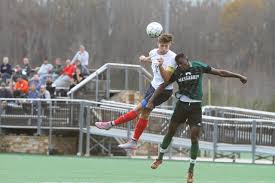
Meniscus Tears
The menisci are C-shaped cartilage pads that cushion the knee joint. Soccer players tear their meniscus during twisting movements under load, and these injuries range from minor fraying to complete tears. Understanding what a torn meniscus involves can help you recognize early symptoms before they become severe.
Patellar Tendinitis (Jumper’s Knee)
Repetitive kicking and jumping loads the patellar tendon with significant force. Tendinitis develops gradually when this tendon is overloaded without adequate recovery. Including proper warm up and cooldown routines is one of the primary ways to prevent this chronic condition.
Ligament Sprains
The MCL and LCL stabilize the knee against sideways forces. Both can be sprained during contact or when a player’s foot is planted and the knee is struck from the side. Our resource on knee ligament injuries provides detailed information on grading, symptoms, and recovery timelines.
Adjusting Your Soccer Player Knee Warm Up Routine for Specific Conditions
Not every player starts each session with a perfectly healthy knee. Many competitive soccer players manage ongoing conditions that require modifications to the standard warm up approach.
Warming Up with Patellar Pain
Players with chondromalacia patella or patellar tracking issues should reduce the depth of squats during warm up and avoid exercises that create loud grinding sensations under the kneecap. Light cycling or swimming before hitting the pitch can be a useful addition for these players.
Warming Up After a Knee Sprain
Players returning from a knee sprain should spend extra time on balance and proprioception drills during warm up. The nerve receptors within the ligaments that inform balance are disrupted by sprains and need deliberate retraining.
Warming Up with Chronic Knee Pain
Players managing chronic knee pain conditions benefit from adding 3 to 5 minutes of gentle stationary cycling before dynamic exercises. This non-impact movement promotes joint lubrication without loading the joint aggressively. Our resource on knee pain relief and strengthening exercises provides further guidance for managing these situations effectively.
Building Consistency Into Your Soccer Player Knee Warm Up Routine
Doing your knee warm up once or twice a week will not deliver the protection you need. The benefits of a structured routine accumulate over time through consistent practice before every single training session and match.
In 2026, elite clubs and national programs universally require structured pre-training warm ups precisely because the evidence is undeniable. Player welfare teams track warm up compliance the same way they track training load.
For recreational and amateur players, building the warm up into your pre-game habit is the single most effective thing you can do to extend your soccer career and avoid time away from the sport with a knee hurt from a preventable injury.
Consider keeping a simple checklist in your kit bag. Before every session, confirm you have completed each of the five phases: general activation, hip and glute work, dynamic knee mobilization, neuromuscular control, and sport-specific movement.
Players who are concerned about ongoing knee instability alongside their warm up practice should review our article on traumatic knee injuries to understand when professional evaluation becomes necessary.
Cooling Down and Recovering Your Knee After Training
A soccer player knee warm up routine is only half of the equation. What you do in the 15 minutes after training or a match is equally important for long-term knee health.
A proper cooldown includes 5 minutes of light jogging transitioning to walking, followed by static stretching of the quadriceps, hamstrings, hip flexors, and calves. These muscles all attach near the knee and become tight during high-intensity activity.
Foam rolling the IT band, quadriceps, and calves after activity reduces muscle tension that would otherwise pull on the knee joint during your next session. Players prone to IT band issues should pay particular attention to this step.
Ice applied for 15 to 20 minutes after particularly intense sessions can reduce minor inflammation before it accumulates into a more significant knee pain problem. This is especially important for players who already manage a chronic knee condition.
If your knee consistently hurts after training despite a proper warm up and cooldown, do not ignore it. Explore our resource on chondromalacia patella as one potential explanation for ongoing anterior knee pain in soccer players.

Conclusion
A well-executed soccer player knee warm up routine is the foundation of long-term knee health and athletic performance on the pitch. By progressing systematically through general activation, hip and glute priming, dynamic knee mobilization, neuromuscular control drills, and sport-specific movement, you give your knee every advantage before it faces the demands of the game.
The knee is a remarkable joint capable of withstanding enormous forces, but only when the surrounding muscles are properly activated and the joint is adequately prepared. Ignoring your warm up routine is one of the fastest ways to end up with knee pain that limits your ability to play.
Whether you are managing an existing condition or working proactively to protect healthy knees, consistency with your warm up is the key variable that determines your outcomes. Make the soccer player knee warm up routine a non-negotiable part of your pre-match process and your knees will reward you with years of injury-free play.
For further reading on protecting your knees and managing injuries when they do occur, explore our resources on knee pain conditions and learn what steps to take if you suspect a more serious injury is developing.
Frequently Asked Questions
What is the best soccer player knee warm up routine for beginners?
Beginners should start with 3 to 5 minutes of light jogging followed by leg swings, walking lunges, mini squats, and single-leg balance drills. The full soccer player knee warm up routine takes around 15 minutes and can be shortened to 10 minutes for training sessions as long as all five phases are included.
Can a knee warm up routine prevent ACL tears in soccer?
Evidence from programs like FIFA 11+ shows that structured knee warm up routines significantly reduce ACL tear rates in soccer players, particularly when neuromuscular control and landing mechanics drills are included. No routine eliminates all risk, but consistent adherence provides meaningful protection against the most common mechanisms of ACL injury.
What should I do if my knee hurts during the warm up?
If you experience sharp, localized knee pain during your warm up, stop the activity and assess whether the sensation improves with rest or worsens. Mild stiffness that loosens with movement is generally safe to continue through, but pain that is sudden, severe, or accompanied by swelling means you should not continue and should seek medical evaluation. Our guide on overcoming knee pain provides helpful context for these situations.
How long before a soccer match should I start my knee warm up?
Begin your soccer player knee warm up routine approximately 20 to 25 minutes before kickoff to ensure your muscles are fully activated by the time you are on the pitch. Ending the warm up more than 10 minutes before the match starts allows the body to cool down again, which reduces the protective effect of the routine.
Is it normal for my knee to click during warm up exercises?
Painless clicking in the knee is often caused by gas bubbles moving through joint fluid or tendons snapping lightly over bony prominences and is generally not a concern. Clicking that is accompanied by pain, swelling, or a locking sensation should be evaluated by a healthcare professional, as it may indicate a meniscus or cartilage issue.
Should I wear a knee brace during my soccer warm up routine?
Players recovering from ligament injuries or those with confirmed instability may benefit from wearing a supportive brace during warm up as well as during play. If you are unsure whether bracing is appropriate for your situation, reviewing information on ACL injuries and knee brace selection and consulting with a sports medicine professional is the recommended approach.
What is the difference between knee pain from a warm up and a serious knee injury?
Knee pain from inadequate warm up typically presents as diffuse stiffness or muscular aching that improves with movement and resolves within an hour of finishing activity. Signs of a serious injury include immediate sharp pain, rapid swelling, inability to bear weight, or a popping sensation at the moment of injury. If any of these occur, treat them as a potential traumatic knee injury and seek prompt medical assessment.