
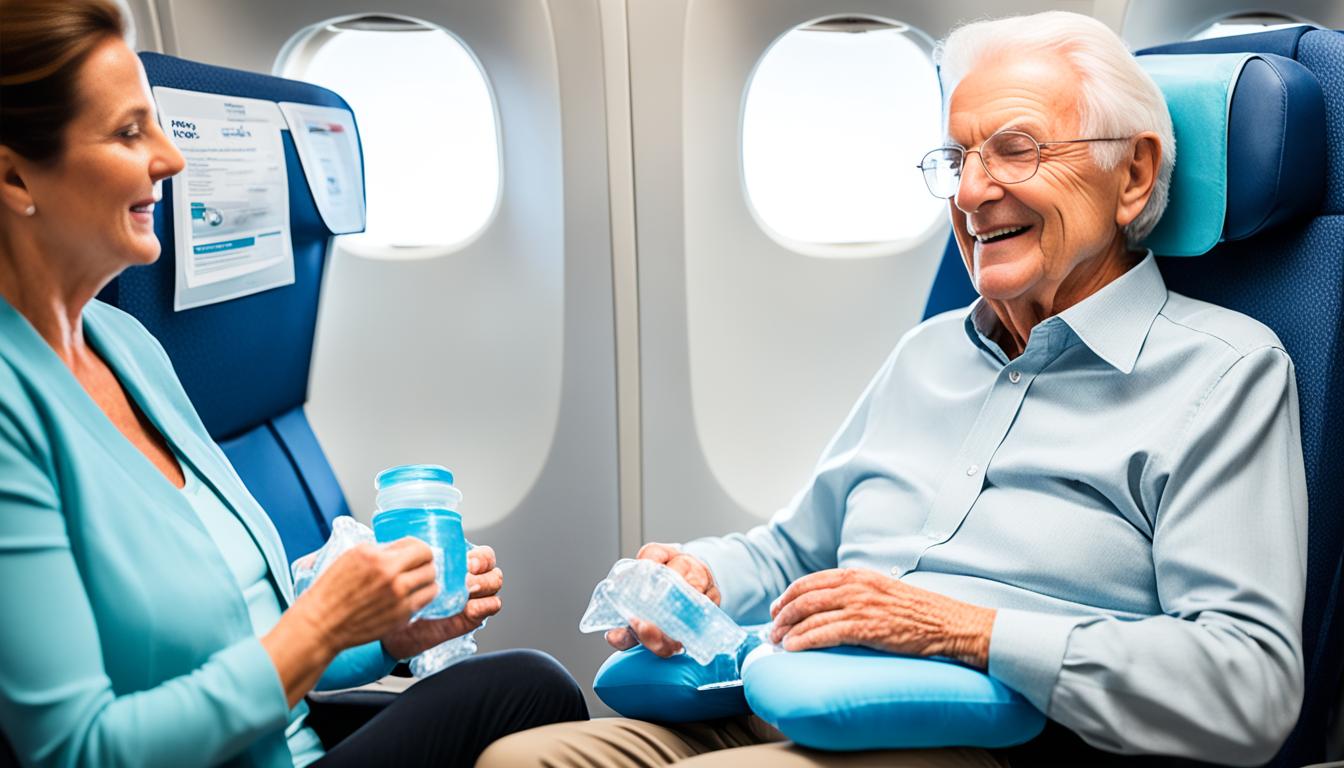
Easing Your Journey: Traveling With Knee Pain Tips
When it comes to traveling with knee pain, it’s essential to be prepared and take proactive measures to manage your discomfort. Whether you’re dealing with arthritis or recovering from an injury, these travel tips will help make your journey more comfortable and enjoyable.
Key Takeaways:
- Bring protective equipment such as a knee brace and compression socks.
- Discuss medications and treatments with your doctor to alleviate pain.
- Dress in comfortable clothing and supportive shoes to reduce strain on your knees.
- Regularly move around and engage in light physical activity to minimize stiffness and pain.
- Consume anti-inflammatory foods to help lower the risk of joint pain.
Understanding and Managing Knee Pain While Traveling
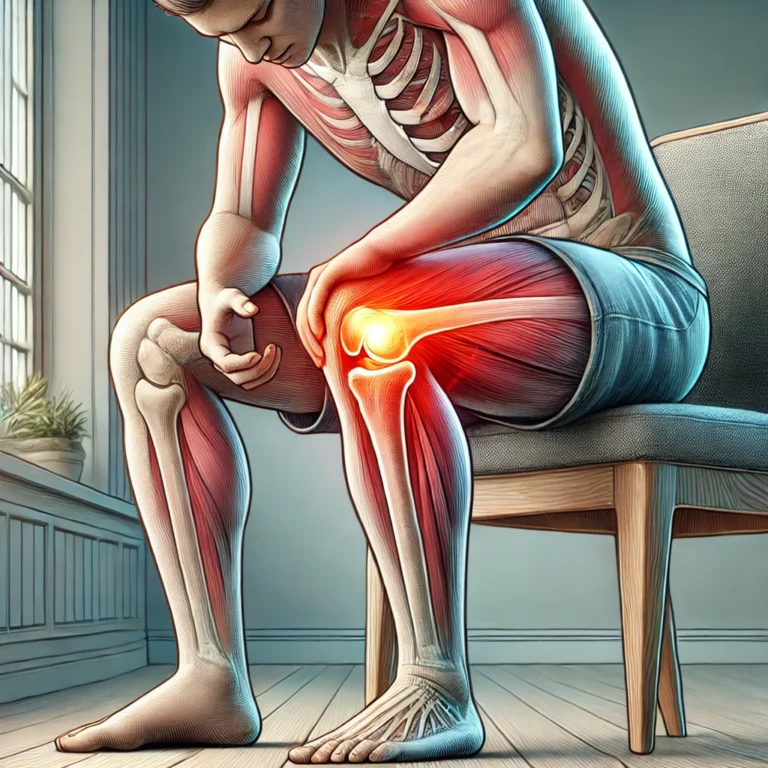
Traveling with knee pain can be challenging, particularly if you have conditions like osteoarthritis. Prolonged periods of sitting during travel can exacerbate knee pain and discomfort. However, with the right strategies and precautions, you can help ease your discomfort and make your journey more enjoyable.
Protective Equipment
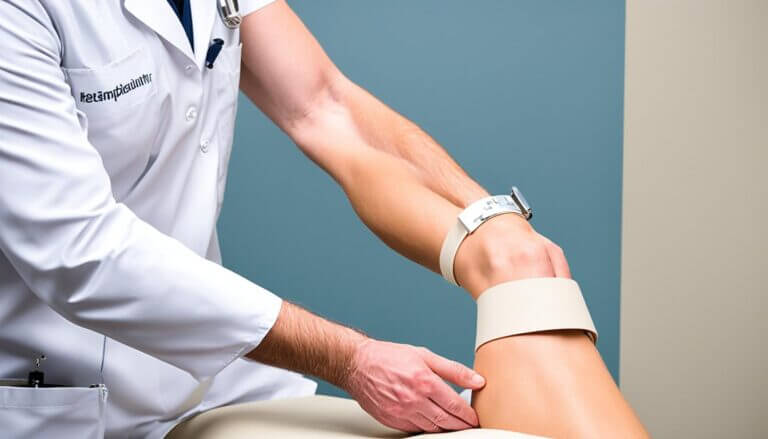
When traveling with knee pain, it’s essential to bring appropriate protective equipment. A knee brace can provide stability and support to your knee joint, reducing strain during prolonged sitting. Compression socks can also help improve circulation and reduce swelling in your legs and feet.
Medical Advice and Medications
Before embarking on your trip, consult with your doctor about your knee pain and discuss appropriate medications or treatments. Your doctor may recommend pain relievers or prescribe specific medications to manage your knee pain while traveling. Follow their advice and ensure you have an adequate supply of any necessary medications.
Dress for Comfort
Choosing the right clothing for your journey can make a significant difference in managing knee pain. Opt for loose-fitting and comfortable clothes that allow for freedom of movement. Avoid tight or restrictive clothing that can interfere with blood circulation and exacerbate pain.
Regular Movement
One of the most important tips for managing knee pain while traveling is to move around regularly. Make an effort to stretch your legs, change positions, and walk up and down the aisle of the plane or train whenever possible. By staying active, you can prevent stiffness and improve blood circulation in your knee joint.
Anti-Inflammatory Foods
Adopting an anti-inflammatory diet can contribute to managing knee pain during travel. Include foods rich in antioxidants and omega-3 fatty acids, such as fruits, vegetables, fish, and nuts, in your meals or snacks. These foods can help reduce inflammation and ease knee pain.
“Traveling with knee pain can be challenging, but with the right strategies, you can have a more comfortable journey.”
Summary of Knee-Friendly Travel Tips
To summarize, here are helpful tips for managing knee pain while traveling:
- Bring protective equipment like a knee brace and compression socks
- Consult with your doctor for appropriate medications and treatments
- Dress in comfortable and loose-fitting clothing
- Maintain regular movement and stretch your legs frequently
- Incorporate anti-inflammatory foods into your diet
| Knee-Friendly Travel Tips | Benefits |
|---|---|
| Use a knee brace | Provides stability and support |
| Wear compression socks | Improves circulation and reduces swelling |
| Consult with your doctor | Ensure appropriate medical advice and medication |
| Choose comfortable clothing | Reduces strain and promotes freedom of movement |
| Maintain regular movement | Prevents stiffness and improves blood circulation |
| Incorporate anti-inflammatory foods | Reduces inflammation and eases knee pain |
By following these knee-friendly travel tips, you can effectively manage your knee pain while traveling and enjoy a more comfortable journey. Remember to consult with your healthcare provider for personalized advice based on your specific condition and needs. Safe and pleasant travels!
Tips for Comfortable Travel with Knee Pain
To ensure a more comfortable journey, there are several strategies you can implement when traveling with knee pain. By following these tips, you can reduce discomfort and make the most of your travel experience.
Protective Equipment
Bringing along protective equipment such as a knee brace and compression socks can provide much-needed support and stability for your knees. These items can help alleviate pain and reduce the risk of further injury during your travels.
Medical Advice
Discussing your knee pain with a healthcare professional is crucial before embarking on your journey. Your doctor can provide personalized recommendations and prescribe medications or treatments that can help alleviate pain. Following their guidance ensures that you have the appropriate strategies in place to manage your knee pain effectively.
Comfortable Clothing and Supportive Shoes
Choosing the right clothing and footwear is essential for comfortable travel with knee pain. Opt for loose-fitting, breathable clothing that allows for easy movement and doesn’t constrict your knees. Consider wearing supportive shoes with good cushioning to absorb shock and reduce strain on your knees.
Stay Active
Maintaining mobility and engaging in light physical activity during your journey can help reduce stiffness and alleviate knee pain. Take frequent breaks to stretch your legs and perform simple exercises that promote blood circulation and joint flexibility. Remember to consult with your healthcare provider before starting any new exercise routine.
Anti-Inflammatory Foods
Consuming a diet rich in anti-inflammatory foods can contribute to joint health and help prevent knee pain. Include foods such as fatty fish, nuts, fruits, vegetables, and whole grains in your meals to reduce inflammation and support overall joint function.
Sample Table:
| Protective Equipment | Medical Advice | Comfortable Clothing and Supportive Shoes | Stay Active | Anti-Inflammatory Foods |
|---|---|---|---|---|
| Bring knee brace and compression socks for support | Consult with a healthcare professional for personalized advice | Choose loose-fitting clothing and supportive shoes | Take regular breaks to stretch and move around | Incorporate anti-inflammatory foods into your diet |

Essential Knee-Friendly Strategies During Flights
When traveling by plane, we understand the importance of prioritizing movement to prevent stiffness and reduce knee pain. Here are some essential knee-friendly travel tips to help you have a comfortable journey:
- Stand up and stretch: To decompress the spine and improve circulation, make sure to stand up and stretch your legs every hour during the flight. This simple act can go a long way in reducing discomfort and promoting better blood flow to your knees.
- Wear comfortable shoes: Opt for comfortable and supportive shoes that provide proper cushioning and stability for your knees. Avoid high heels or shoes with minimal support, as they can worsen knee pain and strain.
- Choose an aisle seat near the bulkhead: Selecting an aisle seat near the bulkhead can give you more legroom and easier access to stretch your legs. This additional space can provide relief for your knees and make it easier for you to move around during the flight.
- Apply cold packs or heat wraps: If you experience sore joints during the flight, applying cold packs or heat wraps can help alleviate pain and inflammation. These simple remedies can provide temporary relief and make your journey more enjoyable.
- Follow a healthy diet: Incorporating anti-inflammatory foods into your diet can help manage knee pain during flights. Opt for foods rich in omega-3 fatty acids, such as salmon and walnuts, and include plenty of fruits and vegetables to promote joint health.
By implementing these knee-friendly strategies during your flights, you can minimize discomfort and make your travel experience more pleasant. Remember, taking care of your knees is essential, and with these tips in mind, you can make the most of your journey.

When traveling by plane, prioritize movement to prevent stiffness and reduce knee pain. Stand up and stretch every now and then, wear comfortable shoes, choose an aisle seat near the bulkhead, apply cold packs or heat wraps for relief, and follow a healthy diet. These strategies can make a significant difference in managing knee pain during flights.
Conclusion
Traveling with knee pain doesn’t have to be distressing. By incorporating these tips into your travel routine, you can reduce discomfort and enjoy a more pleasant journey.
Remember to consult with a healthcare provider for personalized advice if you have chronic knee issues. They can provide specific recommendations tailored to your condition and help you manage your knee pain while traveling.
Whether it’s using protective equipment, dressing comfortably, staying active, or consuming anti-inflammatory foods, these strategies can make a significant difference in relieving knee pain while on the go.
So, the next time you pack your bags, keep these tips in mind to ensure a smoother and more enjoyable travel experience. Safe travels!
FAQ
How can I manage knee pain while traveling?
To manage knee pain while traveling, it’s important to bring protective equipment such as a knee brace and compression socks. Discussing medications and treatments with your doctor can also help alleviate pain. Dressing in comfortable clothing and supportive shoes can reduce strain on your knees. Moving around regularly and engaging in light physical activity can help reduce stiffness and pain. Consuming anti-inflammatory foods can also lower the risk of joint pain.
What can I do to prevent knee pain during flights?
When traveling by plane, it’s important to prioritize movement to prevent stiffness and reduce knee pain. Standing up and stretching your legs every hour can decompress the spine and improve circulation. Wearing comfortable and supportive shoes can provide better knee support. Opting for an aisle seat near the bulkhead allows for more legroom and easier access to stretch your legs. Applying cold packs or heat wraps can provide relief for sore joints during the flight. Additionally, following a healthy diet and avoiding inflammatory foods can help manage knee pain during flights.
How can I make my journey more comfortable with knee pain?
To make your journey more comfortable with knee pain, it’s important to be prepared and take steps to manage your discomfort. Consider bringing protective equipment such as a knee brace and compression socks. Discussing medications and treatments with your doctor can help alleviate pain. Dress in comfortable clothing and supportive shoes to reduce strain on your knees. Regularly move around and engage in light physical activity to reduce stiffness and pain. Consuming anti-inflammatory foods can also lower the risk of joint pain.
What are some tips for traveling with arthritis?
When traveling with arthritis, it’s important to take steps to manage your discomfort. Some tips include bringing protective equipment like a knee brace and compression socks, discussing medications and treatments with your doctor, dressing in comfortable clothing and supportive shoes, moving around regularly, and consuming anti-inflammatory foods. These tips can help alleviate pain and ensure a more comfortable journey.


One Comment