13102

Efficacy of ultrasound versus shortwave diathermy in the treatment of chronic low back pain in patients with lumbar disc herniation: a prospective randomized control trial BMC Sports sciences, medicine and rehabilitation


  • Meucci RD, Fassa AG, Faria NM. Prevalence of chronic low back pain: systematic review. Rev. Saude Publica. 2015;49:1. https://doi.org/10.1590/S0034-8910.2015049005874.

    Article PubMed PubMed Central Google Scholar

  • Ay S, Evcik D. Depression and quality of life in patients with chronic low back pain. Department of Physical Medicine and Rehabilitation. Ankara New Medical Journal. 2008; 25:228–31.

    Google Scholar

  • Bogduk N. On the definitions and physiology of back pain, referred pain and radicular pain. Pain. 2009;147(1–3):17–9. https://doi.org/10.1016/j.pain.2009.08.020.

    Article PubMed Google Scholar

  • van Tulder M, Becker A, Bekkering T, Breen A, del Real MTG, Hutchinson A, Bart Koes B, Laerum E, Malmivaara A. Chapter 3 European guidelines for the treatment of acute non-specific low back pain in primary care. Eur Spine J. 2006; 15:169–91. https://doi.org/10.1007/s00586-006-1071-2.

    Article Google Scholar

  • Hayden JA, Ellis J, Ogilvie R, Malmivaara A, van Tulder MW. Exercise therapy for chronic low back pain. Cochrane Database System Rev. 2021;28(9):CD009790. https://doi.org/10.1002/14651858.CD009790.pub2.

    Article Google Scholar

  • Allen RJ. Physical agents used by physiotherapists in the treatment of chronic pain. Phys Med Rehabil Clin N Am. 2006; 17:315–45. https://doi.org/10.1016/j.pmr.2005.12.007.

    Article PubMed Google Scholar

  • Qaseem A, Wilt TJ, McLean RM, Forciea MA, Clinical Guidelines Committee of the American College of Physicians, Denberg TD, Barry MJ, Boyd C, Chow RD, Fitterman N, Harris RP, Humphrey LL, Vijan S. Noninvasive treatments for Acute, Subacute, and Chronic Low Back Pain: A Clinical Practice Guideline from the American College of Physicians. Ann Intern Med. 2017;166(7):514–30. https://doi.org/10.7326/M16-2367.

    Article PubMed Google Scholar

  • KramerJF. Ultrasound: evaluation of its mechanical and thermal effects. Arch Phys Med Rehabilitation. 1984; 65:223–7.

    CAS PubMed Google Scholar

  • Maxwell L. Therapeutic ultrasound: its effects on the cellular and molecular mechanisms of inflammation and repair. Physiotherapy. 1992; 78:421–6. https://doi.org/10.1016/S0031-9406(10)61528-3.

    Article Google Scholar

  • Kitchen S, Partridge C. Review of continuous and pulsed shortwave diathermy patterns. Physiotherapy. 1992; 78:243–52. https://doi.org/10.1016/S0031-9406(10)61434-4.

    Article Google Scholar

  • Unlu Z, Tasci S, Tarhan S, Pabuscu Y, Islak S. Comparison of 3 physiotherapy modalities for acute pain in lumbar disc herniation measured by clinical evaluation and magnetic resonance imaging. J Manipulative physiotherapy. 2008;31(3):191–8. https://doi.org/10.1016/j.jmpt.2008.02.001.

    Article Google Scholar

  • Ebadi S, Henschke N, Forogh B, Nakhostin Ansari N, van Tulder MW, Babaei-Ghazani A, Fallah E. Therapeutic ultrasound for chronic low back pain. Cochrane Database System Rev. 2020;7(7):CD009169. https://doi.org/10.1002/14651858.CD009169.pub3.

    Article PubMed Google Scholar

  • Seco J, Kovacs FM, Urrutia G. The efficacy, safety, effectiveness and cost-effectiveness of ultrasound and shock wave therapies for low back pain: a systematic review. Rug J 2011;11:966–77. https://doi.org/10.1016/j.spinee.2011.02.002.

    Article PubMed Google Scholar

  • Kreiner DS, Hwang SW, Easa JE, Resnick DK, Baisden JL, Bess S, Cho CH, DePalma MJ, Dougherty P 2nd, Fernand R, et al. North American Spine Society. An evidence-based clinical guideline for the diagnosis and treatment of lumbar disc herniation with radiculopathy. Rug J 2014;14(1):180–91. https://doi.org/10.1016/j.jmpt.2008.02.001.

    Article PubMed Google Scholar

  • Chapman JR, Norvell DC, Hermsmeyer JT, Bransford RJ, DeVine J, McGirt MJ, Lee MJ. Evaluation of common outcomes for measuring treatment success for chronic low back pain. Spine. 2011;36:S54–68. https://doi.org/10.1097/BRS.0b013e31822ef74d.

    Article PubMed Google Scholar

  • Chiarotto A, Maxwell LJ, Terwee CB, Wells GA, Tugwell P, Ostelo RW. Roland-Morris Disability Questionnaire and Oswestry Disability Index: which has better measurement properties for measuring physical functioning in non-specific low back pain? Systematic review and meta-analysis. Phys Ther. 2016;96(10):1620–37. https://doi.org/10.2522/ptj.20150420.

    Article PubMed Google Scholar

  • Yakut E, Düger T, Oksüz C, Yörükan S, Ureten K, Turan D, Frat T, Kiraz S, Krd N, Kayhan H, Yakut Y, Güler C. Validation of the Turkish version of the Oswestry Disability Index for patients with low backache. Spine. 2004;29(5):581–5.

    Article PubMed Google Scholar

  • True JEJ, Sherbourne CD. The MOS 36-item short health survey (SF-36). I. Conceptual framework and item selection. Medical care. 1992;30:473–83.

    Article PubMed Google Scholar

  • Demiral Y, Ergor G, Unal B, Semin S, Akvardar Y, Kivircik B, Alptekin K. Normative data and distinctive properties of short form 36 (SF-36) in Turkish urban population. BMC Public Health. 2006;6:247.

    Article PubMed PubMed Central Google Scholar

  • Ansari NN, Ebadi S, Talebian S, Naghdi S, Mazaheri H, Olyaei G, Jalaie S. A randomized, single-blind, placebo-controlled clinical trial of the effect of continuous ultrasound on low back pain. Electromyogr Clin Neurophysiol. 2006;46(6):329–36.

    CAS PubMed Google Scholar

  • Saghaei M. Random assignment software for parallel-group randomized trials. BMC Med Res Method. 2004;4:26. https://doi.org/10.1186/1471-2288-4-26.

    Article PubMed PubMed Central Google Scholar

  • Schulz KF, Altman DG, Moher D, CONSORT group. CONSORT 2010 Statement: Updated Guidelines for Reporting Randomized Parallel Group Trials. BMJ. 2010;2010(340):332. https://doi.org/10.1136/bmj.c332.

    Article Google Scholar

  • Robertson VJ, Baker KG. A review of therapeutic ultrasound: effectiveness studies. Phys Ther. 2001;81(7):1339–50.

    Article CAS PubMed Google Scholar

  • Miller DL, Smith NB, Bailey MR, Czarnota GJ, Hynynen K, Makin IR. Bioeffects Committee of the American Institute of Ultrasound in Medicine. Overview of therapeutic ultrasound applications and safety considerations. J Echo Med. 2012;31(4):623–34. https://doi.org/10.7863/jum.2012.31.4.623.

    Article PubMed PubMed Central Google Scholar

  • Noori SA, Rasheed A, Aiyer R, Jung B, Bansal N, Chang KV, Ottestad E, Gulati A. Therapeutic ultrasound for pain management in chronic low back pain and chronic neck pain: a systematic review. Pain Med. 2020;7(21):1482–93. https://doi.org/10.1093/pm/pny287.

    Article Google Scholar

  • Haile G, Hailemariam TT, Haile TG. Effectiveness of ultrasound therapy in the treatment of chronic nonspecific low back pain: a systematic review. J Pain Res. 2021;14:1251–7. https://doi.org/10.2147/JPR.S277574.

    Article PubMed PubMed Central Google Scholar

  • Goats GC. Continuous shortwave diathermy (radio frequency). Br J Sports Med. 1989;23(2):123–7. https://doi.org/10.1136/bjsm.23.2.123.

    Article CAS PubMed PubMed Central Google Scholar

  • Benincá IL, de Estéfani D, Pereira de Souza S, Weisshahn NK, Haupenthal A. Tissue heating in different shortwave diathermy methods: a systematic review and narrative synthesis. J Bodyw Mov Ther. 2021;28:298–310. https://doi.org/10.1016/j.jbmt.2021.07.031.

    Article PubMed Google Scholar

  • Dos Reis do Nascimento DM, Raab FGC, Silva GLH, de Andrade AM, Ferreira PML, Silveira GAR, Brandt de Macedo AC. Immediate analgesic effect of two forms of short-wave diathermy in chronic low back pain: study protocol for a randomized controlled trial. Pain management. 2022;12(2):131–9. https://doi.org/10.2217/pmt-2021-0026.

    Article CAS PubMed Google Scholar

  • Abdulla FA, Alsaadi S, Sadat-Ali M, Alkhamis F, Alkawaja H, Lo S. Effects of pulsed low-frequency magnetic field therapy on pain intensity in patients with chronic low back musculoskeletal pain: study protocol for a randomized double-blind placebo-controlled trial. BMJ opened. 2019;9(6):e024650. https://doi.org/10.1136/bmjopen-2018-024650.

    Article PubMed PubMed Central Google Scholar

  • Shields N, Gormley J, O’Hare N. Shortwave diathermy: a review of existing clinical trials. Phys Ther Rev. 2001;6(2):101–18. https://doi.org/10.1002/pri.259.

    Article Google Scholar

  • Paladini LH, Almeida N, Korelo RIG, Michel de Macedo R, Guarita-Souza LC, Zotz TGG, Brandt de Macedo AC. Shortwave therapy in patients with chronic low back pain: a systematic review. Column/Column. 2020;19(3):218–22. https://doi.org/10.1590/S1808-185120201903219301.

    Article Google Scholar

  • Karasel S, Oncel S, Sonmez I. The effect of shortwave diathermy and exercise on depressive feelings in patients with chronic low back pain. Med Arch. 2021;75(3):216–20. https://doi.org/10.5455/medarh.2021.75.216-220.

    Article PubMed PubMed Central Google Scholar

  • Shakoor MA, Rahman MS, Moyeenuzzaman M. Effects of deep heat therapy on patients with chronic low back pain. Mymensingh Med J. 2008;17(2):32–8.

    Google Scholar

Source link

Medical disclaimer: This article is for general information only and is not medical advice, diagnosis or treatment. Always talk to your doctor or a qualified health professional about knee pain or an injury. Get urgent care for severe pain, a knee you cannot put weight on, sudden major swelling, or a hot, red knee with fever. Read our full disclaimer.
Mokhtar Sahraoui

About the author: Mokhtar Sahraoui

Mokhtar Sahraoui is the founder and editor of Knee Hurt. He researches and writes practical, easy-to-understand guides on knee pain, knee injuries, arthritis and recovery, based on trusted medical sources. Knee Hurt articles are general information and are not a substitute for advice from your doctor or physical therapist.
Similar Posts

  • |

    New research further confirms the benefits of exercise for bone health

      A new study has linked physical activity levels to several key health indicators, including bone mineral density and body fat percentage. In this article we delve into the details of this research. You’ll learn what these results mean for savers and how you can use them to build stronger bones and a longer, more…

  • Celebrate bone health at “Our Virtual Table” – Bone Talk

    As the holidays approach, we enjoy getting together. While the festivities bring joy, they also provide an opportunity to focus on our health, especially the health of our bones. Welcome to ‘Our Virtual Table’, where we celebrate the season with good food and a commitment to taking care of our bodies. The basics: nutrition for…

  • Best ice machine for knee surgery (Game Ready, Polar Care)

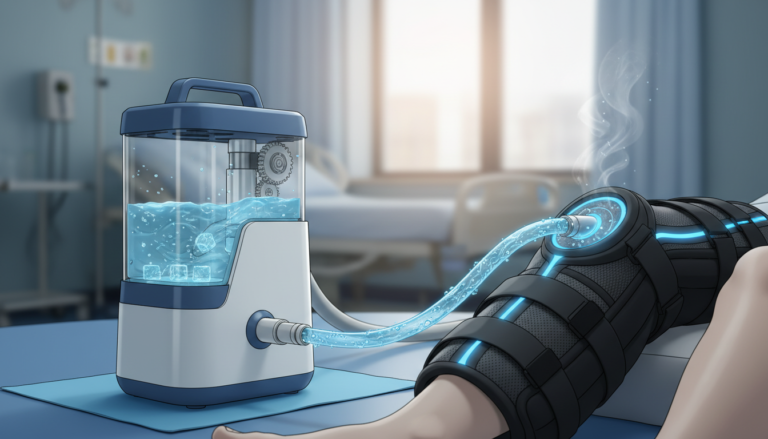
    What if you could recover from knee surgery with less pain and fewer medications? This question is at the heart of modern post-operative care. Managing discomfort and swelling is a major challenge after an orthopedic procedure. cold therapy system Cold therapy offers a powerful, drug-free solution. It is a non-invasive method to control inflammation and pain directly at the source. Specialized units deliver consistent cooling to the affected area. This can significantly reduce the need for strong painkillers during the critical healing phase. We have thoroughly examined the market of recovery tools. Our guide focuses on leading systems, including various Breg Polar Care models and the Game Ready unit. Our goal is to help you navigate your options. You can find a system that fits your needs and supports a smoother, more comfortable recovery at home. Key Takeaways Cold therapy is a proven, drug-free method to manage pain and swelling after surgery. Using a dedicated cooling unit can help reduce reliance on narcotic pain medication. Popular systems like the Breg Polar Care line come in several models, such as the Cube, Kodiak, Glacier, and Wave. Game Ready is a leading unit that combines cold therapy with adjustable compression. Always consult your healthcare provider to ensure this therapy is right for your specific procedure. Selecting the right device involves considering your budget and recovery goals. Effective, consistent cooling can greatly improve comfort and outcomes during the healing process. Introduction to Knee Surgery Recovery and Cold Therapy Successfully navigating the first weeks post-surgery hinges on a structured recovery strategy. This plan must prioritize managing two key issues: discomfort and inflammation. This is where cold therapy, also called cryotherapy, becomes essential. It involves applying controlled cooling to the surgical area to reduce inflammation. After a procedure, fluid often accumulates in the joint. This swelling, known as edema, increases pressure and causes significant pain. The therapy works by constricting blood vessels. This action helps limit the amount of fluid and blood pooling at the injury site. Many surgeons now recommend a dedicated cooling device. These units provide consistent, targeted cold therapy that is far more effective than basic ice packs. Reducing swelling early is crucial. It directly supports efforts to regain a full range of motion in the knee during rehabilitation. Healthcare providers often prescribe this therapy as a safe alternative to stronger pain medications. Patients should always combine its use with specific exercise advice from a physiotherapist. This promotes healthy blood flow and ensures optimal healing. How Cold Therapy Works in Reducing Swelling and Pain Cold therapy targets the root causes of post-operative discomfort through a simple yet powerful process. It directly addresses the inflammation and pain that hinder healing. Mechanism of Action in Cold Therapy The primary mechanism involves using cold water to constrict blood vessels. This reduces blood flow and inflammation in the affected area. A dedicated unit provides a continuous, even distribution of this chilled liquid. It maintains a steady cold temperature for many hours. cold therapy mechanism Advantages Over Traditional Ice Packs Basic ice packs warm up quickly due to body heat. Their effectiveness diminishes within minutes. In contrast, a motorized therapy system eliminates frequent trips to the freezer. Its large, insulated reservoir ensures prolonged cooling. Specialized pads are designed for specific body parts. They deliver targeted cold therapy exactly where needed. This approach prevents the condensation issues of melting ice packs. It keeps the surgical site clean and dry, enhancing comfort and hygiene. Overview of Cold Therapy Devices for Post-Surgical Recovery The market offers two primary types of cold therapy units, each with distinct mechanisms and benefits. Selecting the right one depends on your mobility, budget, and recovery goals. We categorize these devices into gravity-fed and motorized systems. This helps you understand which technology best suits your specific needs. Types of Devices: Motorized and Gravity-Fed Systems Gravity-fed devices, like the Aircast Cryo/Cuff, use elevation to circulate water without a motor. They are cost-effective and portable. The simple physics of elevation moves chilled liquid through the pad. Motorized systems provide constant recirculation of cold water between a cooler and the pad. This is ideal for patients with limited mobility after a procedure. Brands like Breg Polar Care circulate water directly for efficient cooling. The DonJoy IceMan series uses dual pump technology for a comfortable temperature. Some advanced therapy units, such as the Ossur Cold Rush, feature an adjustable flow dial. This allows patients to customize their experience. Understanding these mechanical differences is key before making a purchase. Both types deliver effective cold therapy, but their operation varies. Key Features to Consider When Purchasing an Ice Machine Several practical factors determine how well a cold therapy machine will serve you at home. The right features enhance both effectiveness and convenience during your healing period. Consistency, Coverage, and Temperature Control Look for a unit that maintains a steady cold temperature. Consistent cooling is vital for safe, prolonged sessions. Good coverage means the pad fits your joint properly. This ensures the therapy reaches all affected areas. Adjustable controls let you fine-tune the intensity. This prevents skin irritation while maximizing comfort. cold therapy…

  • |

    Reducing hamstring injuries is at the heart of a good injury prevention program

      Effectiveness of injury prevention programs with core muscle strengthening exercises to reduce the incidence of hamstring injuries in football players: a systematic review and meta-analysis. Al Attar WSA and Husain MA. Sports Health. 2023 [Epub Ahead of Print]. Full text freely available Take home message Injury prevention programs with core muscle strengthening exercises reduce…

  • Fibromyalgia Quiz | Signs, Symptoms & Treatments – AOTC Jax

    At Arthritis and Osteoporosis Treatment Center, we are committed to the compassionate treatment of all patients. That’s why, this Fibromyalgia Awareness Month, we want to help you learn the signs, symptoms, and available treatment options for this condition. Take our fibromyalgia test below and don’t forget to consult our doctors for the best, personalized care….

  • |

    College athletes experience worse outcomes after injury due to concussions suffered outside of sport

    Researchers at the Children’s Hospital of Philadelphia (CHOP) found that college athletes had worse outcomes after injury due to concussions suffered outside of sports than those they experienced while playing sports. In addition, female athletes who sustained their injuries outside of exercise had more severe symptoms and more sports days lost due to injuries than…

2 Comments

Leave a Reply

Your email address will not be published. Required fields are marked *