
soccer competition game women preview
|

Reducing hamstring injuries is at the heart of a good injury prevention program


Effectiveness of injury prevention programs with core muscle strengthening exercises to reduce the incidence of hamstring injuries in football players: a systematic review and meta-analysis.

Al Attar WSA and Husain MA. Sports Health. 2023 [Epub Ahead of Print].

Full text freely available

Take home message

Injury prevention programs with core muscle strengthening exercises reduce the risk of hamstring injuries in football players.

Background

Football players are at risk for many lower limb injuries, especially hamstring injuries. Many researchers have shown that injury prevention programs, which often include core muscle strengthening exercises, can reduce the risk of lower extremity injuries. However, it remains unclear whether injury prevention programs that include core muscle strengthening exercises effectively reduce the risk of hamstring injuries.

Study aim

The researchers completed a systematic review and meta-analysis to investigate whether an injury prevention program, including core strengthening exercises, reduces the number of hamstring injuries.

Methods

Researchers conducted an extensive literature review of randomized clinical trials involving (1) injury prevention training programs that included core strengthening exercises, (2) an outcome measure for the number of hamstring injuries, (3) a control comparison, and (4) football players of any type. level. Two researchers evaluated the risk of bias among the included studies.

Results

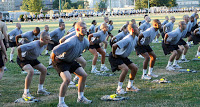
The authors analyzed five studies. One study was a randomized controlled trial, while the others were cluster randomized controlled trials. Each trial included 209 to 1,892 participants, for a total of 4,485 participants across all studies. Participants completed the injury prevention programs for 10 weeks to 8 months and had compliance rates ranging from 21% to 91%. Three of the five studies were considered to be at low risk of bias. Across all studies, 171 hamstring injuries were recorded during 379,102 exposures. Overall, completing an injury prevention training program that included core strengthening exercises (e.g. FIFA 11+) resulted in a 47% reduction in hamstring injuries compared to the control group (typically a standard warm-up program).

Viewpoints

Overall, this study supports the implementation of an injury prevention program involving core muscle strengthening exercises to reduce the risk of hamstring injuries in football players. Although this finding is useful to many physicians, gaps remain. For example, the low number of studies that met the inclusion criteria limits our confidence in the results. For example, although we estimate that these prevention programs reduce the risk of hamstring injuries by 47%, we can only be confident that the actual risk reduction likely ranges from 2% to 72%. More studies and a larger sample size would help us better understand how effective these programs are in reducing the risk of hamstring injuries. The studies also did not use identical interventions. While this may frustrate some people because we can’t say we have to do this specific program, it can also reassure us that we may have some flexibility to customize programs for each team and still experience the benefits. Ultimately, injury prevention programs that include core strengthening exercises are low risk and low cost and can help reduce the risk of injuries, especially hamstring injuries.

Clinical implications

Clinicians should encourage football teams to use injury prevention training programs that include core muscle strengthening exercises. These programs are often low riskcheapand completed in less than 15 minutes.

Questions for discussion

What do you look for when evaluating injury prevention programs for implementation? Have you specifically looked for core strengthening in the past? Why or why not?

Written by Kyle Harris
Reviewed by Jeffrey Driban

related posts

Exercises that target specific hamstring muscle groups
Clinical Findings Triumph baseline MRI findings in predicting hamstring re-injury shortly after return to play
Another feather in the cap of the FIFA 11+ Injury Prevention Program
FIFA 11+ reduces the risk of injuries for football players

9 EBP CEU courses

Source link

Medical disclaimer: This article is for general information only and is not medical advice, diagnosis or treatment. Always talk to your doctor or a qualified health professional about knee pain or an injury. Get urgent care for severe pain, a knee you cannot put weight on, sudden major swelling, or a hot, red knee with fever. Read our full disclaimer.
Mokhtar Sahraoui

About the author: Mokhtar Sahraoui

Mokhtar Sahraoui is the founder and editor of Knee Hurt. He researches and writes practical, easy-to-understand guides on knee pain, knee injuries, arthritis and recovery, based on trusted medical sources. Knee Hurt articles are general information and are not a substitute for advice from your doctor or physical therapist.

Similar Posts

  • |

    Study reveals link between contact sports participation and parkinsonism in individuals with chronic traumatic encephalopathy

    The largest study of CTE to date has found a new link between contact sports participation, chronic traumatic encephalopathy (CTE) and the development of a movement disorder known as parkinsonism. The study of 481 deceased athletes by researchers from Boston University Chobanian and Avedisian School of Medicine and VA Boston Healthcare, published today in JAMA…

  • |

    Coach the coach, make ACL injury prevention programs stick!

      Coach training improves adherence to anterior cruciate ligament injury prevention programs: a cluster randomized controlled trial. Clinical Journal of Sports Medicine Ling, Daphne I; Boyle, Caroline; Schneider, Brandon; Janosky, Joseph; Childservant, James; Marx, Robert G. Clin J Sport Med. July 2022 – Part 32 – Number 4 – p. 348-354. doi: 10.1097/JSM.0000000000000936 Free article…

  • | |

    Record Number of Midwestern Orthopedics at RUSH Physicians Named to Chicago Magazine’s “TOP DOCS” List

      CHICAGO , Nov. 2, 2023 /PRNewswire/ — A record 15 Midwest Orthopedics physicians at RUSH (MOR) were named to Chicago Magazine’s “Top Docs” list. The “Top Docs” list, compiled by Castle Connelly, a physician-led healthcare research and information company, features Chicago-area physicians selected by their peers. The MOR physicians on this list are Drs….

  • |

    Catalyst OrthoScience announces Amy Ables, Ph.D. as Chief Strategy Officer

      NAPLES, FL, November 20, 2023–(BUSINESS WIRE)–Catalyst OrthoScience Inc. (Catalyst), a medical device company focused on the upper extremity orthopedics market, has appointed Amy Ables, Ph.D. as the organization’s Chief Strategy Officer, effective immediately. “The board and I are pleased that an executive with the experience and leadership of Dr. Ables is joining our team…

  • |

    Best knee scooter post-surgery

    Is hopping around on one leg or battling clumsy crutches the only way to get through recovery after a foot or ankle procedure? For many, traditional crutches are a source of frustration and fatigue. They demand considerable arm strength and often lead to instability. This can make you feel trapped and dependent on others. best knee scooter post-surgery There is a more comfortable and popular solution. Studies show that 90 percent of patients prefer using a knee scooter over crutches during their healing period. Occupational therapists highlight a key benefit: these aids keep your injured foot correctly elevated and non-weight bearing. This proper positioning is vital for a smooth recovery. We’ve done the research for you. Our analysis of the current market identifies devices that provide superior mobility and comfort compared to old-fashioned methods. Selecting the right walker helps you maintain your independence. It allows for safer movement around your home and community. A sturdy, well-designed walker is a much more stable alternative to risky hopping. Our expert-driven guide reviews the leading models available. The goal is to help you find reliable equipment that protects your leg while letting you continue with daily life. Key Takeaways The vast majority of patients prefer knee scooters to traditional crutches for recovery. These devices properly elevate the leg, which is essential for non-weight bearing healing. They promote greater independence and reduce reliance on others during your recovery. Choosing a high-quality model significantly improves safety and overall comfort. Our guide provides an expert analysis of the top mobility aids on the market today. A stable walker minimizes the risk of falls and accidental weight-bearing. Informed selection helps you navigate your environment with confidence and ease. Understanding Knee Scooters in Post-Surgery Recovery Patients seeking a stable alternative to crutches frequently turn to rolling walkers with a knee platform. This device, often called a knee scooter or knee walker, has two to five wheels and a padded rest for your leg. It is designed to keep your injured foot correctly elevated. This positioning is completely non-weight bearing, which is vital for healing. Unlike traditional crutches, a knee walker does not demand much arm strength. You simply rest your leg on the cushioned platform and propel yourself forward. This reduces physical exertion dramatically during daily movement. Occupational therapists note an overwhelming patient preference for this mobility aid. We have found that nearly 90 percent of users prefer it over other options. The design helps prevent reinjury caused by balance struggles. Feature Knee Scooter/Walker Traditional Crutches Weight-Bearing Non-weight bearing, leg elevated Partial weight on arms and shoulders Upper Body Strain Minimal; uses leg for support High; requires arm strength Hands-Free Operation Yes; handlebars for steering No; hands occupied Stability on Flat Surfaces Very stable with multiple wheels Less stable; two points of contact Risk of Reinjury Low; proper leg positioning Higher; balance challenges These devices are essential for maintaining independence. They allow you to perform household tasks while your injury heals. By keeping your hands free, a knee scooter lets you carry items and engage in daily life more effectively. Benefits of Using Knee Scooters Over Crutches The journey to regain mobility after surgery doesn’t have to be a struggle against discomfort and instability. While traditional crutches are less expensive, they frequently cause pain and balance issues for active individuals. A knee walker provides a stable base for movement. It allows you to navigate both indoors and outdoors without the constant fatigue linked to crutches. benefits of knee scooter over crutches Occupational therapists emphasize that a knee scooter is a superior choice if you lack upper body strength. Using this device greatly lowers your chance of a fall compared to balancing on underarm crutches. These aids offer a level of freedom that lets you spend time outside. This activity is proven to speed up the healing process. Choosing the right knee walker ensures you can maintain your daily routine. You avoid the physical limits imposed by standard crutches. A quality knee scooter supports your injured leg correctly, promoting safer recovery….

  • |

    Running and physiotherapy; Why runners should seek the expertise of a PT

      by Danielle Dupont, PT, DPT, RRS, NASM-CNC – North Central Phoenix Whether you’re a seasoned marathon runner or just starting your fitness journey, running and physical therapy can play a crucial role in optimizing your performance. PT can also help prevent injuries and promote overall well-being. Top 10 Reasons Why Runners Should Seek a…

One Comment

Leave a Reply

Your email address will not be published. Required fields are marked *