Empowering patients across our community with professional-grade tools to track joint health, manage osteoarthritis, and accelerate recovery from knee injuries.
Understanding Clinical Knee Assessments
When you are dealing with chronic knee pain or recovering from an acute injury, “feeling better” is a subjective term that can be difficult to communicate to your healthcare provider. In the medical world, specialists use Patient-Reported Outcome Measures (PROMs) to turn your experience into objective data. Two of the most respected tools in orthopedics are the WOMAC and KOOS scores.
At Knee Hurt, we believe that education is the first step toward overcoming physical limitations. By using these self-assessment tools, you can establish a baseline for your functional mobility and track how treatments—ranging from physical therapy to advanced medical therapies—are impacting your daily life.
The WOMAC Index: The Gold Standard for Osteoarthritis
The Western Ontario and McMaster Universities Osteoarthritis Index (WOMAC) is a widely used, proprietary set of standardized questionnaires used by health professionals to evaluate the condition of patients with osteoarthritis of the knee and hip. It specifically targets three main areas:
1. Pain (5 Items)
Assesses pain during walking, stair climbing, at night while in bed, resting, and weight-bearing. This helps determine how inflammation impacts your comfort levels.
2. Stiffness (2 Items)
Evaluates morning stiffness and stiffness occurring later in the day. This is often a key indicator for rheumatoid arthritis and other inflammatory conditions.
3. Physical Function (17 Items)
The most comprehensive section, looking at your ability to perform activities of daily living (ADL), such as using stairs, rising from sitting, standing, bending, and shopping.
Clinical Fact: While WOMAC is the “gold standard” for elderly populations, younger or more active patients may find it has a “ceiling effect,” meaning it might not accurately capture the limitations they feel during high-impact sports.
The KOOS Score: For Injuries and Active Lifestyles
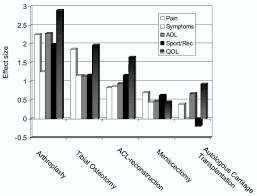
The Knee Injury and Osteoarthritis Outcome Score (KOOS) was developed as an extension of the WOMAC specifically to be more responsive to younger, more active individuals with knee injuries. Whether you are recovering from an ACL tear or a meniscus injury, the KOOS provides a deeper look into your recovery.
The Five Subscales of KOOS
- Pain: Similar to WOMAC, assessing frequency and intensity.
- Symptoms: Looking at mechanical issues like clicking, catching, or limited range of motion.
- Activities of Daily Living (ADL): How the knee affects your basic mobility.
- Sport and Recreation Function: This is unique to KOOS, assessing higher-level tasks like squatting, running, jumping, and pivoting.
- Knee-Related Quality of Life (QOL): Measuring the psychological impact and how much you “trust” your knee.
Research suggests that the QOL subscale is often the most sensitive to long-term improvement after surgery, making it vital for anyone following a specialized training program.
Why Choose a Self-Assessment in Our Service Area?
Residents in our local region often face long wait times for specialist consultations. By performing a Clinical Knee Function Score self-assessment at home, you provide your local physician or physical therapist with high-quality data from the very first appointment. This “local first” approach to data-driven health management ensures that your specific needs are addressed quickly and accurately.
Whether you are dealing with the hormonal impacts on arthritis or the aftermath of a local sporting injury, these scores bridge the gap between your daily pain and clinical treatment plans.
Local Benefits of Tracking Your Score:
- Personalized Treatment: Helps local doctors move toward personalized treatment approaches tailored to your mobility level.
- Pre-Surgical Baseline: Established data points if you are considering surgery at regional hospitals.
- Progress Tracking: Visual proof that your rehabilitation or prescribed therapies are working.
How to Interpret Your Results
Understanding the numbers is just as important as taking the test. For the KOOS and many “normalized” WOMAC assessments, the scale runs from 0 to 100.
Score: 100
Represents “perfect” knee health with no symptoms, no pain, and full functional mobility.
Score: 0
Represents extreme knee problems, complete lack of function, and significant daily pain.
The Minimal Clinically Important Difference (MCID)
In clinical practice, a change in your score is only “meaningful” if it crosses a certain threshold. Usually, a change of 8 to 10 points is required for a patient to actually perceive a significant improvement or decline in their quality of life. Tracking these small shifts can help identify if a specific inflammatory subtype is affecting your recovery speed.
Frequently Asked Questions
Is a higher score better or worse?
For the KOOS, a 100 is the best possible score (no symptoms). For a traditional WOMAC, 0 is often considered “best” (no pain), but most modern versions normalize the score to 100 so that a higher number always equals better health to avoid confusion.
How long does the assessment take?
A full KOOS assessment typically takes 10–15 minutes, while a standard WOMAC takes about 5–10 minutes. Short-form versions like the KOOS-12 can be completed in under 5 minutes.
Can this score tell me if I need a knee replacement?
No. These scores measure your subjective experience. While surgeons use them to understand your functional limitations, they also rely on imaging like X-rays or MRIs to see physical joint damage before recommending surgery.
Which test is right for me?
If you are over 65 and your main concern is chronic stiffness and “wear and tear,” use the WOMAC. If you are younger, active in sports, or have had a specific injury like a ligament tear, the KOOS is much more accurate for your needs.
How often should I retake the assessment?
Most clinicians recommend retaking the score every 4 to 6 weeks while undergoing a new treatment or rehabilitation program to track progress effectively.
The Importance of Professional Guidance
While self-assessments are powerful, they are not a substitute for a clinical diagnosis. Conditions like idiopathic inflammatory myopathies or crystal arthritis require blood work and professional analysis. Use your WOMAC and KOOS scores as a communication tool to help your doctor understand the severity of your daily struggle.
For more in-depth information on managing your symptoms, visit our comprehensive guide to overcoming knee pain.
Take the First Step Toward Better Mobility
Don’t let knee pain define your lifestyle. Use our educational resources to understand your function, then consult with a local specialist to create your recovery plan.