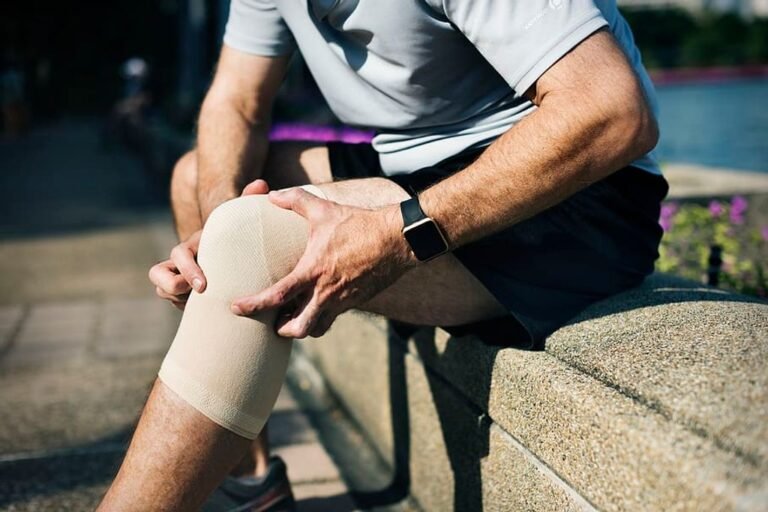
Knee pain causes:osteoarthritis, rheumatoid injuries, bursitis, tendonitis,ligament sprains.
Knee pain can really change how we live, making simple steps hard and stopping us from doing what we love. But what’s causing this pain, and how can we fix it1? Let’s look into the surprising reasons behind knee pain and find ways to ease it.
Osteoarthritis, rheumatoid arthritis, and injuries like torn ligaments or tendinitis are big reasons for knee pain1. Gout, caused by too much uric acid, can also make knees hurt a lot2. Even things like loose parts or a kneecap that’s out of place can cause pain1.
Key Takeaways
- Knee pain can be caused by many things, like arthritis, injuries, and mechanical issues.
- Osteoarthritis, rheumatoid arthritis, and sprained ligaments are top reasons for knee pain.
- Sports like basketball, soccer, and running can make knee injuries and pain more likely.
- Staying strong and flexible can help lower the chance of knee problems.
- Treatments for knee pain include medicines, physical therapy, and sometimes surgery.
Understanding the Different Causes of Knee Pain
The knee joint is key to our daily activities. It’s made up of bones, ligaments, and fluid-filled sacs that help it work smoothly3. When these parts don’t work together right, it can cause pain. The main causes are usually osteoarthritis and rheumatoid arthritis.
Arthritis: Osteoarthritis and Rheumatoid Arthritis
Osteoarthritis happens when the cartilage in the knee wears out over time4. This can lead to bone rubbing against bone, causing pain and stiffness. Rheumatoid arthritis is an autoimmune disorder that also affects the knee, causing inflammation and cartilage damage4.
Both types of arthritis can cause knee pain, but they have different causes and effects. Knowing the differences helps in finding the right treatment34.
Spotting and treating knee arthritis early can make a big difference in someone’s life. Doctors use tests like X-rays and MRIs to figure out the best treatment4. This might include physical therapy, medicine, or surgery for severe cases3.
| Osteoarthritis | Rheumatoid Arthritis |
|---|---|
| Most common form of arthritis affecting the knee | An autoimmune disorder that can affect the knee joint |
| Caused by the gradual deterioration of cartilage | Causes inflammation and further damage to the cartilage |
| Typically affects individuals 50 years of age and older | Can affect individuals of any age, often symmetrically |
Understanding knee pain helps people work with their doctors to find the best treatment. This way, they can keep their knees healthy and move freely34.
“Prompt diagnosis and management of knee arthritis are crucial to preserving joint function and improving quality of life.”
Knee pain causes: This could include osteoarthritis, rheumatoid arthritis, injuries, bursitis, tendonitis, ligament sprains
Knee injuries and overuse are common reasons for knee pain. These can cause a lot of discomfort and make moving hard5. Things like sprains and tears happen often, especially during sports that need quick turns or a lot of jumping6. Overuse can lead to problems like tendonitis or iliotibial band syndrome in people who do the same activity a lot5.
Other issues, like loose bodies or kneecaps that are out of place, can also cause pain5. Bursitis and tendonitis, which are inflamed sacs and tendons, add to the pain5. Being overweight makes these problems worse, as extra weight puts more stress on the knees57.
Treating Knee Injuries and Overuse
Dealing with knee injuries and overuse often means resting, icing, taking anti-inflammatory drugs, and doing physical therapy5. Sometimes, surgery is needed for serious or ongoing issues7. Keeping a healthy weight and doing exercises that stretch and strengthen can also help with pain and prevent more injuries57.
| Knee Injury or Condition | Symptoms | Potential Causes |
|---|---|---|
| Ligament Sprains | Pain, swelling, instability | Sudden changes in direction, high-impact activities |
| Meniscus Tears | Pain, swelling, limited range of motion | Sudden twisting or impact, degeneration |
| Bursitis | Pain, swelling, tenderness | Overuse, injury, arthritis |
| Tendonitis | Pain, stiffness, weakness | Overuse, overtraining, poor form |
If knee pain doesn’t get better or gets worse, seeing a healthcare professional is key67. They might use tests like X-rays, MRI, or joint fluid analysis to find out what’s causing the pain and how to treat it7.
Conclusion
Knee pain can come from many things like injuries, arthritis, overuse, and mechanical issues8. It’s important to know what might be causing the pain to get the right treatment8. By finding and treating the cause, people can ease their pain and improve their life.
Osteoarthritis affects over 32 million people in the U.S., often hitting the knee hard8. Women are more likely to get it than men, and being overweight, your job, or sports can make it worse8. Rheumatoid arthritis, a condition where the body attacks its own joints, can also cause knee pain and damage8. Plus, injuries, overdoing it, and mechanical problems can all lead to knee pain. So, figuring out the cause is key.
Knowing what might be causing knee pain helps people work with their doctors to find the best treatment9. This might mean trying things like physical therapy, losing weight, and taking medicine, or even more serious steps like injections or surgery if needed9. With the right treatment, people can feel better and live more freely again.
FAQ
What are the most common causes of knee pain?
How does osteoarthritis affect the knee joint?
What types of injuries can cause knee pain?
What are some other causes of knee pain?
How can knee pain be treated?
Source Links
- Knee pain – Symptoms and causes – https://www.mayoclinic.org/diseases-conditions/knee-pain/symptoms-causes/syc-20350849
- Why Does My Knee Hurt? What Causes Knee Pain? – https://www.webmd.com/pain-management/knee-pain/knee-pain-causes
- Knee Pain and Problems – https://www.hopkinsmedicine.org/health/conditions-and-diseases/knee-pain-and-problems
- Arthritis of the Knee – OrthoInfo – AAOS – https://orthoinfo.aaos.org/en/diseases–conditions/arthritis-of-the-knee/
- Knee pain: MedlinePlus Medical Encyclopedia – https://medlineplus.gov/ency/article/003187.htm
- Knee Pain Conditions, Causes, Symptoms, Treatments | HSS – https://www.hss.edu/condition-list_knee.asp
- Knee pain – UF Health – https://ufhealth.org/conditions-and-treatments/knee-pain
- Osteoarthritis of the Knee (Degenerative Arthritis of the Knee) – https://www.webmd.com/osteoarthritis/ostearthritis-of-the-knee-degenerative-arthritis-of-the-knee
- Knee osteoarthritis related pain: a narrative review of diagnosis and treatment – https://www.ncbi.nlm.nih.gov/pmc/articles/PMC4039588/