Knee pain prevention: healthy weight, exercising regularly, wearing supportive shoes,
Are you dealing with knee pain that stops you from being active? There are steps you can take to prevent and manage knee problems. Keeping a healthy weight, exercising often, and wearing the right shoes can make your knees strong and healthy.
Knees are key for moving and carrying our body’s weight. Yet, many people suffer from knee pain and injuries, affecting about 25% of U.S. adults1. Carrying extra weight can stress the knees, causing cartilage to wear down and become inflamed2. Every step we take puts two to four times our body weight on the knee joint, showing how weight affects knee pain2.
Key Takeaways:
- Keeping a healthy weight is key for knee health, as extra weight can cause joint damage and inflammation.
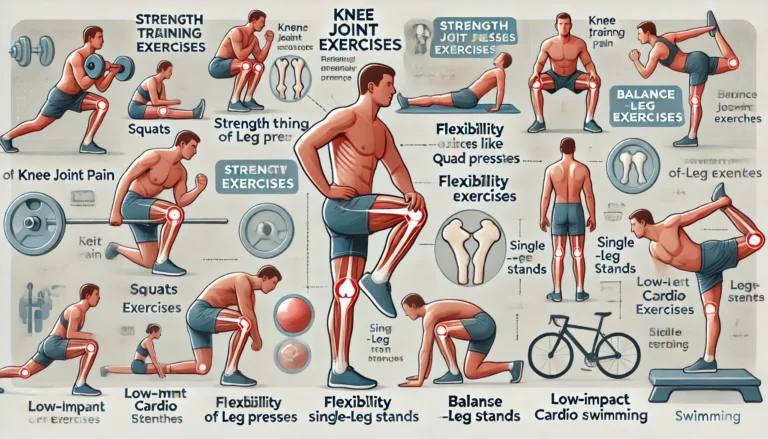
- Regular exercise, like strength training, flexibility exercises, and low-impact activities, strengthens the muscles around the knees and lowers injury risk.
- Wearing shoes with good support and cushioning helps keep the legs aligned and balanced, easing knee strain.
- Using the PRICE method (protection, rest, ice, compression, and elevation) can help manage knee pain and swelling.
- Seeing a doctor is crucial if knee pain doesn’t go away or gets worse, as it could mean a serious issue.
Understanding the Importance of Knee Health
Our knees are key for moving around and staying mobile. They are big and complex, helping us walk, run, jump, and do everyday tasks3. Keeping our knees healthy is crucial for living freely and doing what we need to do every day. Knee problems can really limit our actions and affect our life quality.
Knees: Essential for Movement and Mobility
The knee is a complex joint made of bones, cartilage, ligaments, and tendons that work together for smooth movement3. But it can get hurt or have conditions like osteoarthritis, ACL tears, and patellofemoral pain syndrome4. It’s important to take care of our knees because problems there can really affect our health and freedom.
Having strong muscles around the knee helps keep it stable and safe from injury3. Weak muscles, like the quadriceps and hamstrings, can make knee injuries more likely3. Carrying extra weight can also harm the joint cartilage, making knee osteoarthritis more likely3.
| Knee Condition | Description |
|---|---|
| Osteoarthritis | The most common type of arthritis affecting the knee, caused by the gradual wear-and-tear of the joint cartilage35. |
| ACL Injury | A tear in the anterior cruciate ligament, often occurring in sports with sudden stops and changes in direction3. |
| Patellofemoral Pain Syndrome | Also known as “runner’s knee,” this condition involves pain between the kneecap and thigh bone due to excessive stress4. |
| Meniscus Tear | A tear in the cartilage that cushions the shin bone and thigh bone, causing pain, catching, or locking4. |
| Patellar Tendonitis | Inflammation of the tendon that connects the kneecap to the shin bone, often affecting athletes who jump frequently4. |
| Ligament Tear | Damage to the stabilizing ligaments in the knee, usually resulting from a serious injury4. |
Knowing how important knee health is helps us take steps to keep moving freely and stay independent354.
Knee Pain Prevention: Maintaining a Healthy Weight, Exercising Regularly, and Choosing Proper Footwear
Keeping our knees healthy is key to avoiding knee pain. A big part of this is keeping a healthy weight. Carrying extra weight puts more stress on the knees, leading to faster cartilage wear and a higher chance of osteoarthritis6. Just 10 pounds of extra weight can mean 30-60 more pounds of force on the knee with each step6. Losing 10 pounds can cut knee pain by 20% for those with arthritis6.
Exercise is vital for knee health. Low-impact activities like swimming, cycling, and elliptical workouts strengthen the muscles around the knees safely7. Adding strength training and flexibility exercises keeps joints working well and prevents arthritis7.
Choosing the right shoes is also key. Shoes with strong soles and good cushioning help spread out the weight and reduce knee stress8. Shoes that are old or don’t support well can change how we move, making knee problems and injuries more likely8.
By following these tips, we can help prevent knee pain and keep our knees healthy and mobile. 
Lifestyle Habits for Knee Health
Keeping your knees healthy is more than just about weight and exercise. Our daily habits greatly affect our joint health and injury prevention. One key habit is maintaining proper posture9.
Importance of Proper Posture
Bad posture puts too much stress on your joints, causing cartilage to wear out and get damaged over time9. Keeping your shoulders back, head level, and stomach in helps ease the strain on your knees and other joints. A physical therapist can teach you exercises to improve your posture and lessen joint strain9.
Other habits also help keep your knees healthy. Doing low-impact exercises like cycling and swimming keeps your knee cartilage strong and safe from damage9. Building muscle around your knees with strength training and stretching can also be good for you10.
It’s important to warm up before you start any physical activity and slowly increase the intensity of your workouts to avoid knee injuries10. Mixing up your activities helps prevent injuries from doing the same motion over and over, which can lead to swollen knees and damaged cartilage10.
By following these lifestyle habits, keeping a healthy weight, and wearing good shoes, you can greatly improve your knee health and lower the risk of future joint problems91011.
| Lifestyle Habit | Benefit for Knee Health |
|---|---|
| Proper Posture | Reduces stress on the knees and other joints |
| Low-Impact Exercises | Keeps knee cartilage healthy and prevents future damage |
| Strength Training | Builds muscle around the knees, contributing to joint stability |
| Stretching | Improves flexibility and range of motion around the knee joint |
| Warming Up and Gradual Intensity | Prevents knee injuries and overuse injuries |
| Varied Physical Activities | Avoids repeated motion injuries that can lead to knee problems |
Conclusion
Keeping our knees healthy is key to staying mobile, independent, and active12. We can do this by keeping a healthy weight12, exercising often12, wearing the right shoes, and standing up straight. These steps can ease knee pain and stop new problems from starting. This lets us keep doing what we love without pain.
Carrying extra weight increases the risk of knee osteoarthritis by 19.5%12. Losing just one pound can ease the pressure on our knees by 4 pounds12. Losing 10 pounds means 40 pounds less pressure, lowering the risk of osteoarthritis12. Eating foods that fight inflammation can also help slow down osteoarthritis12.
By focusing on our knee health, we can keep our knees strong and flexible for a long time. Activities like walking, cycling, and yoga help with weight loss and keep joints healthy12. Even simple activities, like walking after meals, can help with digestion and weight loss12. Making these choices helps us stay mobile, independent, and happy.
FAQ
What are the key strategies for preventing knee pain?
Why are healthy knees important?
How does maintaining a healthy weight impact knee health?
What role does regular exercise play in preventing knee pain?
How does proper footwear affect knee health?
Why is proper posture important for knee health?
Source Links
- An Overview of Knee Pain – https://www.webmd.com/pain-management/knee-pain/knee-pain-overview
- Preventing Knee Pain – https://www.rush.edu/news/preventing-knee-pain
- Knee pain – Symptoms and causes – https://www.mayoclinic.org/diseases-conditions/knee-pain/symptoms-causes/syc-20350849
- 6 Exercises to Help Your Knee Pain | The Hospital of Central Connecticut – https://thocc.org/about/news-press/news-detail?articleId=55094&publicid=395
- The pain-relieving qualities of exercise in knee osteoarthritis – https://www.ncbi.nlm.nih.gov/pmc/articles/PMC5074793/
- Essential Guide to Preventative Care for Knee Injuries: Stay Active and Injury-Free – Plancher Orthopaedics – https://plancherortho.com/preventative-care-for-knee-injuries-stay-active-and-injury-free/
- Osteoarthritis of the knee: Learn More – What can I do to strengthen my knees? – InformedHealth.org – https://www.ncbi.nlm.nih.gov/books/NBK544978/
- 5 Ways To Help Prevent Knee Pain – https://www.henryford.com/blog/2021/06/knee-preservation
- 8 Ways to Keep Your Knees Healthy as You Age | Orthopedic Blog | OrthoCarolina – https://www.orthocarolina.com/media/8-ways-to-keep-your-knees-healthy-as-you-age
- Easy Ways to Protect Your Knees – https://www.webmd.com/pain-management/knee-pain/protect-knees
- How to Save Your Knees Without Giving Up Your Workout (Published 2021) – https://www.nytimes.com/2021/11/19/well/move/workout-exercise-knee-health.html
- Chronic Knee Pain and Weight: A Comprehensive Approach to Pain Management – https://posm.org/chronic-knee-pain-and-weight-a-comprehensive-approach-to-pain-management/