
Patellar Tendonitis Exercises for Pain Relief
Patellar tendonitis is a common condition that causes pain and inflammation in the tendon just below the kneecap. It is often caused by overuse or sudden changes in activity level, making it particularly common among athletes, especially runners, jumpers, and basketball players. If you are experiencing patellar tendonitis, incorporating specific exercises into your routine can help alleviate pain and improve your overall mobility.
Physical therapy exercises, also known as rehab exercises, are highly effective in the treatment of patellar tendonitis. These exercises focus on strengthening the muscles around the knee, stretching the affected areas, and improving balance and stability. By incorporating a variety of exercises into your daily routine, you can enhance your recovery process and prevent future flare-ups.
It is important to note that before starting any exercise program, especially if you have a pre-existing condition or injury, it is recommended to consult with a healthcare professional. They will be able to provide personalized guidance and ensure that the exercises are appropriate for your specific needs.
Key Takeaways:
- Patellar tendonitis is a condition characterized by pain and inflammation below the kneecap.
- Physical therapy exercises can effectively treat patellar tendonitis and promote pain relief.
- Exercises for patellar tendonitis include strengthening, stretching, and balance activities.
- Starting slowly and listening to your body is essential to avoid exacerbating pain or causing further injury.
- Consulting with a healthcare professional is advisable before starting any exercise program for patellar tendonitis.
Straight-Leg Raises and Short-Arc Quad Exercises
When it comes to treating patellar tendonitis, two exercises that have shown great effectiveness are straight-leg raises and short-arc quad exercises. These exercises target the muscles around the knee and help to strengthen and rehabilitate the affected area.
Straight-Leg Raises
To perform straight-leg raises, start by lying on your back with your unaffected leg bent and your affected leg straight. Slowly tighten the thigh muscles in your affected leg and lift it up about 30 centimeters off the floor. Hold the position for 6 seconds before lowering your leg back down. Repeat this exercise 8 to 12 times.
Remember to listen to your body and start with a manageable number of repetitions. As your strength improves, you can gradually increase the number of sets and repetitions.
Short-Arc Quad Exercises
Short-arc quad exercises are another effective way to strengthen the muscles surrounding the knee and relieve symptoms of patellar tendonitis. To perform this exercise, lie on your back with your knees bent over a foam roll or towel. Lift the lower part of your affected leg until it is straight and parallel to the ground. Hold the position for 6 seconds before slowly lowering your leg back down. Repeat this exercise 8 to 12 times.
Short-arc quad exercises can be challenging, so it’s important to start with a height that you are comfortable with and gradually increase it as you feel stronger. Remember to maintain proper form and avoid any pain or discomfort while performing the exercise.
By incorporating these exercises into your patellar tendonitis treatment plan, you can strengthen the muscles around your knee, improve stability, and reduce pain. Remember to consult with a healthcare professional before starting any new exercise program to ensure it is suitable for your specific condition.
| Exercise | Instructions |
|---|---|
| Straight-Leg Raises | Lie on your back. Bend your unaffected leg and keep the affected leg straight. Lift your affected leg about 30 centimeters off the floor. Hold for 6 seconds. Repeat 8 to 12 times. |
| Short-Arc Quad Exercises | Lie on your back with your knees bent over a foam roll or towel. Lift the lower part of your affected leg until it is straight. Hold for 6 seconds. Repeat 8 to 12 times. |
Half-Squats and Step-Ups
When it comes to patellar tendonitis treatment exercises, half-squats and step-ups are two effective options. These exercises target the muscles around the knee and help improve strength and stability. Let’s take a closer look at how to properly perform each exercise:
Half-Squats
Half-squats are beneficial for strengthening the quadriceps, hamstrings, and glutes, all of which play a crucial role in supporting the knee joint. Here’s how to do them:
- Stand with your feet shoulder-width apart.
- Turn your feet out to the sides.
- Slowly bend your knees about one-quarter of the way down.
- Keep your back straight and avoid tilting your pelvis forward.
- Repeat the movement 8 to 12 times.
Step-Ups
Step-ups engage the muscles in your thighs, hips, and glutes, enhancing overall lower body strength and stability. Follow these steps to perform step-ups correctly:
- Find a stable footstool or use a thick book as a step.
- Place your affected leg on the step.
- Keep your back straight and avoid pushing off your back leg.
- Step up onto the step, using the muscles in your affected leg.
- Repeat the movement 8 to 12 times.
Remember, it’s crucial to start slowly and listen to your body during these exercises. If you experience any pain or discomfort, ease off and consult a healthcare professional. These exercises should be part of a comprehensive patellar tendonitis treatment plan that may also include other exercises, stretches, and rest periods for optimal recovery.
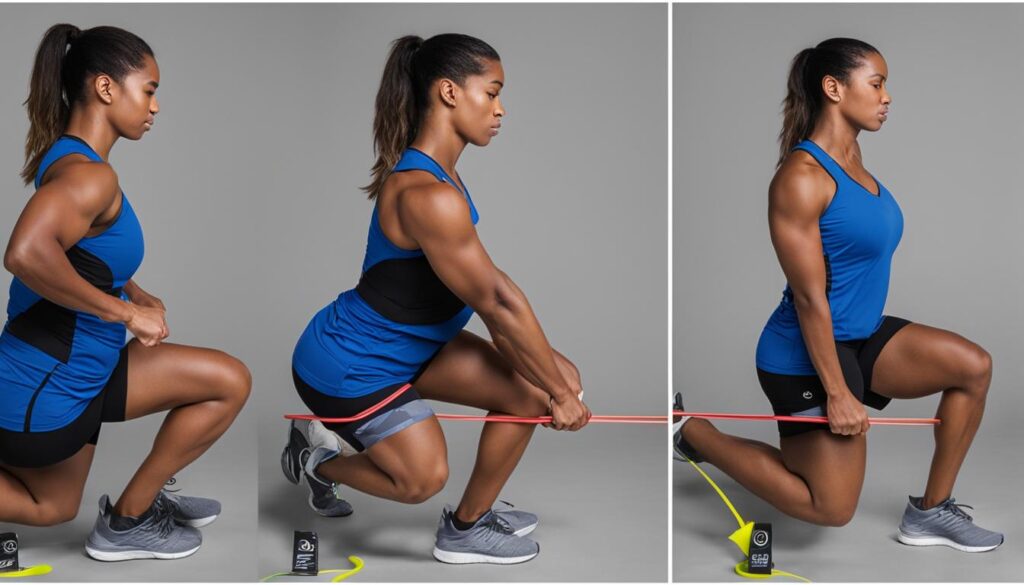
Continue to Section 4 to discover two more effective exercises for managing patellar tendonitis: Terminal Knee Extension and Step-Down Exercises.
Terminal Knee Extension and Step-Down Exercises
Terminal knee extension and step-down exercises are additional exercises that can be helpful for patellar tendonitis. These exercises specifically target the muscles around the knee and help strengthen the joint while reducing stress on the tendon.
Terminal Knee Extension Exercise
To perform the terminal knee extension exercise:
- Start by tying an exercise band around your affected leg and secure the other end to a stable object.
- Keep your affected leg somewhat bent and your good leg a step behind.
- Slowly straighten your affected leg by tightening the thigh muscles.
- Hold the extension for 6 seconds.
- Repeat the exercise 8 to 12 times.
This exercise helps improve the range of motion in your knee and strengthens the muscles supporting the joint.
Step-Down Exercise
The step-down exercise is another beneficial exercise for patellar tendonitis, focusing on the knee’s stability and control.
| Steps for Step-Down Exercise: |
|---|
| 1. Stand on a footstool or thick book. |
| 2. Slowly step down with your good leg while keeping your affected knee in line with your middle toe. |
| 3. Repeat the exercise 8 to 12 times. |
This exercise helps improve your balance, strengthens the muscles around the knee, and promotes proper alignment during movements.
Remember to consult with a healthcare professional before starting any new exercise program. They can provide personalized guidance and ensure these exercises are suitable for your specific condition and fitness level.
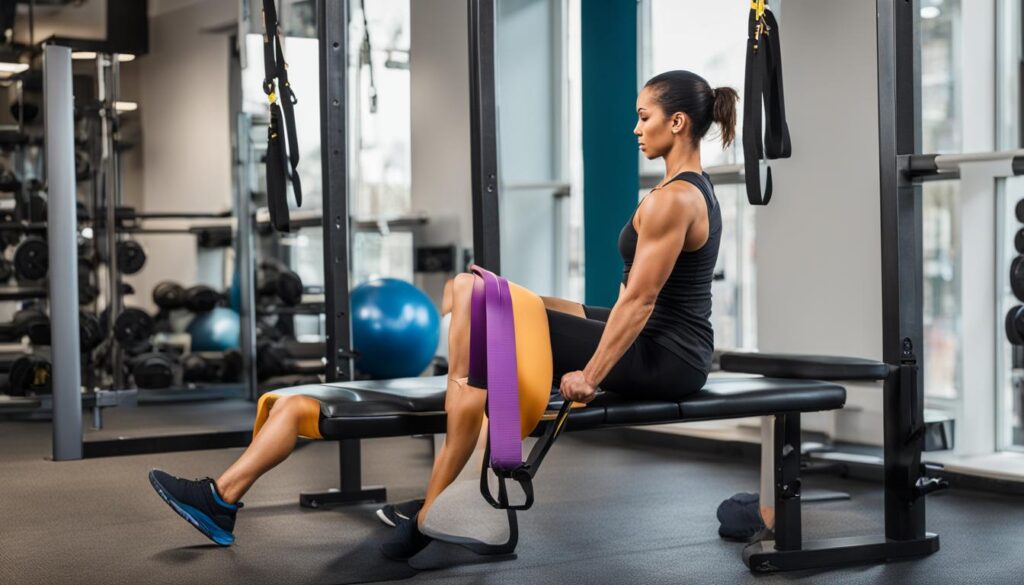
Quad Sets and Hip Abduction Exercises
Quad sets and hip abduction exercises are two more exercises that can aid in the treatment of patellar tendonitis. Quad sets involve placing a small towel roll under your knee and tightening your top thigh muscle to press the back of your knee downward while pressing on the towel. Repeat 10 times, holding for 5 seconds, and complete 3 sets.
Hip abduction exercises are performed while lying on your side and slowly raising your top leg to the side, keeping your knee straight and toes pointed forward. Repeat 10 times and complete 3 sets.
| Exercise | Description | Repetitions | Sets |
|---|---|---|---|
| Quad Sets | Place a small towel roll under your knee and tighten your top thigh muscle to press the back of your knee downward while pressing on the towel. | 10 | 3 |
| Hip Abduction | Lie on your side and slowly raise your top leg to the side, keeping your knee straight and toes pointed forward. | 10 | 3 |
By incorporating quad sets and hip abduction exercises into your patellar tendonitis treatment routine, you can further strengthen the muscles around your knee and promote healing. Remember to start slowly and listen to your body, gradually increasing repetitions and sets as you feel more comfortable. These exercises, combined with other recommended exercises, can help alleviate pain and improve your overall condition. Consult with a healthcare professional for personalized guidance and recommendations.
Conclusion
Patellar tendonitis can cause significant pain and discomfort, but with the right exercises, it is possible to find relief and improve mobility. The patellar tendonitis exercises mentioned above, such as straight-leg raises, half-squats, and quad sets, can help strengthen the muscles around the knee and reduce stress on the tendon.
It is important to start slowly and listen to your body when performing these pain relief exercises for patellar tendonitis. If you experience any pain, it is crucial to ease off and consult with a healthcare professional before continuing. They can provide guidance specific to your condition and ensure that you are performing the exercises correctly.
By incorporating these treatment exercises for patellar tendonitis into your routine, you can effectively manage the condition and gradually regain your mobility. Remember to be consistent and patient, as recovery takes time. With dedication and the guidance of a healthcare professional, you can get back to a pain-free, active lifestyle.
FAQ
What is patellar tendonitis?
Patellar tendonitis is a condition that causes pain and inflammation in the tendon located just below the kneecap. It is often caused by overuse or sudden changes in activity level.
What are the symptoms of patellar tendonitis?
The symptoms of patellar tendonitis may include pain and tenderness below the kneecap, swelling, stiffness, and difficulty with activities that involve bending the knee, such as running or jumping.
How can patellar tendonitis be treated?
Patellar tendonitis can be treated through a combination of rest, physical therapy exercises, pain management, and avoiding activities that worsen the symptoms. It is important to consult with a healthcare professional for a proper diagnosis and treatment plan.
What are some common patellar tendonitis treatment exercises?
Common patellar tendonitis treatment exercises include straight-leg raises, half-squats, terminal knee extension, quad sets, and hip abduction exercises. These exercises help strengthen the muscles around the knee and reduce stress on the tendon.
Can I do patellar tendonitis exercises at home?
Yes, many patellar tendonitis exercises can be done at home with minimal equipment. However, it is important to consult with a healthcare professional or physical therapist to ensure you are performing the exercises correctly and safely.
Are there specific exercises for runners and jumpers with patellar tendonitis?
Yes, there are exercises specifically tailored for runners and jumpers with patellar tendonitis. These exercises focus on strengthening the muscles used during these activities and improving stability and flexibility in the knee.
How often should I perform patellar tendonitis exercises?
The frequency of patellar tendonitis exercises can vary depending on your individual condition and treatment plan. It is best to follow the recommendations of your healthcare professional or physical therapist. In general, exercises may be performed several times a week.
Can patellar tendonitis exercises help basketball players?
Yes, patellar tendonitis exercises can help basketball players by strengthening the muscles around the knee and improving stability and flexibility. It is important for basketball players to consult with a healthcare professional or physical therapist for specific exercises tailored to their sport.
Source Links
- https://myhealth.alberta.ca/Health/aftercareinformation/pages/conditions.aspx?hwid=bo1598
- https://oahct.com/wp-content/uploads/2020/05/OAH-PATELLAR-TENDONITIS-EXERCISES.pdf
- https://health.clevelandclinic.org/patellar-tendonitis-exercises-stretches