Relief for Right Knee Pain on Stairs
If you experience pain in your right knee when climbing stairs, you’re not alone. Many individuals suffer from knee pain while ascending steps, and it’s important to understand the potential causes and find relief. When we climb stairs, our knees endure significant pressure, exerting forces up to six times our body weight. This added stress can contribute to various conditions that result in knee pain, such as patellofemoral pain syndrome, meniscus tear, chondromalacia patella, IT band syndrome, and muscle imbalance.
To alleviate knee pain on stairs, there are several approaches you can try, including targeted exercises, modification of walking technique, and improving body awareness. However, it’s crucial to consult with a healthcare professional or physical therapist to determine the underlying cause of your knee pain and develop a personalized treatment plan for optimal results.
Key Takeaways:
- Right knee pain when climbing stairs is a common issue that affects many individuals.
- Knee pain on stairs can be caused by various conditions, including patellofemoral pain syndrome, meniscus tear, chondromalacia patella, IT band syndrome, and muscle imbalance.
- Seeking professional guidance from a healthcare professional or physical therapist is essential for accurate diagnosis and personalized treatment.
- Exercises that focus on strengthening the knee and improving body awareness can help alleviate knee pain during stair climbing.
- Modifying your walking technique and utilizing handrails for support can also reduce knee pressure when using stairs.
Understanding Knee Pain when Climbing Stairs
The knee joint is a complex structure consisting of bones, ligaments, tendons, cartilage, menisci, bursae, muscles, and nerves. These components work together to support and stabilize the knee during movement. When climbing stairs, the knee joint undergoes unique stresses due to the angle and increased forces.
Let’s take a closer look at the anatomy of the knee:
- Bones: The knee joint is formed by three bones: the patella (kneecap), femur (thighbone), and tibia (shinbone).
- Ligaments: The knee is reinforced by collateral ligaments on the sides and cruciate ligaments inside the joint capsule.
- Tendons: Tendons connect muscles to bones, helping with movement and stability.
- Cartilage: The knee is lined and cushioned by articular cartilage, which allows smooth joint motion.
- Menisci: These crescent-shaped structures act as shock absorbers and help distribute weight evenly in the knee joint.
- Bursae: Fluid-filled sacs called bursae reduce friction between the bones, tendons, and muscles.
- Muscles: Strong muscles around the knee provide stability and assist with movement.
- Nerves: Nerves transmit signals between the knee joint and the brain, allowing for coordination and proprioception.
When climbing stairs, these structures are subjected to increased pressure, leading to potential knee pain. Understanding the anatomy of the knee can help us identify the specific causes of knee pain when climbing stairs and develop appropriate treatment strategies.
Common Causes of Knee Pain when Climbing Stairs
Various factors can contribute to knee pain when climbing stairs. Patellofemoral pain syndrome, also known as runner’s knee, is a common condition characterized by pain in the front of the knee. A meniscus tear, an injury to the cartilage in the knee, can also cause pain, especially on the inner or outer aspect of the knee. Chondromalacia patella refers to the wearing of the cartilage under the kneecap, resulting in irritation and a dull ache. IT band syndrome, which involves inflammation of the iliotibial band, can lead to pain on the outside of the knee. Additionally, muscle imbalance, particularly being quad dominant, can put excessive pressure on the front of the knee. Identifying the specific cause of knee pain can help guide treatment strategies.
| Common Causes of Knee Pain when Climbing Stairs | Description |
|---|---|
| Patellofemoral pain syndrome | Pain in the front of the knee |
| Meniscus tear | Injury to the cartilage in the knee, causing pain on the inner or outer aspect of the knee |
| Chondromalacia patella | Wearing of the cartilage under the kneecap, resulting in irritation and a dull ache |
| IT band syndrome | Inflammation of the iliotibial band, leading to pain on the outside of the knee |
| Muscle imbalance | Excessive pressure on the front of the knee, particularly being quad dominant |
Identifying the specific cause of knee pain is crucial for developing an effective treatment plan. Whether it’s through targeted exercises, physical therapy, or other approaches, addressing the underlying factors contributing to knee pain can help alleviate symptoms and improve overall knee health.
Testimonials
“I suffered from patellofemoral pain syndrome for months, and it made climbing stairs unbearable. But after identifying the cause and following a personalized treatment plan, my knee pain has significantly improved.” – Sarah M.
“I had a meniscus tear that made every step on the stairs excruciatingly painful. With physical therapy and strengthening exercises, I am now able to climb stairs without any discomfort.” – James R.
Treating and Managing Knee Pain on Stairs
When it comes to addressing and controlling knee pain while climbing stairs, there are various effective treatment and management options available. These approaches aim to provide relief, improve functionality, and enhance overall knee health. By incorporating targeted exercises, developing body awareness, modifying walking techniques, and engaging in strengthening and therapeutic exercises, individuals can find significant relief from knee pain.
Targeted Exercises for Knee Pain Relief
One of the key aspects of treating knee pain is through targeted exercises that focus on strengthening the structures around the knee. By improving the strength and flexibility of the supporting muscles, such as the hip flexors, hamstrings, and quadriceps, individuals can enhance stability and reduce stress on the knee joint.
Some effective exercises include:
- Hip flexor stretches
- Single-leg lifts
- Hamstring stretches
These exercises help to improve muscle imbalances, reduce strain, and promote better knee function.
Developing Body Awareness for Better Movement
Developing body awareness is crucial in understanding how movements and activities impact the knee. By becoming more mindful of body mechanics, individuals can identify and correct muscle imbalances, faulty movement patterns, and inefficient techniques that contribute to knee pain.
H3: Modifying Walking Technique
An effective way to minimize knee pain on stairs is to modify the walking technique. This can be achieved by engaging the glutes and hamstrings while maintaining proper alignment of the body. By distributing the load more evenly and reducing pressure on the knee joint, individuals can prevent or alleviate pain while climbing stairs.
Engaging in Strengthening and Therapeutic Exercises
Working with a physical therapist or following a prescribed exercise program can offer significant benefits in managing knee pain. Strengthening exercises recommended by healthcare professionals, such as those provided by trusted platforms like Hinge Health, can help relieve pain and improve knee function. These exercises specifically target the muscles around the knee, providing stability and support.
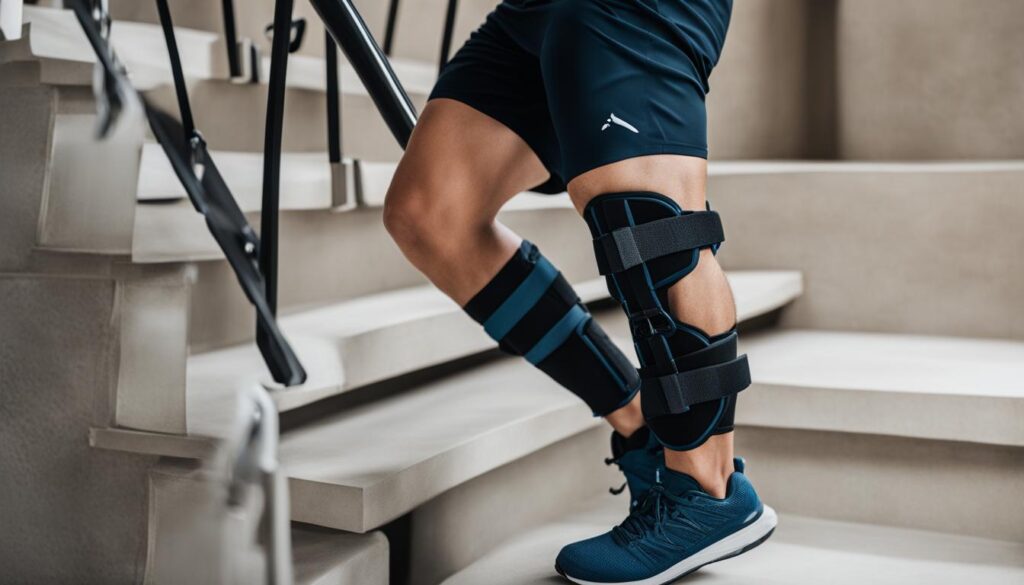
Tips for Reducing Knee Pain on Stairs
If you’re experiencing knee pain when climbing stairs, there are several tips that can help alleviate discomfort and reduce the strain on your knees. By following these recommendations, you can improve your ability to navigate stairs with greater ease and minimize knee pain.
Take Things One Step at a Time
When climbing stairs, it’s important to take things one step at a time. Instead of rushing, step onto the next step with both feet before ascending or descending further. This reduces the stress on your knee joints and helps distribute the weight evenly, reducing the impact and pressure on your knees.
Lead with the Correct Leg
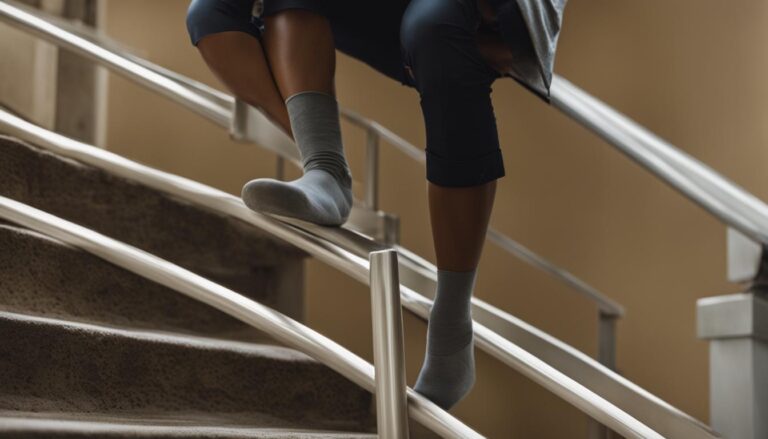
When going upstairs, lead with your stronger leg, the leg that experiences less pain or discomfort. Step up first with this leg, followed by the other leg. Conversely, when going downstairs, lead with your weaker leg, stepping down first with that leg. This technique can help alleviate knee pain and provide better stability while climbing stairs.
Use a Handrail or Surface for Support
Using a handrail or holding onto a sturdy surface while climbing stairs can provide additional support and help distribute the weight more evenly. By doing so, you can reduce the strain on your knees and alleviate knee pain. Make sure to grip the handrail firmly and use it as a guide for balance as you navigate the stairs.
Consider Using a Crutch or Stick
If you’re experiencing more severe knee pain, you may benefit from using a crutch or stick while climbing stairs. This can provide extra support and take some of the weight off your knee joints. Consult with your healthcare professional to determine if using a crutch or stick is appropriate for your specific condition.
Warm Up Your Knee
Prior to climbing stairs, it can be beneficial to warm up your knee joints. Perform gentle knee exercises or stretches, such as leg swings or knee rotations, to increase blood flow and loosen up the surrounding muscles and tissues. This can help reduce knee pain and improve mobility when going up or down stairs.
Improve Muscle Strength
Another effective way to reduce knee pain on stairs is to improve the strength of the muscles supporting your knees. Incorporate exercises that target the quadriceps, hamstrings, and gluteal muscles into your fitness routine. Sit-to-stand exercises, step-ups, and resistance training can help strengthen the muscles around your knees, providing better support and stability.
Remember to listen to your body and make adjustments based on what feels most comfortable for you. If you experience persistent or worsening knee pain, it’s important to consult with a healthcare professional or physical therapist for a thorough evaluation and personalized treatment plan.
| Tips for Reducing Knee Pain on Stairs |
|---|
| Take things one step at a time |
| Lead with the correct leg |
| Use a handrail or surface for support |
| Consider using a crutch or stick |
| Warm up your knee |
| Improve muscle strength |
Conclusion
Knee pain when climbing stairs is a common issue that can be effectively managed and relieved with the right strategies. By focusing on strengthening the muscles around the knee, modifying techniques, and improving body awareness, you can significantly reduce knee pain and improve your overall quality of life.
Consulting with a healthcare professional or physical therapist is crucial in determining the underlying cause of your knee pain and developing an appropriate treatment plan. They can provide expert guidance and personalized solutions to address your specific condition.
Preventing knee problems is equally important. Taking proactive steps to care for your knees, such as engaging in regular exercises targeted at knee rehabilitation, maintaining a healthy weight, and seeking the advice of a knee specialist when needed, can go a long way in preventing future knee issues. By prioritizing the health of your knees, you can enjoy an active and pain-free lifestyle.
Remember, taking care of your knees is an ongoing process. Be sure to continue seeking medical advice and staying informed on the latest advancements in knee pain relief and rehabilitation to ensure the best possible care for your knees.
FAQ
What causes knee pain when climbing stairs?
Knee pain when climbing stairs can be caused by conditions such as patellofemoral pain syndrome, meniscus tear, chondromalacia patella, IT band syndrome, and muscle imbalance. These conditions can result in pain and discomfort in the knee joint.
How can I treat and manage knee pain when climbing stairs?
There are several approaches to treating and managing knee pain when climbing stairs. These can include targeted exercises to strengthen the knee and surrounding muscles, improving body awareness, modifying your walking technique, and engaging in therapeutic exercises recommended by a physical therapist.
Are there any tips for reducing knee pain when climbing stairs?
Yes, there are several tips that can help reduce knee pain when climbing stairs. These can include taking one step at a time, leading with the correct leg, using a handrail for support, using a crutch or stick for additional support, warming up the knee before climbing stairs, and improving muscle strength through specific exercises.
How can I prevent knee problems and improve overall knee health?
To prevent knee problems and improve overall knee health, it’s important to engage in regular exercise and maintain a healthy weight. By keeping the muscles around the knee strong and supporting the joint, you can reduce the risk of knee pain and injury.