Aspen Medical Products VRTX CTLSO2

Aspen Medical Products launches the first off-the-shelf cervical to sacrum spine system

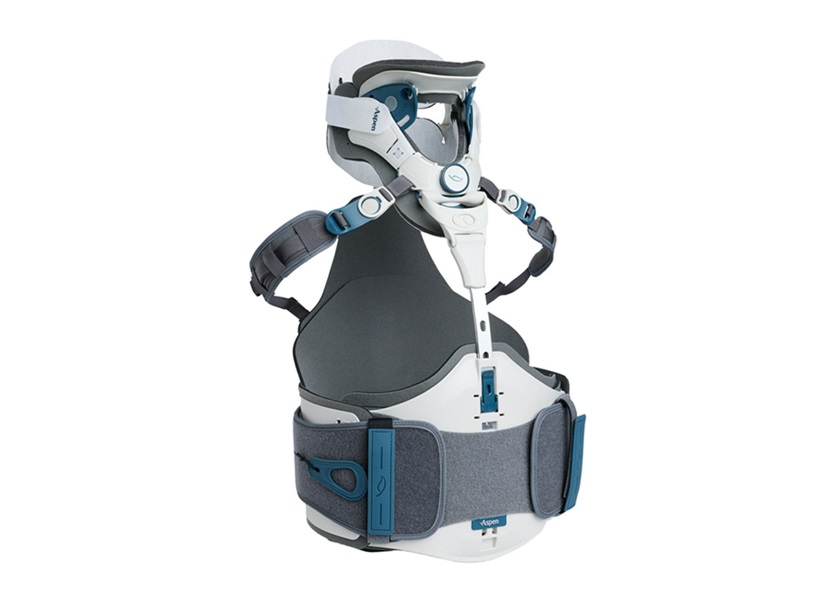
VRTX CTLSO

IRVINE, Calif., Oct. 25, 2023 /PRNewswire/ — Aspen Medical Products (Aspen), a leader in spine solutions for pain and mobility management, has launched the VRTX System – the first fully integrated spine support system in the post-operative and trauma care market.

According to the American Academy of Orthopedic Surgeons, millions of spine-related injuries occur annually in the United States. Patients with traumatic injuries to the spine at multiple levels typically require a custom-made Cervical Thoracic Lumbar Sacral Orthosis (CTLSO) that stabilizes the spine before or after surgery. These patients may wait up to three days to receive their CTLSO after being measured and fit, increasing the risk of deep vein thrombosis, pressure sores, breathing problems and other complications.

The VRTX System is the first-ever cervical to sacral system designed to redefine spine care in acute care settings. The prefabricated design with intuitively adjustable sizing helps doctors fit patients and immediately stabilize the spine. This turnkey solution can help reduce length of stay and the risk of complications, while optimizing operational efficiency in hospitals by improving time and inventory management.

“Aspen is once again leading the way in innovation and clinical solutions with the VRTX system,” said Jim Cloar, Chief Executive Officer of Aspen. “We understand the need for an improved experience for patients and physicians, and we designed the VRTX system to add value to the healthcare system as a whole. Our ultimate goal was to create a family of products that all interact with each other, simplify the fitting process through an intuitive design and ensure ease of use at home. We are proud to bring the first total spine solution to market.”

A pioneer in advancing spine care, the VRTX System is built on a foundation of results and innovation. The modular, low-profile design comfortably supports a wide range of patient anatomies and improves patient outcomes by helping them become ambulatory faster. An integrated QR code scans patient instructions, so you always have the correct application instructions at hand and can ensure compliance.

Each component of the VRTX system consists of a prefabricated CTO, TLSO, LSO and CTLSO and provides optimal movement restriction and can be lowered or increased depending on the patient’s needs. This modular solution enables standardization of products and services across the hospital to maximize staff efficiency and patient care.

Building on the success of the Vista Cervical Collar, Aspen has included enhanced features in the new VRTX Collar. A symmetrical back panel ensures accurate and consistent application every time, and clinicians now have the convenience of writing directly on the surface of the collar to indicate pad replacement time. Additionally, more finite height adjustments are suitable for a wider range of patients, and the VRTX collar can be adjusted to a lower setting.

“From day one, Aspen has been committed to understanding the complex needs and challenges of both patients and healthcare providers. Years of patient and physician feedback and industry insights have been our guiding forces in creating the VRTX system. This innovation is more than just a product; it is a testament to our commitment to improving the healthcare landscape and ultimately increasing the well-being of everyone we serve,” said Albert Romo, Aspen’s Director of Research and Development.

More information about the VRTX system is available at vrtx.aspenmp.com.

About Aspen medical products

Founded in 1994, Aspen Medical Products, LLC is an industry leader in the development and manufacturing of spinal orthopedics and pain therapy solutions. Designed to restore function and relieve pain, Aspen products address a variety of patient needs across the care continuum to help them resume activities of daily living. Aspen is headquartered in Irvine, California and has local sales representations in the US and internationally. www.aspenmp.com

SOURCE Aspen Medical Products

rt

Source link

Similar Posts

  • CMA clarifies collaboration on combination therapies to accelerate patient access to essential treatments

    The Competition and Markets Authority (CMA) today issued a statement clarifying that certain types of agreements between competing pharmaceutical companies working on ‘combination therapies’ will not be prioritized for research – making it easier for pharmaceutical companies to work together to deliver essential to develop treatments for use in NS. The CMA’s statement comes in…

  • 1… 2… 3… Previous concussions predict persistent symptoms after concussion in youth

      Association for Concussion History and Long-Term Recovery in Youth. Chizuk HM, Cunningham A, Horn EC, Thapar RS, Willer BS, Leddy JJ, Haider MN. Clin J Sport Med. 2022;32(6):e573-e579. doi:10.1097/JSM.0000000000001044 https://journals.lww.com/cjsportsmed/Abstract/2022/11000/Association_of_Concussion_History_and_Prolonged.19.aspx Take home message Athletes with three or more previous concussions were more likely to develop persistent postconcussive symptoms and take longer to recover than…

  • Less gym time, same results: why ‘lowering’ weights is all you need to do

      Good news for those who struggle to fit a gym workout into their day: You may be able to cut your weight routine in half and still see the same results. New research from Edith Cowan University (ECU) has shown that one type of muscle contraction is most effective at increasing muscle strength and…

  • |

    Sleeping after knee replacement

    What if the key to a faster recovery isn’t just what you do during the day, but how you rest at night? We understand that getting proper rest following an operation can be a major hurdle. In fact, research shows about half of all patients report significant discomfort when trying to find a comfortable position. sleeping after knee replacement This cycle of fatigue and increased sensitivity can slow down your progress. That’s why quality rest is not a luxury—it’s a critical part of the healing process, as emphasized by Christynne Helfrich, PT, DPT at Hinge Health. Our guide is designed to break this cycle. We provide expert-backed strategies for managing discomfort and improving your overall rest quality. This includes proven positions and techniques for the crucial first weeks. By addressing the root causes of post-operative disturbances, we aim to help you achieve the restorative rest your body needs. For a comprehensive plan, explore our detailed resource on how to sleep after knee replacement. Key Takeaways Quality rest is a powerful, non-negotiable part of the healing journey after surgery. Many individuals experience increased pain at night or struggle to find a comfortable sleep position. Targeted exercises and proper sleep hygiene can significantly improve your comfort and rest quality. Effective pain management, including techniques like icing, is crucial for uninterrupted sleep. Guidance from your physical therapist and surgical team is essential for a safe and effective recovery. Patience and consistency with your nightly routine are key to long-term success. Understanding Knee Replacement Recovery Your body begins a detailed repair process immediately after joint surgery. A nerve block often provides comfort for the first 18 to 30 hours post-procedure. This offers a valuable window before typical sensations begin. knee replacement recovery Post-Surgery Healing and Body Changes Significant changes occur as you heal from this operation. Natural inflammation and swelling around the new joint are common. Your system is working hard to integrate the artificial components. We note that many individuals report increased difficulty starting around day four. Challenges can persist for up to ten weeks in some cases. Discomfort may also travel to areas like the shin or hip at night. This is a normal part of the adjustment process. Your body is adapting to its new mechanics. How Sleep Supports Recovery Quality rest is vital for repair. Your body focuses on mending the joint and surrounding muscle tissue during deep rest. This is when the most intensive healing occurs. As healing progresses, your sleep quality should gradually improve. Research shows most people see significant progress by the three-month mark. The first month is often the most difficult. We encourage you to stay active during the day. Gentle movement promotes blood flow and prevents stiffness. This daily activity supports better rest at night. Understanding that your body is working hard post-operatively helps manage expectations. Consistency with your routine is key for long-term success. Common Sleep Challenges After Knee Replacement The quiet of the night often amplifies the physical sensations that accompany post-operative healing. We see that nearly half of all individuals report severe disturbances during this critical time. This makes addressing these hurdles a top priority. common sleep challenges after knee replacement Nighttime Pain and Discomfort Without daytime distractions, you may become more aware of persistent sensations. This heightened awareness can make falling asleep difficult. Anxiety about your new joint is also common. Worrying about movement can further disrupt your rest cycles. Dealing with Swelling and Stiffness Inflammation is a natural response to an operation. It often increases when you are lying down for extended periods. Limited mobility prevents natural position shifts. This lack of movement allows stiffness to set in by morning. Challenge Primary Cause Typical Effect Nighttime Pain Increased sensory awareness Difficulty initiating sleep Swelling Post-surgery inflammation Discomfort in bed Joint Stiffness Immobility during rest…

Leave a Reply

Your email address will not be published. Required fields are marked *