Ease Bad Knee Pain Walking Up Stairs Now
Walking up stairs can be a challenge for those experiencing knee pain. The extra pressure on the knees while climbing can exacerbate the pain, especially if there are underlying health conditions or muscle imbalances. Understanding the causes of knee pain on stairs is essential for finding effective solutions.
Key Takeaways:
- Knee pain while climbing stairs can be caused by various factors such as patellofemoral pain syndrome, meniscus tear, chondromalacia patella, and IT band syndrome.
- Common conditions causing knee pain on stairs include chondromalacia patella (runner’s knee) and patellofemoral pain syndrome.
- Reducing knee pain on stairs can be achieved through strengthening exercises, body awareness, and modifying walking techniques.
- Treatment options for knee pain on stairs include targeted exercises, physical therapy, and modifications to daily activities.
- If knee pain on stairs is severe, persistent, or accompanied by other symptoms, it is important to seek medical help.
What Causes Knee Pain When Climbing Stairs?
Knee pain when climbing stairs can be a common and frustrating issue. Understanding the underlying causes of this discomfort is essential for effective treatment and prevention. Several factors can contribute to knee pain while climbing stairs, including:
- Patellofemoral pain syndrome
- Meniscus tear
- Chondromalacia patella
- IT band syndrome
- Muscle imbalances
These conditions can lead to inflammation, instability, and discomfort in the knee joint, making activities such as stair climbing particularly painful. Identifying the specific cause of knee pain is crucial for developing a targeted treatment plan.
“Understanding the underlying causes of knee pain is crucial for effective treatment and prevention.”
Additionally, muscle imbalances and weakness in the knee muscles can contribute to knee pain when climbing stairs. When certain muscles are weak or imbalanced, it puts extra strain on the knee joint, leading to pain and discomfort.
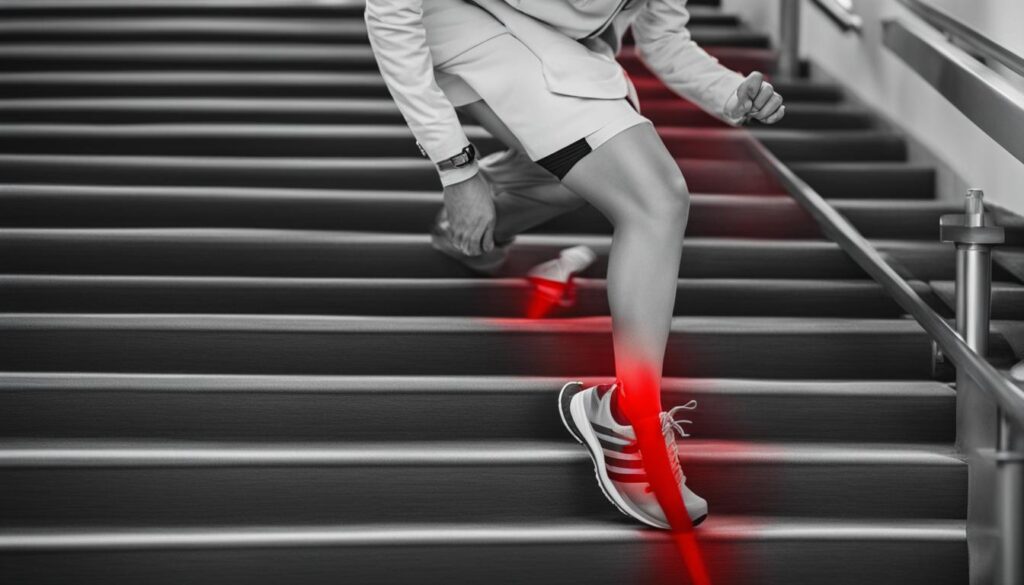
Common Conditions Causing Knee Pain on Stairs
When it comes to knee pain on stairs, there are several common conditions that can be the culprit. Understanding these conditions is key to finding effective solutions and managing the pain. Let’s take a closer look at some of the most prevalent causes:
- Chondromalacia patella (runner’s knee): This condition occurs when the cartilage behind the kneecap breaks down, leading to increased friction and irritation. The repetitive motion of climbing stairs can exacerbate this condition, causing knee pain.
- Patellofemoral pain syndrome: Also known as “runner’s knee,” this condition causes pain around the kneecap during activities such as climbing stairs. It is often caused by factors like muscle imbalances, overuse, or misalignment of the kneecap.
- Meniscus tears: The meniscus is a cartilage that provides cushioning between the thigh bone and the shin bone. Tears in the meniscus can occur due to sudden twisting movements or gradual wear and tear, causing knee pain on stairs.
- IT band syndrome: The IT (iliotibial) band is a band of connective tissue that runs along the outside of the thigh. Overuse or tightness in the IT band can lead to knee pain, especially when climbing stairs.
Understanding these common conditions can help individuals recognize the potential causes of their knee pain on stairs. By seeking proper diagnosis and treatment, individuals can find relief and improve their mobility.

Living with Knee Pain on Stairs: A Personal Story
“Every step felt like a struggle. The sharp pain in my knees made climbing stairs a daunting task. I soon discovered that I was not alone. Many individuals deal with knee pain on stairs caused by conditions like chondromalacia patella and patellofemoral pain syndrome.
Thankfully, I sought medical help and received the treatment and support I needed. Through targeted exercises, physical therapy, and lifestyle modifications, I’ve been able to improve my knee health and climb stairs with confidence once again.”
How to Reduce Knee Pain on Stairs
When it comes to reducing knee pain while climbing stairs, there are several effective strategies that can help alleviate discomfort and improve mobility. By focusing on strengthening exercises, body awareness, and modifications to your walking technique, you can minimize the pressure on your knees and make stair climbing more manageable.
Strengthening Exercises:
Targeted exercises that strengthen the muscles around the knees can provide valuable support and reduce knee pain. Consider incorporating the following exercises into your routine:
- Hip Flexor Stretches
- Single-Leg Lifts
- Hamstring Stretches
These exercises help improve muscle strength, flexibility, and stability, which can contribute to better knee function and decreased pain.
Body Awareness and Walking Technique:
Developing body awareness and making modifications to your walking technique can also have a significant impact on reducing knee pain. Focus on the following tips:
- Keep your body weight centered and evenly distributed.
- Engage your core muscles to maintain stability.
- Take smaller steps and avoid overstriding.
- Land softly on the balls of your feet.
By adopting these habits, you can minimize the impact on your knees and promote proper alignment while climbing stairs.
Using Handrails or Crutches:
Incorporating additional support can also help reduce the pressure on your knees when climbing stairs. Consider using handrails or crutches to provide stability and distribute weight, relieving some of the strain on your knees.
Remember to consult with a healthcare professional before starting any new exercise regimen or making modifications to your routine. They can provide personalized guidance and ensure that your efforts to reduce knee pain are safe and effective.
Implementing these strategies can help alleviate knee pain and make stair climbing a more comfortable experience. However, if your knee pain persists or worsens, it is crucial to seek medical attention for proper diagnosis and treatment.
Treating Knee Pain on Stairs
If you’re experiencing knee pain when climbing stairs, there are several effective treatment options to consider. By addressing the underlying causes and implementing targeted strategies, you can find relief and improve your mobility.
Targeted Exercises
Strengthening the muscles around the knees is essential for providing better support and reducing pain. Incorporating exercises that target the quadriceps, hamstrings, and glutes can help improve knee stability. Examples of exercises that can be beneficial include:
- Wall squats: Stand with your back against a wall and slowly lower yourself into a squat position, keeping your knees aligned with your feet.
- Hamstring curls: Use an exercise machine or resistance band to target the back of your thighs, flexing your knees and bringing your heels towards your glutes.
- Step-ups: Step up onto a sturdy platform or staircase, leading with the injured leg and pushing through your heel.
Physical Therapy
Physical therapy can play a crucial role in the treatment of knee pain on stairs. A trained therapist can help improve your body awareness, correct muscle imbalances, and develop a customized exercise plan tailored to your specific needs. They may incorporate techniques such as:
- Manual therapy: Hands-on techniques, including massage and joint mobilization, to alleviate pain and promote healing.
- Electrical stimulation: The use of electrical currents to reduce pain, improve muscle strength, and enhance circulation.
- Therapeutic exercises: Guided exercises designed to improve flexibility, strength, and balance in the affected knee.
Modifying Daily Activities
In addition to exercises and physical therapy, modifying your daily activities can help alleviate knee pain on stairs. Consider implementing the following adjustments:
- Walking aids: Using assistive devices like crutches or a cane can provide additional support and reduce the pressure on your knees when ascending and descending stairs.
- Proper footwear: Opt for shoes that provide good cushioning and support, minimizing the impact on your knees.
- Walking technique: Focus on maintaining proper body mechanics when climbing stairs, keeping your knees aligned with your feet and avoiding excessive twisting or bending.
By incorporating targeted exercises, physical therapy, and modifications to your daily activities, you can effectively treat knee pain when climbing stairs. Remember to consult with a healthcare professional or physical therapist to create a personalized plan that addresses your specific needs.
When to Seek Medical Help for Knee Pain on Stairs
While many cases of knee pain on stairs can be managed with self-care and home remedies, it is important to seek medical help in certain situations. If the pain is severe, persistent, or accompanied by other symptoms like swelling, instability, or limited mobility, it is recommended to consult a healthcare provider. They can provide a proper diagnosis and recommend appropriate treatment options.
Ignoring persistent knee pain when walking upstairs can potentially worsen the condition and lead to further complications. Seeking medical help early on can prevent further damage and ensure the most effective treatment plan.
When to Seek Medical Help:
- Severe and persistent knee pain when walking upstairs
- Swelling and inflammation around the knee joint
- Instability or giving way sensation while climbing stairs
- Limited mobility or difficulty in bearing weight on the affected knee
- Pain that worsens with activity and does not improve with rest
A healthcare provider will conduct a thorough evaluation, which may include physical examinations, imaging tests, and reviewing medical history to determine the underlying cause of the knee pain. Based on the diagnosis, they can recommend appropriate treatment options, such as physical therapy, medications, injections, or in severe cases, surgical intervention.
Seeking medical help for knee pain on stairs is crucial to prevent further complications and ensure appropriate treatment. Don’t ignore persistent pain, especially if accompanied by other symptoms such as swelling or limited mobility.
Remember, self-diagnosis is not recommended, as knee pain can have various causes and may require different treatment approaches. Consulting a healthcare professional will provide a personalized and effective plan for managing knee pain on stairs and improving overall knee health.
Tips for Preventing Knee Pain on Stairs
When it comes to avoiding knee pain while climbing stairs, there are a few proactive steps you can take. By implementing these preventive measures, you can minimize the risk of knee pain and ensure a more comfortable stair-climbing experience.
Maintain a Healthy Weight
Excess weight puts added strain on your knees, potentially leading to pain and discomfort when climbing stairs. By maintaining a healthy weight through a balanced diet and regular exercise, you can reduce the pressure on your knees and minimize the risk of knee pain.
Wear Proper Footwear
Choosing the right footwear is crucial for providing adequate support to your knees. Opt for shoes that offer cushioning, stability, and good arch support. Avoid high heels and shoes with worn-out soles, as they can contribute to knee pain on stairs.
Avoid Excessive Strain on the Knees
When climbing stairs, be mindful of how much strain you are placing on your knees. Take small steps and use handrails for support, if available. Avoid rushing or overexerting yourself, as this can increase the risk of knee pain and potential injury.
Regular Exercise and Strengthening
Regular exercise that focuses on strengthening the muscles around the knees can help prevent knee pain on stairs. Include exercises that target the quadriceps, hamstrings, and glutes in your workout routine. This will provide better support for your knees and reduce the likelihood of experiencing pain.
“Regular exercise that focuses on strengthening the muscles around the knees can help prevent knee pain on stairs.”
To get you started, here are a few exercises that can help strengthen your knee muscles:
- Leg Extensions: Sit on a chair or exercise bench with your back straight. Extend one leg at a time, raising it until it is parallel to the ground. Repeat 10-15 times for each leg.
- Step-Ups: Find a stable step or platform that is about knee height. Step up with one leg, lifting your body weight, and then step back down. Repeat 10-15 times for each leg.
- Hamstring Stretches: Lie on your back with your legs extended. Lift one leg and gently pull it towards your chest, feeling a stretch in the back of your thigh. Hold for 15-30 seconds and repeat with the other leg.
Remember to consult with a healthcare professional or a qualified fitness trainer before starting any new exercise program.
By following these tips and making these preventive measures a part of your daily routine, you can significantly reduce the risk of knee pain when climbing stairs and enjoy improved knee health overall.
| Preventive Measures | Benefits |
|---|---|
| Maintaining a healthy weight | Reduces strain on knees |
| Wearing proper footwear | Provides support and stability |
| Avoiding excessive strain on the knees | Minimizes risk of pain and injury |
| Regular exercise and strengthening | Improves knee muscle support |
Conclusion
Knee pain when walking up stairs is a common issue that can significantly impact daily life. However, it is important not to disregard this problem and instead take steps to address it. By understanding the causes of knee pain on stairs and implementing appropriate strategies, we can improve our mobility and overall quality of life.
If you experience persistent or worsening knee pain when walking up stairs, it is crucial to seek medical help. A healthcare professional can provide a proper diagnosis and recommend suitable treatment options tailored to your specific situation.
With the right treatment and preventive measures, it is possible to alleviate knee pain and continue to climb stairs comfortably. Strengthening exercises targeting the muscles around the knees, modifying walking techniques, and using assistive devices can all contribute to reducing knee pain. Additionally, maintaining a healthy weight, wearing appropriate footwear, and avoiding excessive strain on the knees can help prevent future knee pain on stairs.
Remember, taking care of our knees is essential for maintaining our mobility and overall well-being. By addressing knee pain on stairs proactively, we can ensure that we can continue to navigate staircases without discomfort or limitations.
FAQ
What causes knee pain when climbing stairs?
Knee pain when climbing stairs can be caused by conditions like patellofemoral pain syndrome, meniscus tear, chondromalacia patella, and IT band syndrome. Muscle imbalances and weak knee muscles can also contribute to knee pain.
What are common conditions that cause knee pain on stairs?
Common conditions that cause knee pain on stairs include chondromalacia patella (runner’s knee), patellofemoral pain syndrome, meniscus tears, and IT band syndrome.
How can I reduce knee pain on stairs?
You can reduce knee pain on stairs by performing strengthening exercises that target the muscles around the knees, modifying your walking technique, and using assistive devices like handrails or crutches for support.
What are the treatment options for knee pain when climbing stairs?
Treatment options for knee pain when climbing stairs include targeted exercises, physical therapy, and modifications to daily activities. Strengthening the muscles around the knees can provide better support and reduce pain. Physical therapy can address muscle imbalances and improve body awareness.
When should I seek medical help for knee pain on stairs?
It is recommended to seek medical help if the knee pain is severe, persistent, or accompanied by other symptoms like swelling, instability, or limited mobility. A healthcare provider can provide a proper diagnosis and recommend appropriate treatment options.
What can I do to prevent knee pain on stairs?
To prevent knee pain on stairs, you can maintain a healthy weight, wear proper footwear, avoid excessive strain on the knees, and regularly exercise to strengthen the muscles around the knees.