Top Hiking Shoes for Knee Support | Pain Relief
Supportive and comfortable shoes can make all the difference when it comes to reducing knee and back pain while hiking. Whether you have knee problems caused by osteoarthritis or simply want to prevent discomfort during your outdoor adventures, investing in the right pair of hiking shoes is essential.
Here, we have compiled a list of our top picks for the best hiking shoes for knee problems. These shoes have been chosen based on their supportive features, comfort level, and overall performance. So, let’s dive in and find the perfect pair to keep you comfortable and pain-free on the trails.
Key Takeaways:
- Choosing hiking shoes with proper support can help reduce knee and back pain.
- Comfortable hiking shoes are essential for those with knee problems, such as osteoarthritis.
- Our top picks for the best hiking shoes for knee problems include Orthofeet Edgewater Stretch, Sketchers GOwalk Joy, and Saucony Ride 15 TR.
- Orthofeet Edgewater Stretch is ideal for people with wider feet, while Sketchers GOwalk Joy is a slip-on option for those who find laces difficult.
- Saucony Ride 15 TR is designed for trail running and offers comfort and reliable traction.
Best Hiking Shoes for Wide Feet: Orthofeet Edgewater Stretch
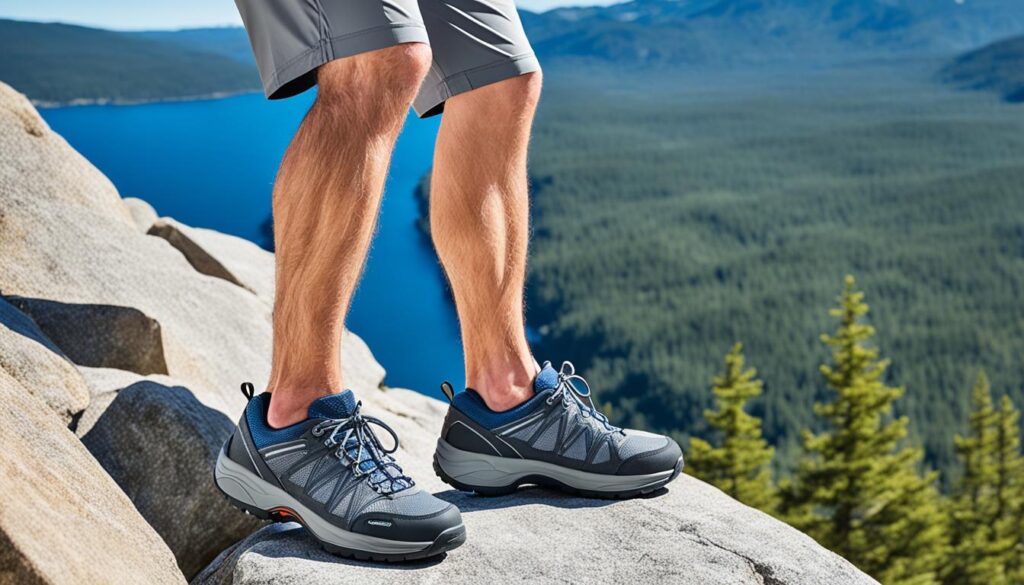
If you have wider feet and struggle to find comfortable and supportive hiking shoes, look no further than the Orthofeet Edgewater Stretch. These shoes are designed specifically to accommodate wider feet with widths up to XX-wide, ensuring a proper fit and eliminating the discomfort caused by tight footwear.
One of the standout features of the Orthofeet Edgewater Stretch is its orthotic insoles, which provide removable arch support. This support not only enhances comfort but also helps promote good posture, which is particularly important during long hikes. The insoles can be customized to suit your specific needs, ensuring optimal stability and support throughout your outdoor adventures.
Additionally, the Orthofeet Edgewater Stretch features a wide toe box. This spacious toe area provides ample room for your toes to move freely, making it an excellent choice for people with bunions, hammer toes, or arthritis in the toes. The wide toe box reduces pressure on the toes and helps alleviate discomfort, enabling you to enjoy your hiking trips without foot pain holding you back.
Overall, the Orthofeet Edgewater Stretch is the best option for individuals with wider feet seeking comfortable and supportive hiking shoes. Its width options, orthotic insoles, and wide toe box make it a top choice for those in need of extra space and support.
| Features | Benefits |
|---|---|
| Widths up to XX-wide | Accommodates wider feet for a comfortable fit |
| Orthotic insoles with removable arch support | Enhances comfort and promotes good posture |
| Wide toe box | Provides ample room for bunions, hammer toes, and arthritis |
Best Slip-on Hiking Shoes: Sketchers GOwalk Joy
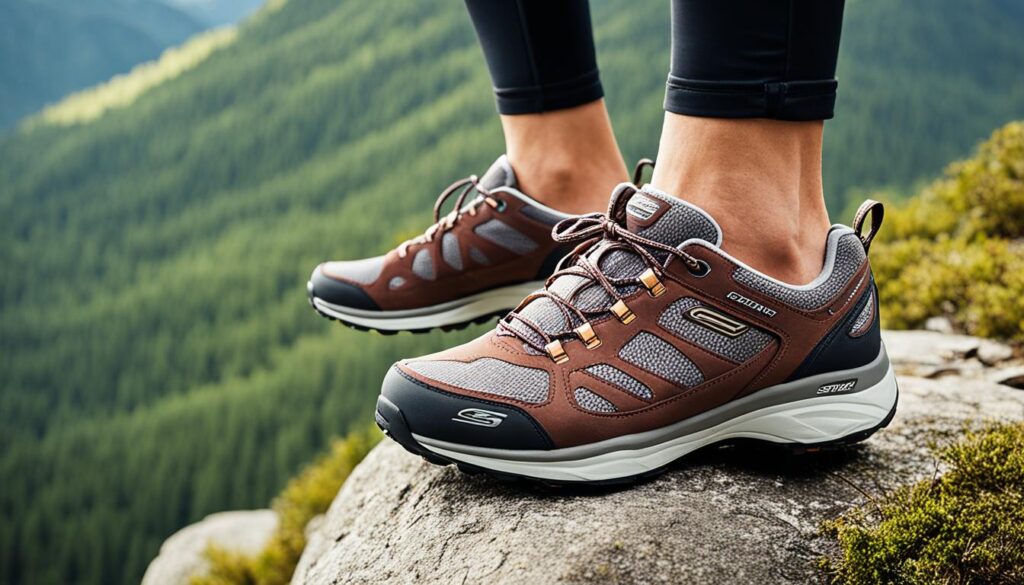
If you prefer slip-on shoes and find laces to be a hassle, the Sketchers GOwalk Joy is the perfect choice for your hiking adventures. These slip-on hiking shoes offer convenience without compromising on comfort or performance. Designed with the needs of hikers in mind, the Sketchers GOwalk Joy provides a comfortable and supportive experience on the trails.
The Sketchers GOwalk Joy features a responsive cushioning system that absorbs impact and provides exceptional comfort with every step. Whether you’re tackling rugged terrains or walking for long hours, the high-rebound cushioned insole offers optimal support and stability, helping to reduce fatigue and foot discomfort.
One of the standout features of these slip-on hiking shoes is the breathable mesh upper. The mesh material allows for better airflow, preventing excessive sweating and reducing the chances of foot swelling. This ensures that your feet stay cool and dry, even during intense hikes or in hot weather conditions.
Why Choose Sketchers GOwalk Joy?
The Sketchers GOwalk Joy stands out as one of the best slip-on hiking shoes available due to its exceptional comfort and thoughtful design. Here are some key reasons to consider the Sketchers GOwalk Joy for your hiking needs:
- Slip-on design: Enjoy the convenience of slipping on and off your shoes effortlessly, saving you time and eliminating the need to fuss with laces.
- Responsive cushioning: Experience superior comfort and shock absorption with the Sketchers GOwalk Joy’s responsive cushioning system, reducing strain on your feet and joints.
- High-rebound cushioned insole: The cushioned insole provides extra support and enhances overall comfort, allowing you to enjoy your hikes for longer durations without discomfort.
- Breathable mesh upper: Stay cool and sweat-free during your hikes with the breathable mesh upper that promotes airflow and prevents excessive moisture buildup.
| Key Features | Benefits |
|---|---|
| Slip-on design | Convenient and hassle-free |
| Responsive cushioning system | Enhanced comfort and shock absorption |
| High-rebound cushioned insole | Optimal support and stability |
| Breathable mesh upper | Improved airflow and reduced sweating |
| Durable construction | Long-lasting performance |
| Available in various colors | Style options to suit your preference |
With its slip-on design, responsive cushioning system, and breathable mesh upper, the Sketchers GOwalk Joy is the perfect choice for those seeking comfort and convenience in slip-on hiking shoes.
Investing in a pair of Sketchers GOwalk Joy slip-on hiking shoes ensures that you can enjoy your outdoor adventures without sacrificing comfort or style. Whether you’re hiking a local trail or exploring a national park, these slip-on shoes provide the support and comfort you need to make the most of your hiking experience.
Best Trail Running Hiking Shoes: Saucony Ride 15 TR
The Saucony Ride 15 TR is an exceptional choice for trail runners who are also avid hikers. These shoes are specifically designed to provide comfort and reliable traction, ensuring a seamless transition between different terrains. Let’s dive into the features that make the Saucony Ride 15 TR the best option for trail running and hiking enthusiasts alike.
Comfortable and Supportive Fit
The Saucony Ride 15 TR boasts a FORMFIT design that embraces the contours of your feet, providing a personalized fit that feels like a second skin. This enables maximum comfort and minimizes the risk of blisters or discomfort during longer hikes or trail runs. The supportive webbing system further enhances stability, allowing you to navigate rugged terrains with confidence.
Durable and Breathable
The protective and breathable mesh upper of the Saucony Ride 15 TR ensures excellent ventilation, keeping your feet cool and dry even during intense activities. The shoe’s durable construction allows it to withstand the demands of trail running and hiking, ensuring it remains a reliable companion for your outdoor adventures.
Environmentally Friendly
For those who prioritize sustainable products, the Saucony Ride 15 TR is a great choice. These shoes are vegan and made with recycled materials, reducing their impact on the environment. By choosing the Saucony Ride 15 TR, you can enjoy your trail runs and hikes while supporting eco-friendly practices.
Summary
The Saucony Ride 15 TR stands out as the best trail running hiking shoe due to its comfort, reliable traction, and durable design. It offers a personalized fit, excellent breathability, and environmental consciousness. Whether you’re a seasoned trail runner or an avid hiker, the Saucony Ride 15 TR is a reliable and comfortable choice for your outdoor pursuits.
Conclusion
When it comes to choosing the best hiking shoes for knee problems, support and comfort are key factors to consider. We have highlighted three top options that prioritize both, namely the Orthofeet Edgewater Stretch, Sketchers GOwalk Joy, and Saucony Ride 15 TR.
The Orthofeet Edgewater Stretch stands out as an excellent choice, especially for individuals with wider feet. With widths up to XX-wide, these shoes provide the necessary space and arch support to alleviate pain and maintain good posture. They are also beneficial for those with conditions such as bunions, hammer toes, or arthritis in the toes.
If you prefer slip-on hiking shoes, the Sketchers GOwalk Joy is a fantastic option. Designed for easy wear without the hassle of laces, these shoes offer exceptional cushioning and breathability. The responsive cushioning system and high-rebound cushioned insole ensure optimal comfort, while the mesh upper keeps your feet cool and prevents swelling.
If you enjoy both hiking and trail running, the Saucony Ride 15 TR is an ideal choice. These shoes are specifically designed for outdoor activities, offering reliable traction and a personalized fit. The supportive webbing and protective, breathable mesh upper keep your feet secure and comfortable, even on challenging terrains. These vegan shoes also contribute to environmental sustainability by incorporating recycled materials.
While these are our top recommendations, it’s essential to consult with a healthcare professional for personalized advice and treatment options for knee pain. They can provide valuable guidance based on your specific needs. Don’t let knee problems limit your outdoor adventures. Invest in the right pair of hiking shoes, and embark on your hiking journeys with confidence, knowing that you have the support and comfort to keep you pain-free.
FAQ
What are the best hiking shoes for knee problems?
Some of the best hiking shoes for knee problems are the Orthofeet Edgewater Stretch, Sketchers GOwalk Joy, and Saucony Ride 15 TR. These shoes offer support, comfort, and features specifically designed to alleviate knee pain during hiking.
Are there any hiking shoes that are suitable for wide feet?
Yes, the Orthofeet Edgewater Stretch is a great option for people with wider feet. These shoes come in widths up to XX-wide and feature a wide toe box, making them ideal for those with bunions, hammer toes, or arthritis in the toes.
Which hiking shoes are slip-on and do not require laces?
The Sketchers GOwalk Joy is a slip-on hiking shoe that does not require laces. It is perfect for individuals who find laces difficult and offers a responsive cushioning system, a high-rebound cushioned insole, and a breathable mesh upper for optimal comfort.
Do you have any recommendations for trail running hiking shoes?
Yes, the Saucony Ride 15 TR is a trail running shoe that can also be used for hiking. It provides comfort, reliable traction, and features a supportive webbing and breathable mesh upper. It is designed to hug the foot for a personalized fit and contains recycled materials.
How important is support and comfort when choosing hiking shoes for knee problems?
Support and comfort are crucial when choosing hiking shoes for knee problems. Proper support can help alleviate knee pain and reduce the risk of further injury. Comfortable shoes with cushioning and a good fit can also minimize discomfort and allow for longer, pain-free hikes.


One Comment