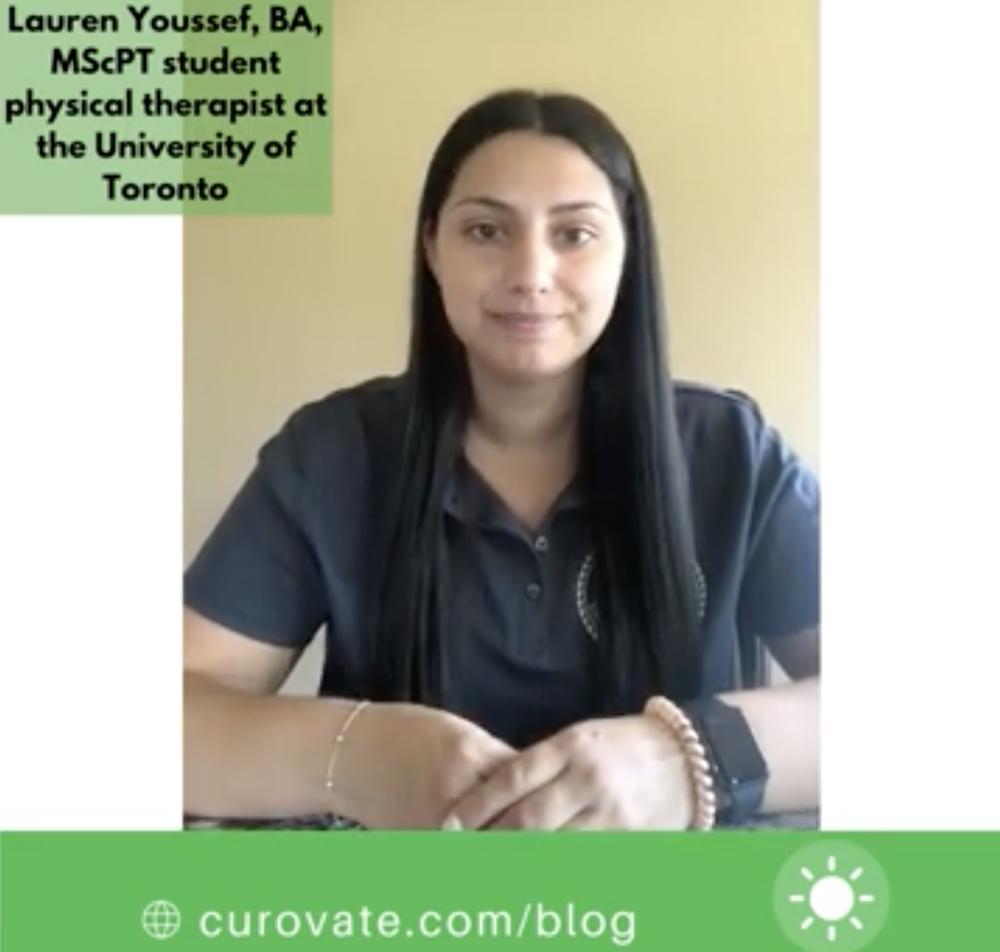
Screenshot 2023 05 11 at 2.54.38 PM 1
|

Have I torn my ACL again? How do I know if I have re-damaged my ACL graft?


After ACL surgery, many people worry that they have re-damaged their ACL or torn their ACL graft. If you are concerned about this, know that this is a common concern. You have undergone a stressful operation and have probably experienced significant pain and limitations in your movement. In your eyes, the worst thing would be if you damaged the ACL graft and now had to go through it all again! Many people worry that simple activities such as bending and straightening their knee after surgery can damage the ACL. Others worry that simply by putting weight on their leg they may damage their ACL graft. These activities do not result in an ACL graft tear. In this video, Lauren Youssef, a physiotherapy student at the University of Toronto, explains why your ACL graft is unlikely to re-rupture after surgery with normal movements and recovery exercises. If you’d also like to learn more about the ACL recovery timeline, we have a great blog on that topic here.

To read the entire blog and learn more about ACL re-injury, read Lauren’s blog “Did I re-torn my ACL graft after surgery?”

Make sure you do everything you need to recover after your ACL injury or surgery by downloading Curovate from the links below. Curovate is a physiotherapy app that provides daily video-guided exercises for each day of your recovery. Curovate also tracks your progress and gives you the ability to measure your knee’s range of motion using just your phone.

If you need more tailored help after your ACL surgery or ACL injury, check out our Virtual Physiotherapy page to book your 1-on-1 video session with a physiotherapist.

app-store-badge-128x128-2 google-play-badge-128x128

Other blogs related to ACL injuries:

1. ACL injury. (2021, March 10). Retrieved from https://www.mayoclinic.org/diseases-conditions/acl-injury/symptoms-causes/syc-20350738

2. Beischer, S., Gustavsson, L., Senorski, E. H., Karlsson, J., Thomeé, C., Samuelsson, K., & Thomeé, R. (2020). Young athletes who return to sports within nine months of anterior cruciate ligament reconstruction are seven times more likely to sustain new injuries than those who delay their return. The Journal of Orthopedic and Sports Physiotherapy, 50(2), 83–90.

3. Kaeding, C. C., Pedroza, A. D., Reinke, E. K., Huston, L. J., MOON Consortium, & Spindler, K. P. (2015). Risk factors and predictors of subsequent ACL injury in both knees after ACL reconstruction: prospective analysis of 2488 primary ACL reconstructions from the MOON cohort. The American Journal of Sports Medicine, 43(7), 1583–1590.

4. Lai, C., Ardern, CL, Feller, JA, & Webster, KE (2018). Eighty-three percent of elite athletes return to sport before injury after anterior cruciate ligament reconstruction: a systematic review with meta-analysis of return to sport, graft rupture rates and performance outcomes. British Journal of Sports Medicine, 52(2), 128–138.

5. Nagelli, CV, & Hewett, TE (2017). Should the return to sport be postponed until two years after anterior cruciate ligament reconstruction? Biological and functional considerations. Sports Medicine (Auckland, NZ), 47(2), 221–232.

6. Noyes, F. R., Huser, L. E., Ashman, B., & Palmer, M. (2019). Anterior cruciate ligament graft conditioning required to prevent abnormal Lachman and twist shift after ACL reconstruction: a robotic study of 3 ACL graft constructs. The American Journal of Sports Medicine, 47(6), 1376–1384.

7. Paterno, MV, Rauh, MJ, Schmitt, LC, Ford, KR, & Hewett, TE (2014). Incidence of second ACL injuries 2 years after primary ACL reconstruction and return to sport. The American Journal of Sports Medicine, 42(7), 1567–1573.

8. Samuelsen, BT, Webster, KE, Johnson, NR, Hewett, TE, & Krych, AJ (2017). Hamstring autograft versus patellar tendon autograft for ACL reconstruction: is there a difference in graft failure rate? A meta-analysis of 47,613 patients. Clinical Orthopedics and Related Research, 475(10), 2459–2468.

Source link

Similar Posts

  • Take a dunk if you want, but don’t expect more

      Effects of cold water immersion compared to other recovery modalities on athletic performance after acute strenuous exercise in physically active participants: a systematic review, meta-analysis and meta-regression. Moore E, Fuller JT, Bellenger CR, Saunders S, Halson SL, Broatch JR, Buckley JD. Sports Med. December 17, 2022. doi: 10.1007/s40279-022-01800-1. E-publishing prior to printing. PMID: 36527593….

  • Team sports linked to fewer mental health problems for children

      A large-scale study of American children and adolescents found that participation in a team sport is associated with fewer mental health problems, but that children involved exclusively in an individual sport – such as tennis or wrestling – may face greater mental health problems. health problems than children who do not exercise at all….

  • |

    Ginger shows promise as a natural defense against autoimmune diseases

      This is evident from a recent study published in the journal JCI Insight, the authors built on their previous work examining the anti-autoimmune disease effects of 6-gingerol, the most abundant phytochemical produced by the roots of the ginger herb. Because their previous work showed that this plant extract could reverse the effects of neutrophil…

  • |

    Knee replacement rehab timeline

    What if the most critical part of your joint procedure happens after you leave the operating room? We understand that navigating the path to healing can feel overwhelming. Our guide is here to provide the clarity you need for a successful journey. knee replacement rehab timeline Data shows that movement often starts very quickly. Physical therapy typically begins within 24 hours after your procedure. This early step is vital for promoting faster healing and restoring mobility. For most people, the complete process of regaining strength spans several months. It’s a journey from the initial post-operative phase to full recovery, often taking between six and twelve months. We aim to help you manage expectations about the time required to return to the activities you love. While every patient’s experience is unique, understanding the general phases can significantly reduce anxiety. By following a structured plan, you can improve function and regain the independence you enjoyed before joint pain began. Your commitment to rehabilitation directly influences the long-term success of your new joint and overall health. Key Takeaways Physical activity often starts within a day of your procedure to aid healing. The full recovery process generally takes between six months and a year. Your personal journey is unique, but knowing common stages reduces worry. A structured plan is crucial for regaining function and independence. Your dedication to the process directly impacts your long-term results. This guide provides clarity to navigate each stage with confidence. Understanding Knee Replacement Surgery We believe informed patients are empowered patients, starting with the details of the operation itself. Knowing which procedure is right for you is a crucial first step in preparing for your healing journey. Differences Between Total and Partial Knee Replacement A total knee replacement involves resurfacing the entire joint with an artificial structure. Surgeons cut away worn cartilage and bone to create a new surface. In contrast, a partial knee replacement focuses only on the damaged compartment. This targeted approach often leads to a quicker recovery process with less discomfort. What to Expect During Surgery and Initial Recovery During your replacement surgery, the medical team precisely aligns the new components. This careful work is done to restore smooth movement and function. Your personal recovery timeline is influenced by factors like your age and general health. Understanding these differences helps you set realistic goals for after your knee surgery. The ultimate goal of this joint procedure is to provide lasting relief from chronic pain and improve your mobility. Immediate Post-Surgery Recovery The journey to regain your mobility starts the moment you wake from anesthesia. Your active participation is vital from these first hours. immediate post surgery recovery We emphasize that structured support begins almost immediately. This early phase sets the foundation for your entire healing process. Day 1: Initiating Rehabilitation and Mobility Physical therapy often starts within 24 hours of your procedure. Your physical therapist will help you take those first, crucial steps. They guide you in standing and walking with a walker or crutches. These initial sessions focus on basic, safe movements. You’ll practice sitting at the bedside and transferring your weight. This early activity promotes circulation and helps prevent complications. Transitioning from Hospital to Home Your medical team must see you meet specific safety criteria before discharge. You need to manage pain well and demonstrate independent movement. Key goals include standing from a chair and using the bathroom alone. Navigating a short flight of stairs is also a common requirement. Some individuals may leave the hospital on the same day as their operation. This is possible if all safety boxes are checked. Your care team will provide clear instructions for protecting your new joint. They will also give you simple exercises to continue at home. The First Week: Early Rehabilitation Steps Navigating the initial week after your operation requires a clear focus on gentle movement and symptom management. We guide you through this period where your routine prioritizes restoring a natural walking pattern and improving joint flexibility. early rehabilitation steps Guided Physical Therapy Exercises for Range of Motion During the first 48 hours, the primary goal is achieving full extension and increasing flexion. Your physical therapist will recommend specific movements to help. These early exercises are designed to prevent stiffness and promote circulation. Your daily routine is crucial for maintaining flexibility in this joint. Managing Pain, Swelling, and Initial Activity Controlling discomfort is a priority. Your doctor may advise using ice packs, elevating your leg, and taking medication as directed. You must monitor your incision site closely. The American Association of Hip and Knee Surgeons suggests waiting 5 to 7 days before showering if non-waterproof dressings are used. We encourage gentle activity, like using a stationary bike. This helps the area regain strength without overexertion. If you experience severe pain or excessive swelling, stop and consult your physical therapist or surgeon immediately. Following a structured rehabilitation timeline is key for a successful recovery….

3 Comments

Leave a Reply

Your email address will not be published. Required fields are marked *