ImageForNews 761321 1696997809292788
|

Inflammatory diseases do not increase the risk of clotting after COVID, research shows


This is evident from a recent study published in the journal JAMA network openedResearchers in Canada investigated whether coronavirus disease 2019 (COVID-19) patients with immune-mediated inflammatory diseases (IMIDs) were at higher risk of experiencing venous thromboembolism after recovery from severe acute respiratory syndrome coronavirus 2 (SARS-CoV- 2) infections compared to COVID-19 patients without IMIDs.
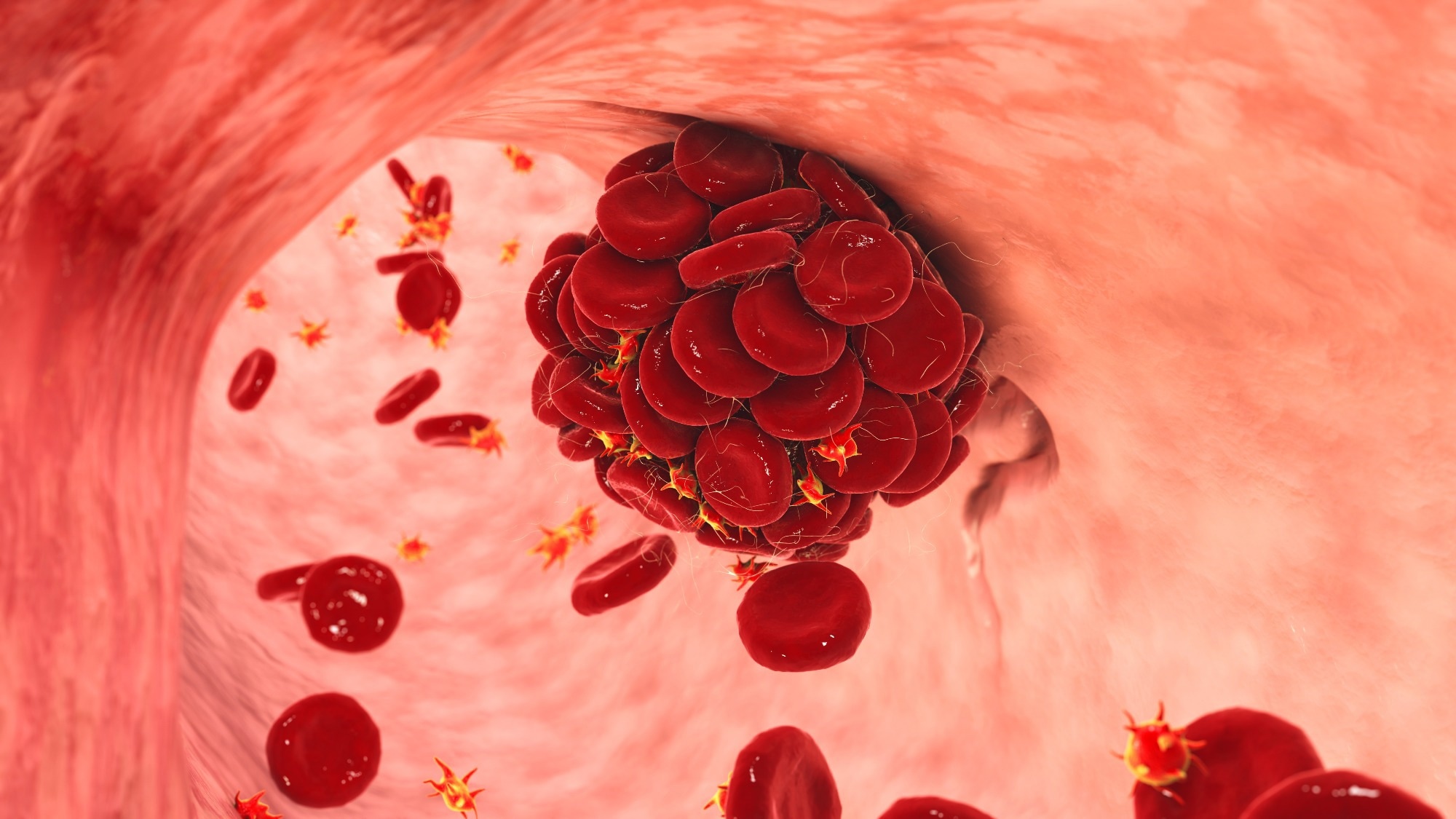
Study: Venous thromboembolism after COVID-19 infection in people with and without immune-mediated inflammatory diseases. Image credits: Kateryna Kon / ShutterstockStudy: Venous thromboembolism after COVID-19 infection in people with and without immune-mediated inflammatory diseases. Image credits: Kateryna Kon / Shutterstock

Background

Immune-mediated inflammatory diseases are heterogeneous chronic diseases resulting from an abnormally activated immune system. Approximately 5% to 7% of the population of the Western world is affected by IMIDs, and individuals with IMIDs have a higher risk of venous thromboembolism compared to individuals without IMIDs. Rheumatoid arthritis, multiple sclerosis, vasculitis, inflammatory bowel disease, and psoriasis are IMIDs known to increase the risk of venous thromboembolism.

The inflammation in IMID patients causes platelet abnormalities, endothelial dysfunction, fibrinolysis disorders, and abnormal activation of clotting factors. Recent evidence also indicates that the widespread inflammation and endothelial dysfunction caused by COVID-19 is associated with a higher risk of venous thromboembolism and multi-organ failure in patients who have recovered from moderate to severe SARS-CoV-2 infections. However, whether COVID-19 increases the risk of venous thromboembolism in patients with IMIDs remains unknown.

About the study

In the current study, the researchers used population-based healthcare data from Ontario, Canada, to evaluate whether the risk and incidence of venous thromboembolism were higher in individuals with IMIDs who had recovered from COVID-19 compared to COVID-19 . patients without IMIDs.

The data includes all interactions Ontario residents with valid health cards had with the health care system, including emergency room visits, hospital admissions, outpatient surgeries and single-day hospital admissions. In addition, physician billings for all patient interactions were included in the data. The administrative health information was also linked to databases containing demographic information and data on COVID-19 testing and vaccination status.

In the retrospective matched cohort analysis, researchers matched individuals who had IMIDs and tested positive for COVID-19 with up to five individuals who tested positive for COVID-19 but did not have IMIDs. Controls were compared based on factors such as age, gender, urban or rural residence, and average income quantile of the neighborhood. Individuals with a diagnosis of malignant neoplasm five years after a positive COVID-19 test were excluded from the study.

Positive cases of COVID-19 were identified based on polymerase chain reaction (PCR) results, while individuals with IMIDs were identified based on physician billings, records of endoscopy procedures, and medication prescriptions specific to IMIDs. Data on hospital admissions and emergency department visits were used to identify events of venous thromboembolism. The primary outcome examined was venous thromboembolism of any type, with secondary outcomes including pulmonary embolism and deep venous thrombosis.

A modified Charlson Comorbidity Index was used to include comorbidities such as diabetes, chronic obstructive pulmonary disease, or congestive heart failure before the positive diagnosis of COVID-19. Individuals with at least two vaccination doses before positive diagnosis of COVID-19 were considered vaccinated. In addition, socio-demographic factors such as residential areas in urban or rural areas, gender, age, socio-economic status and death before the conclusion of follow-up were also taken into account during the analysis.

Results

The findings suggested that individuals with IMIDs did not have a significantly higher risk of venous thromboembolism after recovery from SARS-CoV-2 infections compared to individuals without IMIDs. Among the 28,440 individuals with IMIDs included in the study, the incidence of venous thromboembolism was 2.64 per 100,000 person-days, while in the matched cohorts of individuals without IMIDs it was 2.18 per 100,000 person-days.

However, when the analysis was not adjusted for comorbidities, those with IMIDs had a greater risk of venous thromboembolism after recovery from COVID-19 than those without IMIDs. Furthermore, findings were similar when the risk of deep venous thrombosis and pulmonary embolism was examined separately.

The presence of other comorbidities was found to confound the association between venous thromboembolism and IMIDs after SARS-CoV-2 infections. These findings highlight the need for physicians to consider factors such as comorbidities and individual risk factors when prescribing venous thromboembolism prophylactics to IMID patients who have recovered from COVID-19.

Conclusions

Overall, the findings reported that patients with IMIDs are not at greater risk of venous thromboembolism after SARS-CoV-2 infections compared to COVID-19 patients without IMIDs. However, some comorbidities may confound the association between IMIDs and venous thromboembolism associated with COVID-19, and physicians should consider individual risk factors when treating IMID patients for COVID-19 complications.

Magazine reference:

  • Khan, R., Ellen, K. M., Tang, F., James, Widdifield, J., McCurdy, J. D., Kaplan, GG, & Benchimol, E. I. (2023). Venous thromboembolism after COVID-19 infection in people with and without immune-mediated inflammatory diseases. JAMA network opened, 6(10), e2337020–e2337020. https://doi.org/10.1001/jamanetworkopen.2023.37020

Source link

Similar Posts

  • | |

    New research shows a better way to easily assess knee muscle function

      Muscle strength and its improvement are important for everyone for their daily activities. Conventionally, muscle function can be assessed through physical performance tests and/or muscle strength measurements. However, these methods are not applicable to people who cannot undergo forceful muscle contractions, such as infants, the elderly, and patients with injuries or cognitive impairment (such…

  • Understanding Knees Osteoarthritis Diagnosis

    Welcome to our informative guide on understanding knee osteoarthritis diagnosis. In this article, we will explore the process of diagnosing knee osteoarthritis, including when it is diagnosed and how it can be detected early. If you are experiencing knee pain or have concerns about osteoarthritis, read on to gain valuable insights into this common condition….

  • Xtant Medical Announces Record Third Quarter Revenue of $25 Million

      Increases 2023 annual revenue guidance to $88 million – $91 million BELGRADE, Mont., November 09, 2023 (GLOBE NEWSWIRE) — Xtant Medical Holdings, Inc. (NYSE American: XTNT), a global medical technology company focused on surgical solutions for the treatment of spinal conditions, today reported financial and operating results for the third quarter ended September 30,…

  • |

    Is there a connection between the onset of psoriasis and the risk of autoimmune diseases?

      In a recent study published in the Scientific Reports Journal, researchers evaluated the risk of new autoimmune diseases in individuals with early psoriatic disease. Study: Risk of incident autoimmune diseases in patients with newly diagnosed psoriatic disease: a national population-based study. Image credits: Flystock/Shutterstock.com Background Psoriatic disease, which often includes psoriasis and psoriatic arthritis,…

  • |

    Mercy Medical Center now offers a new smart implant for the knee with benefits for patient and surgeon

      BALTIMORE , Oct. 26, 2023 /PRNewswire-PRWeb/ — Orthopedic surgeons Marc W. Hungerford, MD, Chief of Orthopedics at Mercy Medical Center, and Philip Neubauer, R.Ph., MD, Orthopedics and Joint Replacement at Mercy, are among the first surgeons in Maryland that offered “smart implant” technology during knee replacement surgeries. Developed by ZIMMER BIOMET, the Persona IQ®…

  • |

    Knee replacement age limit

    Is there a magic number that determines when you’re too old for a joint procedure? This is one of the most common questions we hear from individuals struggling with persistent pain. Many believe a strict cutoff exists. In reality, the decision for this surgical intervention is far more nuanced. Nearly one million of these procedures are performed each year in the United States. knee replacement age limit discussion We find the timing is based on your unique health profile, not just the calendar. Your specific joint condition and how it impacts your daily mobility are the true guides. While concerns about being “too old” are frequent, we see successful outcomes across a wide spectrum of years. The focus should be on your overall wellness and the level of disability you’re experiencing. Key Takeaways There is no universal, strict age cutoff for considering a joint procedure. The decision is highly individual, based on health and lifestyle factors. Successful outcomes are achieved for patients of various ages. Your specific level of pain and disability is a more critical factor than your birth year. Nearly one million of these surgeries are performed annually in the U.S. A consultation focuses on your overall wellness, not just a number. Understanding Knee Replacement Surgery When pain from joint degeneration becomes debilitating, many consider surgical intervention as a viable solution. This procedure, formally called arthroplasty, removes damaged bone and cartilage. Artificial implants are then secured to restore smooth movement. understanding knee replacement surgery What Is Knee Replacement? Arthroplasty is a major operation performed by orthopedic specialists. During this surgery, the ends of the thigh and shin bones are reshaped. Metal and plastic components are fixed in place to create a new joint surface. The goal is to eliminate discomfort and improve mobility. According to Toni Golen, M.D., and Hope Ricciotti, M.D., these artificial joints typically function well for 15 to 20 years. This durability influences the timing of the operation. Who Are the Ideal Candidates? We identify suitable candidates based on several key factors. The severity of arthritis discomfort is a primary consideration. Individuals whose chronic pain persists despite medications or injections are often good candidates. Doctors also examine how the joint has deteriorated over time. When non-surgical options no longer provide relief, this procedure may be recommended. Research shows 80% to 90% of individuals report positive outcomes after their operation. Evaluation Factor Description Importance Level Pain Level Chronic discomfort that limits daily activities High Treatment Response Lack of improvement with conservative therapies High Joint Damage Visible degeneration on X-rays or scans High Overall Health Ability to tolerate anesthesia and recovery Critical Activity Goals Desire to return to specific functions Moderate Younger patients may be advised to wait for optimal timing. This ensures the implant lasts for many years. The decision ultimately balances current suffering with long-term health outcomes. Medical Factors Beyond Age Medical professionals look beyond the calendar to evaluate a person’s fitness for a major joint operation. Your specific health profile and daily function are the true guides. Overall Health and Its Role We emphasize that your overall health is critical. It determines if you can handle the demands of surgery and recovery. Clinics like Integrity Spine & Orthopedics stress trying conservative options first. These treatments include physical therapy and joint injections for pain relief. Exhausting these paths is a key step before considering an operation. medical factors beyond…

One Comment

Leave a Reply

Your email address will not be published. Required fields are marked *