Knee pain after hiking downhill

Knee pain after hiking downhill

Ever wondered why conquering a mountain peak feels easier than navigating the descent? The answer lies in the hidden strain placed on your body during downhill treks. While uphill hikes challenge endurance, descending trails amplify pressure on joints and muscles in ways many adventurers underestimate.

Research from Harvard Medical School reveals that forces exerted on joints during descents can reach 2-3 times body weight. This occurs because your quadriceps work overtime to control momentum through eccentric contractions—a process where muscles lengthen under tension. Dr. Jenny Iyo, DPT, notes this repetitive stress often leads to discomfort around the kneecap area, signaling potential overuse injuries.

Many hikers report sharp sensations below the kneecap after steep trails, a telltale sign of strained tendons. At JACO Rehab, we’ve observed that improper technique and weak stabilizing muscles frequently contribute to these issues. The good news? Simple adjustments to stride length, footwear, and equipment can dramatically reduce strain.

Key Takeaways

  • Descending trails generates forces up to three times your body weight on joints
  • Eccentric muscle contractions during downhill movement increase injury risk
  • Proper hiking techniques and strength training help prevent chronic issues
  • Trekking poles redistribute pressure away from vulnerable areas
  • Early intervention prevents minor discomfort from becoming long-term damage

Through biomechanical insights and field-tested strategies, we’ll show how to protect your joints while enjoying nature’s vertical challenges. Let’s explore why preparation matters as much as the adventure itself.

Understanding the Biomechanics of Knee Pain on Downhill Trails

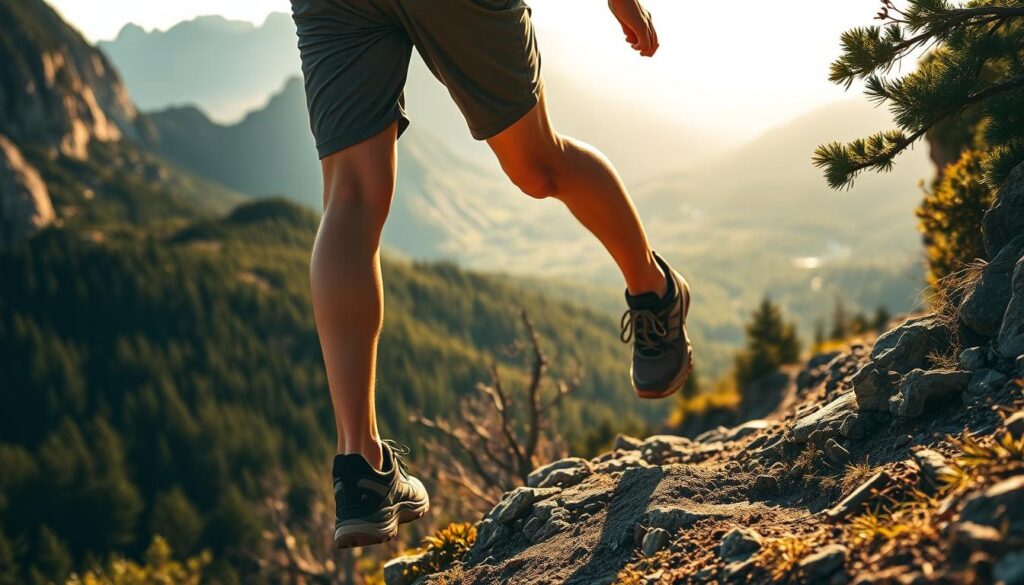
Descending steep terrain challenges your body in ways that often go unnoticed until discomfort arises. The secret lies in how your muscles engage during different phases of movement. Unlike uphill climbs where muscles shorten (concentric contractions), downhill travel forces them to lengthen while bearing weight—a process called eccentric loading.
eccentric muscle contractions hiking

Eccentric vs. Concentric Muscle Contractions

When ascending, your quadriceps contract concentrically to propel upward. Descending reverses this dynamic—your quads lengthen under tension to control speed. This continuous braking action generates microscopic tears in muscle fibers and tendons. Over time, this strain can irritate tissues around the kneecap, especially with improper form.

How Joint Forces Impact the Knees

Each downward step multiplies gravitational forces through your legs. Research shows these loads exceed three times body weight during steep descents. Weak glutes or tight hamstrings shift extra pressure to vulnerable areas like the patellar tendon. Misaligned steps further amplify stress, creating ideal conditions for inflammation.

Proper technique reduces strain by distributing forces across multiple muscle groups. Keeping steps short and engaging core stabilizers helps maintain balance. Pairing these strategies with strength training builds resilience against repetitive stress injuries.

Common Causes and Contributing Factors

Why do some adventurers breeze through descents while others struggle with persistent discomfort? The answer lies in hidden biomechanical factors that amplify strain during downward movement. Our analysis of trail injury patterns reveals three primary culprits demanding attention.

Repetitive Impact and Tissue Damage

Continuous downhill travel subjects connective tissues to relentless pounding. Studies show patellar tendon inflammation accounts for 38% of trail-related complaints, while meniscus tears often develop from twisting motions on uneven terrain. These conditions frequently stem from:

Condition Primary Cause Prevention Tip
Patellar Tendonitis Repetitive eccentric loading Shorter strides
Meniscus Tears Rotational forces on slopes Strengthen hip stabilizers
IT Band Syndrome Poor leg alignment Foam rolling routine

Alignment Errors Amplify Strain

Subtle postural imbalances create cascading effects during descents. Knocked knees or excessive foot pronation redirect forces toward vulnerable joint areas. JACO Rehab’s motion analysis found 62% of hikers exhibit alignment issues that accelerate wear-and-tear injuries.

Common technique flaws include locked joints during impact and improper weight distribution. These habits concentrate pressure on specific structures rather than dispersing forces through muscle groups. Early intervention through gait analysis often prevents chronic damage.

Remember: Discomfort in surrounding areas like hips or ankles frequently signals underlying alignment problems. Consulting movement specialists helps identify these red flags before they escalate into debilitating conditions.

Knee pain after hiking downhill: Effective Prevention Techniques

Mastering descents requires more than endurance—it demands smart biomechanics. We’ve identified three core strategies that help adventurers protect their lower-body joints while maintaining trail enjoyment.

hiking prevention techniques knee health

Optimizing Movement Mechanics

Lean forward slightly with shoulders above hips. This posture distributes forces evenly across muscle groups. Keep steps short—no longer than your natural stride length. Overextending increases braking forces by 40%.

Neutral leg alignment prevents sideways stress on connective tissues. Imagine drawing a straight line from hip to ankle during each step. Engage core muscles to stabilize your pelvis, reducing rotational strain.

Smart Gear Selection

Trekking poles cut joint loads by 25% when used correctly. Plant them slightly ahead during descents to activate upper-body support. Pair with compression sleeves that enhance proprioception around vulnerable areas.

Prevention Technique Primary Purpose Key Benefit
Shorter strides Reduce impact forces Minimizes muscle microtears
Pole usage Redirect pressure Decreases joint compression
Supportive footwear Improve alignment Prevents compensatory movements

Backpack weight matters too. Every 10lbs adds 30lbs of force during downward steps. Use hip belts to transfer load away from sensitive areas. Our movement specialists recommend assessing gear choices during pre-hike preparations.

Monitor discomfort levels using a 1-10 scale. Moderate sensations (level 3-4) suggest needing technique adjustments. Sharp or persistent signals (level 5+) warrant professional evaluation. Remember: Early intervention preserves long-term trail mobility.

Strengthening Exercises and Rehabilitative Strategies

Building resilience against trail stresses begins with intentional conditioning. Our rehabilitation specialists developed protocols that address muscle imbalances while enhancing joint stability. These methods blend strength training with dynamic movement patterns for lasting protection.

Targeted Muscle Workouts

Focus on multi-joint movements that mimic trail demands. Clamshells activate glute medius to prevent hip drop during descents. Single-leg squats build quadriceps endurance while improving balance. Add resistance bands to lateral hops for lateral stability challenges.

Exercise Primary Focus Recommended Sets
Standing Hydrants Glute Activation 3×12 per side
Eccentric Step-Downs Quad Control 2×10 per leg
Plank Row Core Stabilization 3×15

Balance and Recovery Essentials

Incorporate wobble board drills twice weekly to sharpen proprioception. Post-hike yoga flows restore flexibility in tight hip flexors and IT bands. Foam rolling quads and calves accelerates recovery by 40% compared to passive rest.

Preparation Protocols

Dynamic warm-ups prime muscles for uneven terrain. Try leg swings paired with bodyweight squats before hitting trails. Cross-training with cycling maintains cardiovascular fitness without joint strain. Experts at Sustain PT Performance recommend 20-minute mobility sessions three times weekly for optimal results.

Conclusion

Trail adventures test our resilience in unexpected ways. Understanding how muscle engagement and gravitational forces affect the body helps hikers make smarter choices. Proper form and equipment like trekking poles can significantly reduce strain during descents.

Consistent strength training builds stability in vulnerable areas. Exercises targeting glutes and quads create better load distribution. Pair these with regular mobility work to maintain joint health over time.

Listen to your body’s signals. Mild discomfort often improves with rest and ice, but persistent issues warrant professional evaluation. Our team at JACO Rehab emphasizes early intervention to prevent minor irritation from becoming chronic injury.

Implement these strategies before your next adventure. Consult a physical therapist for personalized prevention plans if challenges persist. With mindful preparation, you’ll keep exploring nature’s wonders while protecting your mobility.

FAQ

How do muscle contractions impact stress on joints during descents?

We emphasize eccentric contractions (lengthening under tension) to control movement speed. These contractions absorb shock more effectively than concentric motions, reducing sudden impacts on cartilage and connective tissues.

Why does descending increase pressure on joints?

Gravity multiplies forces by up to 8x body weight during declines. This strains tendons like the patellar and stresses menisci, especially with improper form or weak stabilizers like glutes and quads.

What conditions commonly lead to discomfort after steep hikes?

Overuse injuries such as patellar tendonitis, meniscus tears, and iliotibial band syndrome often arise. Repetitive strain without adequate recovery or strength training exacerbates these issues.

Can body mechanics affect injury risk during downhill treks?

Yes. Valgus collapse (inward knee buckling) or hip weakness shifts load unevenly. We recommend gait analysis and drills to improve alignment, reducing torque on ligaments.

What techniques reduce strain when navigating declines?

Lean slightly forward, engage core muscles, and shorten strides. Use a zigzag pattern on steep trails to minimize direct impact, and avoid locking joints when planting feet.

How do trekking poles assist in minimizing joint load?

Adjustable poles from brands like Black Diamond or Leki redistribute 20-30% of forces to the upper body. Plant them slightly ahead to stabilize each step and ease eccentric demands.

Which exercises build resilience for challenging terrain?

Step-downs, Bulgarian split squats, and resistance band routines (using TheraBand) target quads, hamstrings, and hips. Plyometric drills improve shock absorption capacity over time.

Why are stability exercises crucial for injury prevention?

Single-leg balances and proprioceptive drills enhance neuromuscular coordination. This helps maintain proper form during fatigue, preventing missteps that strain tendons or cartilage.

How does cross-training prepare the body for demanding hikes?

Activities like cycling or swimming build endurance without excessive impact. Dynamic warm-ups with lunges and leg swings also prime muscles for eccentric loading during descents.


Similar Posts

  • |

    Knee pain after sex

    What if a common physical sensation is quietly shaping the quality of our most private moments? This discomfort can feel isolating. It may make us pull back from our partner. The American Osteopathic Association notes that about one-third of Americans live with joint issues that hinder daily activities. knee pain after sex This statistic reflects a wider reality. When our bodies signal distress, it often echoes in our shared life. The ache isn’t just physical. It can create an invisible barrier to intimacy. We believe understanding is the first step toward change. By exploring the reasons behind this discomfort, we can make smart adjustments. Small changes to our routine can have a big impact. Our goal is to help you move from frustration to solution. Let’s look at how to protect your physical connection and ensure your experiences remain fulfilling and joyful. Key Takeaways Joint discomfort during intimate moments is a common issue that affects emotional and physical connection. Nearly one-third of adults in the U.S. report joint-related problems that impact their daily quality of life. This physical barrier can lead to avoiding closeness, which may strain a relationship. Identifying the root cause of the discomfort is a crucial proactive step toward improvement. Simple adjustments to routines and positions can help maintain a healthy and satisfying sex life. Open communication with your partner about physical limits is essential for mutual comfort. Seeking professional guidance can provide tailored strategies for long-term relief and enjoyment. Understanding Knee Pain After Sex It’s a reality for many: seeking closeness, only to be met with a sharp, distracting sensation. This discomfort has specific roots. Knowing them helps us adapt and find relief. Common Causes and Triggers Physical intimacy involves movement and pressure. These actions can strain the joint if it’s already sensitive. A sudden twist or prolonged kneeling might be the direct trigger. Interestingly, gentle motion can be helpful. Maiken Jacobs, an orthopedic patient educator, notes that moving a joint through its range of motion can release endorphins. This is good for your condition. Acute vs. Chronic Pain Explained We must distinguish between two main types. Acute discomfort often results from sudden injuries, like a sprain. It comes on quickly and usually fades with time and care. Chronic issues stem from long-term conditions. Osteoarthritis is a common example. This ongoing pain affects mobility and daily comfort for many people. Identifying which type you’re experiencing is the first step toward smart management. It guides our approach to maintaining a fulfilling connection. Preparing for Intimacy with Knee Sensitivity A little preparation can transform our intimate moments from a source of worry into a space of comfort and connection. We focus on simple, proactive steps that address physical sensitivity head-on. The Role of Warm Baths and Epsom Salts Starting with a warm bath is a powerful ritual. Adding Epsom salt helps soothe muscles and promotes deep relaxation. Taking a warm Epsom salt bath before intimacy can proactively ease joint discomfort and help you relax. Maiken Jacobs, Orthopedic Patient Educator This practice isn’t just solitary self-care. Turning it into a shared, sensual experience with our partner helps us both unwind and set the right mood. preparing for intimacy with knee sensitivity Pre-medicating and Managing Stress Stress tightens our bodies and can heighten our perception of discomfort. Managing tension is therefore a vital part of our preparation. If we’re concerned about potential aches, seeking information from a doctor is wise. They can advise on the ideal timing for taking an anti-inflammatory to maintain comfort. Proactive planning, like using a heating pad beforehand, ensures our focus stays on connection. Preparation Method Primary Benefit Key Consideration Warm Epsom Salt Bath Soothes muscles & promotes relaxation Can be a shared ritual with a partner Consulting a Doctor Personalized timing for medication Provides expert guidance for safety Stress Management Reduces tension that worsens discomfort Includes deep breathing or meditation…

  • |

    Failed knee replacement symptoms

    What if the relief you expected after your joint procedure never arrives? This unsettling question faces a small percentage of individuals each year. While statistics show that 85% to 90% of patients enjoy successful outcomes for 15 to 20 years after their initial knee replacement surgery, some do not. failed knee replacement symptoms We understand that persistent discomfort following this major operation can be a source of deep frustration. It can severely limit your mobility and daily life. Our guide is here to shed light on the various signs that may indicate your implant is not performing as designed. Identifying these indicators early is critically important. It ensures you get the right medical attention and potential intervention from a qualified specialist. If you experience persistent pain and stiffness, understanding the next steps is vital. We will walk you through common warning signs, the diagnostic process, and the treatment paths available to restore your comfort and movement. Key Takeaways Most knee replacement procedures are highly successful for many years. Recognizing early warning signs of a problem is crucial for your health. Specialized care models, like the one at University of Utah Hospital, combine expert teams for complex cases. Persistent pain, swelling, or instability after recovery should not be ignored. Several effective treatment options exist to address implant issues. Early consultation with an orthopedic surgeon can lead to better outcomes. Your long-term mobility and quality of life are the ultimate goals. Understanding Knee Replacement Surgery Modern orthopedic medicine offers a reliable solution for severe joint damage through artificial joint implantation. This procedure aims to restore comfortable movement when natural cartilage wears down. knee replacement surgery components How Knee Replacements Work During this operation, surgeons remove damaged joint surfaces. They replace them with precisely engineered metal and plastic components. These artificial parts are designed to glide smoothly. They mimic your joint’s natural motion, reducing discomfort. Fixation Method How It Works Key Consideration Cemented Fixation Special bone cement bonds the implant directly to your bone. Provides immediate, strong stability after the operation. Biologic Fixation The bone grows into a porous coating on the device over time. Creates a durable, long-term bond without cement. Surgeon’s Choice The method is selected based on your bone quality and age. Each technique has specific advantages for different situations. Long-Term Expectations and Implant Lifespan Most modern devices are engineered for durability. A typical lifespan ranges from 15 to 20 years. “The longevity of a joint implant depends on multiple factors, including the patient’s activity level and overall bone health.” We emphasize that these components are not indestructible. They experience natural wear from daily use over time. Regular monitoring helps ensure your artificial joint functions well for as long as possible. Your activity choices and general health play significant roles. Recognizing Failed Knee Replacement Symptoms When an artificial joint doesn’t function as intended, your body sends distinct signals that demand attention. Learning to identify these signs is crucial for your long-term health and mobility. Persistent Pain and Swelling Persistent pain in the knee joint that lingers long after the typical recovery period is a primary indicator. This pain isn’t normal soreness. It often presents as a deep, constant ache. Swelling around the knee joint that refuses to fade with rest is another red flag. Persistent pain and swelling are common companions. They can suggest underlying issues like inflammation or component loosening. Instability and Changes in Joint Function A feeling of instability, where your leg might buckle, is alarming. This instability often feels like the joint is giving way when you put weight on it. You might also notice a noticeable decline in how well it moves. Stiffness, developing a limp, or hearing odd popping noises are critical functional changes. We encourage you to monitor these signs closely. They are the primary indicators that your implant may require further clinical assessment. Common Causes of Knee Replacement Failure…

  • |

    Medial Retinaculum Tear: Understanding, Treating, and Recovering from This Common Knee Injury

    Have you ever experienced a sudden twinge in your knee that left you feeling unstable and uncertain? If so, you might have encountered a medial retinaculum tear – a condition that, while not always in the spotlight, plays a crucial role in our knee health and stability. Today, we’re diving deep into this often-overlooked knee…

  • | |

    Why did I lose all my muscle after my ACL surgery? Video

      After anterior cruciate ligament surgery or ACL surgery, you experience loss of muscle mass. You may have spent a few weeks or months building up your muscles after your ACL injury, so you may have assumed that your muscles would be strong and healthy after surgery. However, there are many reasons why you may…

One Comment

Leave a Reply

Your email address will not be published. Required fields are marked *