Conquer Knee Pain from Stairs – Get Relief!
Are stairs your worst enemy due to nagging knee pain? We understand the struggles that knee pain can bring, especially when it comes to simple tasks like climbing stairs. But fear not, there are effective solutions to reduce knee pain and regain your mobility.
Managing knee pain from stairs can be a frustrating experience, but with the right strategies and treatments, you can find relief and prevent further discomfort. In this article, we will explore the causes of knee pain while climbing stairs and provide practical tips to manage and treat this common issue.
Key Takeaways:
- Identify the causes of knee pain on stairs, such as tight hamstrings, calf muscles, weak quadriceps muscles, and poor foot or ankle alignment.
- Coping strategies for stair climbing include utilizing a handrail, taking one step at a time, and minimizing knee strain by redistributing weight away from the knees.
- Changing your center of body weight can significantly reduce knee pain while navigating stairs.
- Incorporating targeted exercises and rehabilitation strategies can help build tissue resilience in the knees and provide long-term relief.
- Consistency and patience are key in managing and preventing knee pain from stairs.
Identifying the Causes of Knee Pain on Stairs
Understanding the underlying cause of knee pain is essential for proper treatment. Here are some common culprits behind knee pain on stairs:
- Tight hamstrings or calf muscles
- Weak quadriceps muscles
- Poor foot or ankle alignment
These factors can contribute to knee pain while climbing stairs and should be addressed in treatment and prevention strategies.

Tight Hamstrings or Calf Muscles
Tight hamstrings or calf muscles can put additional strain on the knee joint while climbing stairs, leading to pain and discomfort. When these muscles are tight, they limit the flexibility and movement of the knee, increasing the risk of injury. Regular stretching and flexibility exercises targeted towards the hamstrings and calves can help alleviate knee pain caused by tight muscles.
Weak Quadriceps Muscles
The quadriceps muscles, located at the front of the thigh, play a crucial role in stabilizing the knee joint. If these muscles are weak, it can lead to imbalances and instability, increasing the risk of knee pain on stairs. Strengthening exercises for the quadriceps, such as squats and lunges, can help build muscle strength and provide better support for the knee.
Poor Foot or Ankle Alignment
Foot and ankle alignment can affect the biomechanics of the knee joint, leading to knee pain while climbing stairs. Issues such as flat feet, high arches, or pronation can contribute to misalignment and increased stress on the knee. Using proper footwear with arch support or custom orthotics, along with exercises to improve foot and ankle stability, can help correct alignment issues and reduce knee pain.
Coping Strategies for Stair Climbing
Coping with knee pain on stairs can be challenging, but there are effective strategies that can help you manage and alleviate the discomfort. By implementing these strategies, you can minimize knee strain and make stair climbing a more manageable task.
Utilizing a Handrail for Support
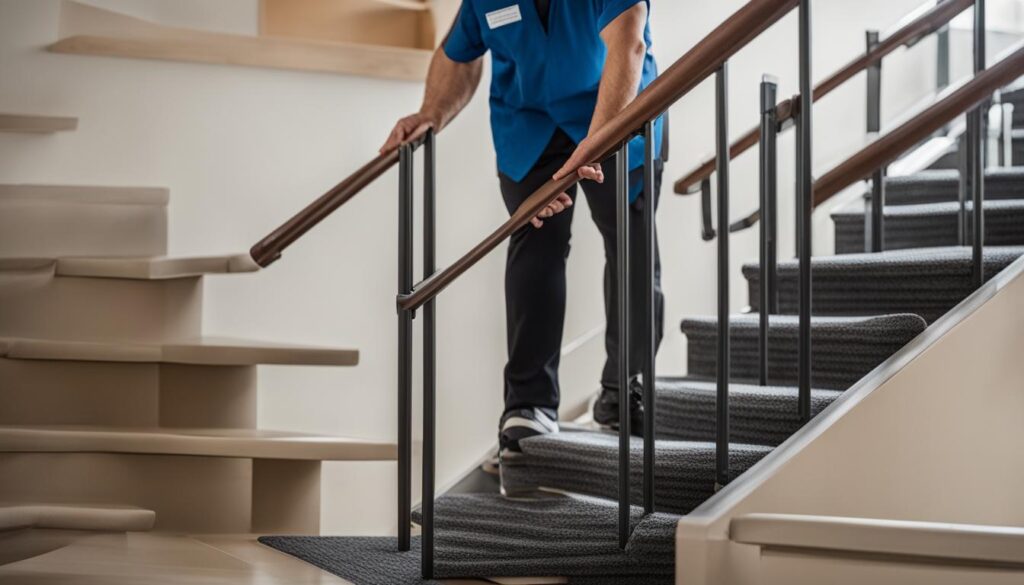
Using a handrail while climbing stairs can provide additional stability and support for your knees. By gripping the handrail, you can distribute some of your body weight onto your arms, reducing the load on your knees. This can help minimize knee strain and provide a sense of security while ascending or descending stairs.
Taking One Step at a Time
When managing knee pain on stairs, it is important to take one step at a time. Rather than rushing or trying to take large strides, focus on maintaining a slower and controlled pace. This allows your knees to adapt and adjust with each step, reducing the impact and strain on your joints.
Minimizing Knee Strain by Distributing Weight
To minimize knee strain while climbing stairs, try to distribute your weight away from your knees. Instead of placing all of your weight on the front of your foot and knee, try to evenly distribute it between your foot and your heel. This can help decrease the load on your knee joint and alleviate pain while climbing stairs.
Incorporating Targeted Exercises for Knee Pain Relief
In addition to the coping strategies mentioned above, targeted exercises can provide relief for chronic knee pain and increase your knee’s strength and flexibility. Consult with a healthcare professional or physical therapist to determine the most suitable exercises for your specific condition. Some exercises that may help include:
- Hamstring stretches
- Quadriceps strengthening exercises
- Calf stretches
- Low-impact aerobic exercises such as swimming or cycling
Incorporating these exercises into your routine can help improve knee function, reduce pain, and enhance your overall mobility.
| Strategy | Description |
|---|---|
| Utilizing a Handrail | Using the handrail for support while climbing stairs helps distribute weight away from the knees and provides stability. |
| Taking One Step at a Time | Safely navigate stairs by taking small steps, allowing your knees to adjust with each movement. |
| Minimizing Knee Strain | Shift weight away from the knees by distributing it evenly between the foot and heel, reducing knee strain. |
| Incorporating Targeted Exercises | Perform hamstring stretches, quadriceps strengthening exercises, calf stretches, and low-impact aerobic exercises to alleviate knee pain and improve mobility. |
Change Your Center of Body Weight for Knee Pain Relief
When it comes to managing knee pain on stairs, shifting the center of your body weight can make a significant difference. This technique helps reduce the strain on the cartilage of the kneecap and the tendons, providing relief and promoting knee pain management. Here are some exercises and rehab hacks that focus on shifting your center of body weight:
Exercise 1: Heel-Toe Step
Start by standing at the bottom of a flight of stairs, ensuring you have a sturdy handrail for support. Place more weight on your heel as you take a step, gradually transitioning to the ball of your foot. As you ascend or descend the stairs, maintain this weight distribution to alleviate stress on your knees. Repeat this exercise for 10-15 minutes a day to build tissue resilience in your knees.
Exercise 2: Single-Leg Step-Up
This exercise focuses on improving your balance and shifting your center of body weight. Stand in front of a sturdy step or platform, maintaining a straight posture. Lift one foot and step onto the platform, shifting your weight towards the lifted leg and engaging your core for stability. Carefully step down and repeat the exercise with the other leg. Perform 10-12 repetitions on each leg to target the muscles surrounding your knees.
Rehab Hack 1: Use a Visual Cue
When climbing stairs, it can be helpful to place a bright-colored piece of tape or a small marker on the edge of each step. This visual cue creates awareness and reminds you to shift your center of body weight towards your heels. Keep your gaze focused on the tape or marker, reinforcing the proper weight distribution throughout your ascent or descent.
Rehab Hack 2: Engage Your Core
By activating your core muscles, you promote stability and enhance your ability to shift your center of body weight. Visualize pulling your belly button towards your spine, tightening your abdominal muscles as you climb the stairs. This conscious engagement of your core helps control your body positioning, reducing strain on your knees and improving knee pain management.
Remember, these exercises and rehab hacks are meant to complement and support your knee pain management journey. If you experience persistent or severe knee pain, it is essential to consult with a healthcare professional for a comprehensive evaluation and personalized guidance.
| Exercise/Rehab Hack | Description |
|---|---|
| Heel-Toe Step | Shift your weight from your heel to the ball of your foot as you ascend or descend stairs, focusing on maintaining the weight distribution. |
| Single-Leg Step-Up | Step onto a platform or step, shifting your weight towards the lifted leg and engaging your core for stability. |
| Use a Visual Cue | Place a bright-colored tape or marker on each step as a reminder to shift your center of body weight towards your heels. |
| Engage Your Core | Tighten your abdominal muscles and pull your belly button towards your spine while climbing stairs to improve stability and reduce knee strain. |
Conclusion
Don’t let knee pain control your life when it comes to climbing stairs. By implementing the strategies and exercises mentioned in this article, you can find relief from knee pain and regain your mobility. Take control of your knee health and conquer those stairs with confidence.
Managing and preventing knee pain is a journey that requires consistency and patience. By making adjustments to your center of body weight, utilizing handrails, and performing targeted exercises, you can alleviate knee pain while climbing stairs. Remember, prevention is key, so take the necessary steps to avoid future knee issues.
With the right approach, knee pain relief is possible. Whether you’re dealing with occasional discomfort or chronic knee issues, adopting a proactive mindset and following these recommendations can make a significant difference in your overall knee health. Don’t let knee pain limit your activities any longer – take action today and conquer knee pain on stairs!
FAQ
What are the common causes of knee pain on stairs?
The common causes of knee pain on stairs include tight hamstrings or calf muscles, weak quadriceps muscles, and poor foot or ankle alignment.
How can I cope with knee pain while climbing stairs?
You can cope with knee pain while climbing stairs by using a handrail for support, taking one step at a time, and minimizing knee strain by distributing weight away from the knees.
How can I change my center of body weight to reduce knee pain on stairs?
Shifting your weight back towards your heels and decreasing forward knee translation can help alleviate knee pain on stairs. This can be achieved through exercises and rehab strategies that build tissue resilience in the knees.
What strategies can help me manage knee pain while climbing stairs?
Strategies for managing knee pain while climbing stairs include using a handrail for support, taking one step at a time, and incorporating targeted exercises into your routine for knee pain relief.
How can I prevent knee pain when climbing stairs?
To prevent knee pain when climbing stairs, it is important to address the underlying causes such as tight muscles and weak quadriceps. Implementing exercises to improve muscle strength and flexibility can help prevent knee pain from stairs.