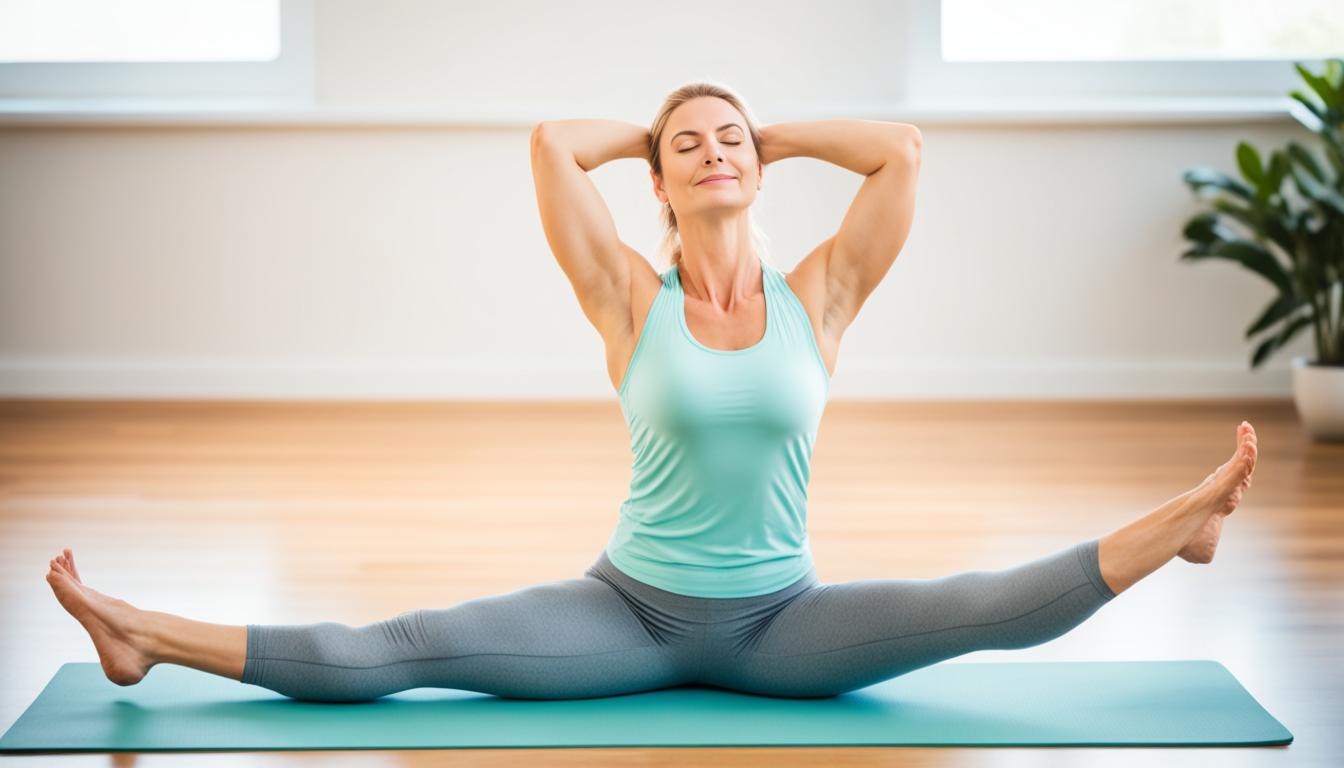
Ease Aches with Knee Pain Relief Yoga Moves
When it comes to everyday movements, our knees play a critical role. However, knee pain can significantly hinder our mobility and quality of life. If you’re seeking natural and effective ways to relieve knee pain, incorporating yoga into your routine may be the solution you’ve been looking for.
Yoga is not only a physical exercise but also a holistic practice that combines movement, breathwork, and mindfulness. By practicing specific yoga poses, you can strengthen the muscles around your knees, improve flexibility, and manage knee pain.
Heather Otterbine, owner of OmBodies Yoga, recommends a series of yoga exercises that can help alleviate knee pain. Whether you’re new to yoga or an experienced practitioner, these poses can be modified to suit your needs and provide targeted relief.
Key Takeaways:
- Yoga poses can help alleviate knee pain by strengthening the muscles around the knees and promoting flexibility.
- Consulting with a medical professional and a qualified yoga teacher is important for practicing yoga safely and effectively with knee pain.
- Avoid yoga poses that involve bending the knees excessively or putting prolonged pressure on the knees to prevent injury.
- Yoga offers several benefits for knee pain relief, including increased mobility, reduced pain, and improved overall knee joint health.
- Incorporating yoga into your daily routine can provide a natural and long-term approach to managing knee pain.
Understanding Yoga for Knee Pain Relief
When it comes to finding relief from knee pain, yoga can be a powerful tool in your arsenal. Incorporating effective yoga exercises for knee pain relief into your routine can help reduce discomfort and increase mobility. By practicing specific yoga poses that target the muscles surrounding the knee joint, you can strengthen and stretch the area, promoting flexibility and reducing pain.
Yoga is a mind-body practice that offers numerous benefits for knee pain relief. It is a low impact activity that strengthens muscles and promotes flexibility without putting excessive pressure on the knees. Research suggests that yoga therapy can improve flexibility, strength, and the ability to perform daily tasks for individuals with knee osteoarthritis.
To effectively manage knee pain through yoga, it is important to consult with a medical professional who can provide guidance tailored to your specific condition. They can recommend suitable yoga poses for knee pain relief and advise on modifications or the use of props to accommodate any limitations you may have.
Incorporating yoga into your daily routine can have a positive impact on reducing knee pain. It is important to listen to your body during practice and make adjustments as needed. Remember that everyone’s body is unique, and what works for one person may not work for another.
“Yoga is a gentle yet effective way to alleviate knee pain. By combining breathwork, movement, and mindfulness, it can help reduce inflammation, improve joint mobility, and strengthen the muscles supporting the knee joint.” – Dr. Melissa Carter, Rheumatologist
To enhance your understanding of yoga for knee pain relief, below is a table highlighting some of the most effective yoga poses for reducing knee pain and promoting knee joint health:
| Yoga Poses | Description |
|---|---|
| Uttanasana (Standing Forward Bend With Ankles Crossed) |
A forward fold that stretches the hamstrings, calves, and glutes, relieving tension in the knee joint. |
| Virabhadrasana III (Warrior III With a Bent Standing Leg) |
A balancing pose that strengthens the quadriceps and engages the core, stabilizing the knee joint. |
| Upavistha Konasana (Wide-Angled Seated Forward Bend) |
A seated pose that opens the hips and stretches the hamstrings, reducing strain on the knees. |
| High Lunge With Arms Extended Forward | A lunge variation that strengthens the quadriceps and hip flexors while promoting balance and stability. |
| Anjaneyasana (Low Lunge) |
A deep lunge that stretches the hip flexors, thighs, and groin, providing relief to the knee joint. |
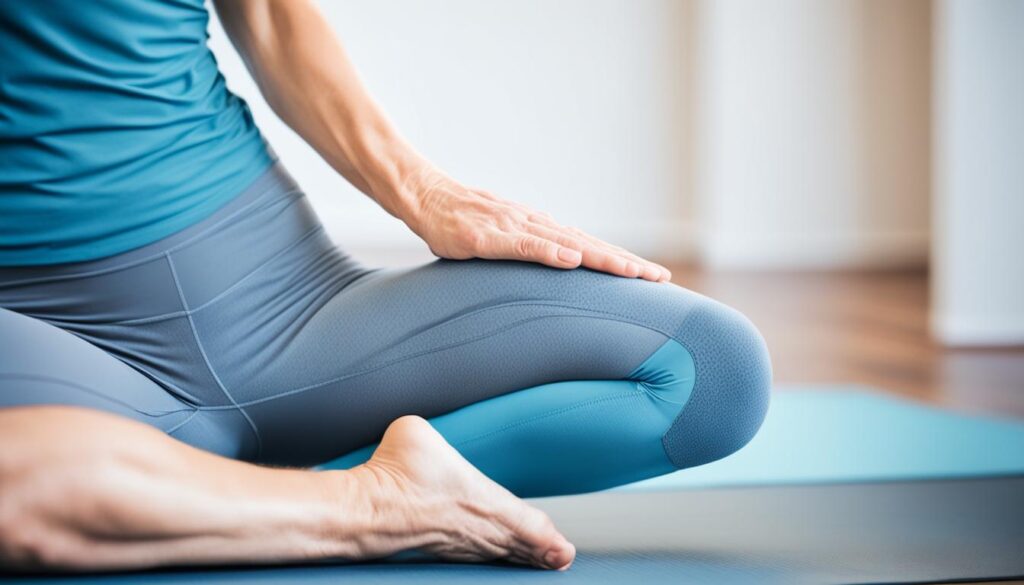
Remember to approach these poses with caution and respect the limitations of your body. It is essential to listen to your body, practice proper alignment, and never force yourself into any pose that causes pain. If you are a beginner or have severe knee pain, it is recommended to work with a qualified yoga instructor who can guide you through modifications and appropriate techniques.
In the next section, we will explore the best practices for incorporating yoga into your knee pain management routine.
Yoga Poses for Knee Pain Relief
Certain yoga poses target the muscles around the knee joint, promoting flexibility and strength. By incorporating these poses into your practice, you can reduce pain and improve knee joint health.
1. Uttanasana (Standing Forward Bend With Ankles Crossed): This pose stretches the hamstrings, calves, and hips, while also engaging the core. It promotes flexibility in the legs and supports knee joint health.
2. Virabhadrasana III (Warrior III With a Bent Standing Leg): Warrior III pose strengthens the muscles in the legs, particularly the quads and hamstrings. It helps improve balance, stability, and overall knee joint health.
3. Upavistha Konasana (Wide-Angled Seated Forward Bend): This seated forward bend pose stretches the inner and outer thighs, groin, and hamstrings. It is beneficial for opening up the hips and promoting knee joint flexibility.
4. High Lunge With Arms Extended Forward: High lunge pose targets the quadriceps, hamstrings, and glutes, providing stability to the knee joint. It helps build strength and flexibility in the legs.
5. Anjaneyasana (Low Lunge): Low lunge pose stretches the hip flexors, quads, and hamstrings, while also strengthening the legs and core. It improves knee joint flexibility and stability.
| Yoga Pose | Description |
|---|---|
| Uttanasana (Standing Forward Bend With Ankles Crossed) | Stretches the hamstrings, calves, and hips. Promotes flexibility and supports knee joint health. |
| Virabhadrasana III (Warrior III With a Bent Standing Leg) | Strengthens the quads and hamstrings. Improves balance, stability, and overall knee joint health. |
| Upavistha Konasana (Wide-Angled Seated Forward Bend) | Stretches the inner and outer thighs, groin, and hamstrings. Opens up the hips and promotes knee joint flexibility. |
| High Lunge With Arms Extended Forward | Targets the quadriceps, hamstrings, and glutes. Provides stability to the knee joint and builds leg strength. |
| Anjaneyasana (Low Lunge) | Stretches the hip flexors, quads, and hamstrings. Strengthens the legs and core. Improves knee joint flexibility and stability. |
Remember to practice these poses mindfully and listen to your body. If you experience any discomfort or pain, modify the poses or seek guidance from a qualified yoga instructor. Incorporating these yoga poses into your routine can contribute to alleviating knee pain and improving overall knee joint health.
Yoga for Knee Pain Relief: Best Practices
In addition to practicing yoga poses, incorporating best practices can enhance the effectiveness of yoga for knee pain relief. Maintaining good posture, eating a healthy diet, maintaining a moderate weight, getting regular exercise, taking walking breaks from seated work, and practicing relaxation techniques can all contribute to reducing knee pain. Research supports the therapeutic benefits of yoga in reducing knee pain, particularly when focused on poses.
| Best Practices for Knee Pain Relief |
|---|
| Maintain good posture |
| Eat a healthy diet |
| Maintain a moderate weight |
| Get regular exercise |
| Take walking breaks from seated work |
| Practice relaxation techniques |
By incorporating these best practices into your daily routine, you can enhance the benefits of yoga therapy for knee pain and promote natural remedies for knee pain relief. Research has shown that maintaining proper posture and weight, along with regular exercise and relaxation, can have a positive impact on knee health.
Yoga Poses to Avoid for Knee Pain
While certain yoga poses can alleviate knee pain, it is important to avoid poses that may cause injury or strain on the knees. These poses involve bending the knees, placing the knees in awkward positions, or putting prolonged pressure on the knees.
- Camel Pose
- Triangle Pose
- Lotus Pose
- Child’s Pose
- Pigeon Pose
Practicing these poses incorrectly or without proper guidance can increase the risk of knee injury. It is crucial to listen to your body and avoid any poses that cause discomfort or pain in the knees.
To ensure a safe yoga practice for knee pain relief, it is recommended to choose yoga styles that are gentle on the body and provide modifications. Some suitable options include Hatha yoga, Iyengar yoga, restorative yoga, or Yin yoga. These styles emphasize proper alignment, support, and relaxation, minimizing the strain on the knees.
By avoiding poses that may aggravate knee pain and selecting yoga styles that prioritize safety and modification, you can engage in a beneficial practice that supports overall knee joint health.
Injuries are much more likely to occur when we push ourselves beyond our limits or ignore warning signs from our body.
Benefits of Yoga for Knee Pain Relief
Yoga offers several benefits for knee pain relief. Research studies have shown that specific yoga poses can reduce pain and improve mobility in individuals with knee osteoarthritis.
Yoga strengthens the muscles around the knee joint, promotes flexibility, and increases overall strength and stability in the legs. By incorporating yoga into your routine, you can effectively manage knee pain and improve your quality of life.
One of the key benefits of yoga for knee pain relief is its natural approach. Unlike pain medications, which may come with side effects, yoga offers a holistic and drug-free solution. It allows you to address the root cause of the pain and work on strengthening and stretching the muscles around your knees.
Furthermore, yoga can be practiced daily, making it a sustainable long-term solution for knee pain management. By incorporating specific poses into your routine and listening to your body’s needs, you can gradually improve your knee joint health and reduce pain over time.
Whether you’re dealing with knee osteoarthritis or general knee pain, yoga can provide a safe and effective approach to finding relief. It is a low-impact activity that minimizes stress on the knees while offering numerous benefits for overall well-being.
Remember, it’s always important to consult with a medical professional before starting any new exercise regimen, especially if you have existing knee conditions. They can provide personalized advice and modifications to ensure a safe and effective yoga practice for your specific needs.
Discover the transformative power of yoga for knee pain relief and start your journey towards improved knee joint health today.
Tips for Safe Yoga Practice with Knee Pain
While yoga can be beneficial for knee pain relief, it is important to practice safely to avoid further injury. Our team of experts at OmBodies Yoga have compiled a list of tips to help you practice yoga safely and effectively, even with knee pain.
- Consult with a qualified yoga teacher, physical therapist, or medical professional: Seeking guidance from an expert can provide personalized modifications and ensure proper form to prevent aggravating knee pain.
- Use props: Props such as blocks, straps, or bolsters can be utilized to support your body and relieve pressure on the knees during yoga poses.
- Add heat for warm-up: Applying heat to the knees before starting your practice can help loosen the muscles and joints, reducing the risk of injury.
- Avoid pushing through pain: If a pose causes discomfort or pain in your knees, listen to your body and modify or skip that pose altogether. Pushing through pain can exacerbate the issue.
- Listen to your body’s limits: Each individual’s body is unique, and it’s important to honor your own limitations. Pay attention to your body’s signals and adjust your practice accordingly.
By following these tips, you can create a safe and effective yoga practice that helps alleviate knee pain while promoting overall well-being.
Conclusion
Incorporating yoga into your routine can provide natural and effective relief for knee pain. By practicing specific poses and techniques, you can strengthen the muscles around your knees, improve flexibility, and enhance overall knee joint health. Remember to always listen to your body and consult with a medical professional for personalized advice and modifications.
Yoga offers a holistic approach to knee pain management, addressing both physical and mental well-being. With regular practice, you can find long-term relief from knee pain and improve your quality of life. Embrace the benefits of yoga for knee pain relief and take control of your knee health today.
Discover the power of yoga for knee pain relief and experience the transformative effects it can have on your overall well-being. Incorporate these yoga exercises into your daily routine and enjoy the natural and lasting benefits they provide. The management of knee pain through yoga empowers you to lead a more active, pain-free life.
FAQ
What are some effective yoga exercises for knee pain relief?
Some effective yoga exercises for knee pain relief include Uttanasana (Standing Forward Bend With Ankles Crossed), Virabhadrasana III (Warrior III With a Bent Standing Leg), Upavistha Konasana (Wide-Angled Seated Forward Bend), High Lunge With Arms Extended Forward, and Anjaneyasana (Low Lunge).
How can yoga help reduce knee pain?
Yoga strengthens the muscles around the knee joint, promotes flexibility, and increases overall strength and stability in the legs. It is a low impact activity that helps alleviate pain and improve mobility without putting excessive pressure on the knees.
Are there any specific yoga poses for knee joint health?
Yes, yoga poses such as Uttanasana, Virabhadrasana III, Upavistha Konasana, High Lunge With Arms Extended Forward, and Anjaneyasana can help stretch and strengthen the muscles that support the knees, improving knee joint health.
Are there any best practices for practicing yoga for knee pain relief?
Yes, incorporating best practices such as maintaining good posture, eating a healthy diet, maintaining a moderate weight, getting regular exercise, taking walking breaks from seated work, and practicing relaxation techniques can enhance the effectiveness of yoga for knee pain relief.
Which yoga poses should I avoid if I have knee pain?
It is important to avoid poses that involve bending the knees, placing the knees in awkward positions, or putting prolonged pressure on the knees. Examples of poses to avoid include Camel Pose, Triangle Pose, Lotus Pose, Child’s Pose, and Pigeon Pose.
What are the benefits of yoga for knee pain relief?
Yoga can reduce pain and improve mobility in individuals with knee osteoarthritis. It strengthens the muscles around the knee joint, promotes flexibility, and increases overall strength and stability in the legs. It is a natural alternative to pain medications and can be incorporated into a daily routine for long-term knee pain management.
How can I practice yoga safely with knee pain?
To practice yoga safely with knee pain, consult with a qualified yoga teacher, physical therapist, or medical professional for guidance on modifications and proper form. Use props, add heat for warm-up, avoid pushing through pain, and listen to your body’s limits.
How can I find long-term knee pain relief through yoga?
By incorporating specific poses, practicing safe techniques, and listening to your body, you can find long-term knee pain relief and improve your overall knee joint health. Consult with a medical professional for personalized advice and modifications.