Solutions for Knee Pain Down Stairs and Bending
Knee pain when going down stairs and bending can be a common and debilitating issue for many individuals. It can hinder daily activities and impact overall quality of life. Whether you’re experiencing occasional discomfort or chronic pain, understanding the causes and solutions for knee pain is essential for finding relief and improving mobility.
In this article, we will explore effective strategies, remedies, and treatment options to alleviate knee pain when going down stairs and bending. From exercises and natural remedies to medical interventions, we will provide valuable insights to help you manage and prevent knee pain in these specific situations.
Continue reading to discover actionable steps you can take to regain pain-free mobility and enjoy a more active lifestyle. By addressing the root causes, implementing appropriate remedies, and making necessary lifestyle changes, you can overcome knee pain and enhance your overall well-being.
Key Takeaways:
- Identifying the causes of knee pain when going down stairs and bending is crucial for effective treatment and prevention.
- There are various remedies and treatment options available, including exercises, natural remedies, and medical interventions.
- Consulting a healthcare professional for an accurate diagnosis and customized treatment plan is important.
- By implementing the right strategies and making lifestyle changes, individuals can manage knee pain and improve mobility.
- Proper prevention measures, such as warm-up exercises and maintaining a healthy weight, can help reduce the risk of knee pain in these situations.
Understanding Knee Pain on Stairs
Knee pain on stairs can be a debilitating issue, impacting mobility and daily activities. To effectively address this problem, it’s essential to understand the underlying causes. Knee pain on stairs can be attributed to several factors:
Muscle Weakness: Weak muscles surrounding the knee joint can lead to instability and pain when going up or down stairs.
Wear and Tear: Over time, the knee joint may undergo wear and tear, resulting in pain and discomfort, especially during stair use.
Knee Injury: Previous knee injuries, such as sprains or strains, can cause ongoing pain, particularly when climbing or descending stairs.
Kneecap Damage: Damage to the kneecap, such as patellar tendonitis or dislocation, can cause pain when putting pressure on the knee while using stairs.
Altered Biomechanics: Changes in the alignment or movement of the knee joint can increase stress on certain structures, leading to pain on stairs.
Inflammation: Inflammatory conditions like arthritis can cause knee pain, making stairs difficult to navigate.
Identifying the specific cause of knee pain on stairs is crucial for developing an effective treatment plan. Consulting with a healthcare professional and undergoing diagnostic tests can help determine the underlying issue.
Together, we can explore treatment options and strategies to alleviate knee pain on stairs, improving overall mobility and quality of life.
Tips for Reducing Knee Pain on Stairs
When it comes to reducing knee pain on stairs, there are several strategies you can implement to improve your mobility and minimize discomfort. By following these tips, you can take positive steps towards a pain-free and active lifestyle.
1. Take One Step at a Time
Taking one step at a time can significantly reduce the impact on your knees when climbing or descending stairs. This approach allows you to distribute your weight evenly and minimize strain on your knees.
2. Lead with the Correct Leg
Leading with the correct leg can make a noticeable difference in reducing knee pain on stairs. When going up, lead with your stronger leg. When going down, lead with your weaker leg. This helps to balance the load and alleviate stress on your knees.
3. Use the Handrail for Support
The handrail is a valuable tool for providing support and stability when navigating stairs. By using the handrail, you can offload some of the weight from your knees and improve your balance, reducing the strain on your joints.
4. Use a Crutch or Stick for Extra Stability
If you experience significant knee pain on stairs, using a crutch or stick can provide additional stability and support. This can help to take some of the pressure off your knees and assist in maintaining your balance throughout the stairs.
5. Warm Up the Knee Before Activity
Before tackling stairs, it’s important to warm up your knee muscles to increase blood flow and flexibility. Perform gentle leg stretches and knee exercises to prepare your knees for the activity and reduce the risk of discomfort or injury.
6. Improve Strength through Exercises
Building strength in the muscles surrounding the knee can help provide stability and support. Incorporate exercises that target the quadriceps, hamstrings, and glutes into your fitness routine. Consult with a professional to create an exercise program that suits your specific needs and condition.
By implementing these tips and techniques, you can actively reduce knee pain on stairs and improve your overall knee health. Remember to listen to your body, take breaks when needed, and consult with a healthcare professional for personalized advice and guidance.
Common Knee Pain Conditions Related to Stairs
When it comes to knee pain on stairs, various conditions can contribute to the discomfort experienced. Understanding these common knee pain conditions can help in identifying the specific cause and implementing effective treatment strategies.
Knee Osteoarthritis
One of the most prevalent knee pain conditions related to stairs is knee osteoarthritis. This degenerative joint disease occurs when the protective cartilage in the knee joint wears down over time, resulting in pain, stiffness, and limited mobility.
Patellofemoral Pain Syndrome (Jumper’s Knee)
Another condition often associated with knee pain on stairs is patellofemoral pain syndrome (PFPS), commonly known as jumper’s knee. PFPS occurs when the kneecap doesn’t track properly, causing pain and inflammation, especially during activities that involve bending the knee, such as going up or down stairs.
Muscle Strain
Muscle strain, also known as a pulled muscle, can occur in the muscles around the knee. This can result from overexertion, sudden movements, or inadequate warm-up before physical activity. Straining these muscles can cause pain and discomfort when using stairs.
IT Band Syndrome
The iliotibial (IT) band is a fibrous band of tissue that runs along the outside of the thigh. IT band syndrome occurs when this band becomes tight or inflamed, causing knee pain and discomfort. Going up or down stairs can exacerbate these symptoms.
Ligament Injuries
Knee ligament injuries, such as anterior cruciate ligament (ACL) or medial collateral ligament (MCL) tears, can cause knee instability and pain. These injuries commonly occur during sports or activities involving sudden directional changes. Stair use can aggravate the pain associated with these injuries.
Compensation Injuries
Compensation injuries refer to pain and discomfort that arises from overloading other structures in the knee due to an underlying condition. When certain parts of the knee are affected, other areas may need to compensate, leading to additional strain and pain during stair use.
Identifying the specific knee pain condition is crucial for devising an appropriate treatment plan. Consultation with a healthcare professional, such as a physical therapist or orthopedic specialist, can help determine the underlying cause and guide effective management strategies.
| Knee Pain Condition | Primary Symptoms | Treatment Options |
|---|---|---|
| Knee Osteoarthritis | Joint stiffness, limited mobility, pain, swelling | Physical therapy, pain medication, joint injections, surgery |
| Patellofemoral Pain Syndrome | Anterior knee pain, discomfort during knee flexion | Physical therapy, strengthening exercises, bracing, pain relief measures |
| Muscle Strain | Pain, tenderness, swelling, muscle weakness | Rest, ice, compression, elevation, physical therapy, stretching exercises |
| IT Band Syndrome | Pain on the outside of the knee, tightness, swelling | Rest, ice, stretching exercises, foam rolling, physical therapy |
| Ligament Injury | Instability, swelling, pain, limited range of motion | Rest, physical therapy, bracing, surgery (in severe cases) |
| Compensation Injury | Vary depending on the underlying condition being compensated | Treatment options vary based on the underlying cause |
Treatment Options for Knee Pain on Stairs
Knee pain when going down stairs and bending can significantly impact an individual’s mobility and quality of life. Fortunately, there are various treatment options available to alleviate and manage knee pain. Let’s explore these options:
R.I.C.E.
The R.I.C.E. method (rest, ice, compression, elevation) is a commonly recommended approach for reducing knee pain and swelling. By resting the affected knee, applying ice packs, using compression wraps, and elevating the leg, individuals can promote healing and alleviate discomfort.
Over-the-Counter (OTC) Medication
OTC pain relief medications, such as ibuprofen or acetaminophen, can help manage knee pain. These medications effectively reduce inflammation and provide temporary relief from discomfort.
Weight Management
Maintaining a healthy weight can significantly reduce stress on the knees and alleviate knee pain. A combination of a balanced diet and regular exercise can support weight management efforts and improve overall knee health.
Exercise and Physical Therapy
Specific exercises and targeted physical therapy can strengthen the muscles surrounding the knee, enhance flexibility, and improve joint stability. These interventions can help alleviate knee pain and prevent future injuries.
Support Aids
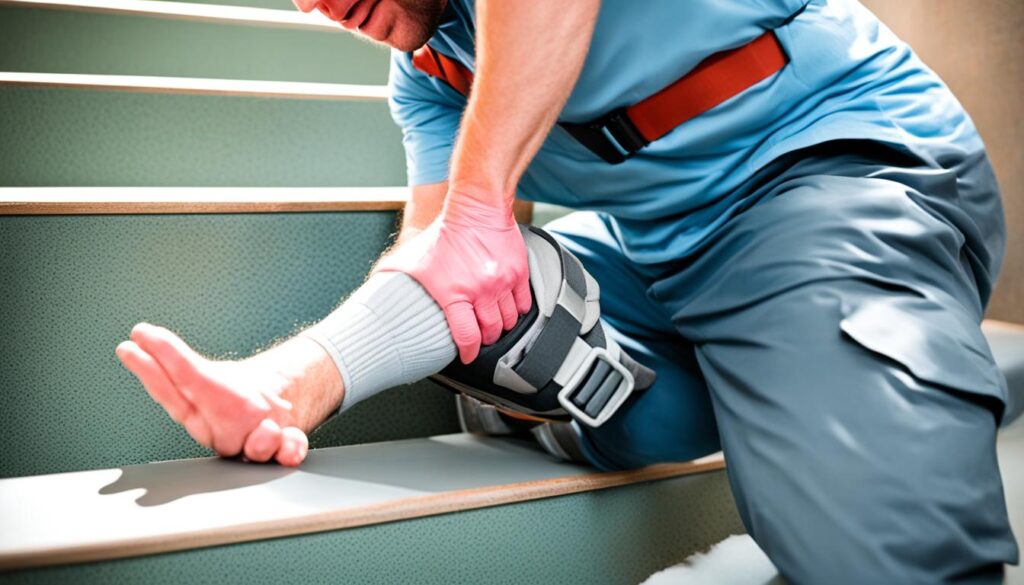
Support aids, such as walkers, crutches, or braces, can provide stability and reduce stress on the knee joints during stair-related activities. These aids can help individuals navigate stairs with greater ease and minimize pain.
Biomechanical Devices
Innovative biomechanical devices, like AposHealth, are designed to correct abnormal movement patterns and redistribute forces on the knee. These devices are customized to each individual and can provide long-term relief from knee pain.
Prescription Medication
In severe cases where other treatment options have not provided sufficient relief, a healthcare professional may prescribe stronger pain medication or anti-inflammatory drugs. These medications should be used under the guidance and supervision of a healthcare provider.
It is important to consult with a healthcare professional to determine the most suitable treatment options for your specific condition. Understanding the underlying cause of knee pain on stairs is crucial in developing an effective treatment plan that addresses your unique needs and promotes pain-free mobility.
Conclusion
Knee pain when going down stairs and bending can have a significant impact on our daily activities and overall quality of life. However, there is hope for managing and even alleviating knee pain, allowing us to regain pain-free mobility.
By understanding the underlying causes of our knee pain and implementing appropriate treatment options, we can effectively manage our condition. It is crucial to consult with a healthcare professional who can provide an accurate diagnosis and create a customized treatment plan tailored to our specific needs.
With the right strategies and support, we can overcome knee pain and enjoy an active, mobile lifestyle. This may include various approaches such as incorporating exercises and physical therapy, using support aids like braces or walkers, managing weight, and considering biomechanical devices like AposHealth. Each individual’s treatment plan should be unique and adapted to their specific condition.
Remember, taking control of knee pain requires patience and dedication. But with professional guidance and a proactive approach, we can effectively manage knee pain, regain pain-free mobility, and live life to the fullest.
FAQ
What are some solutions for knee pain when going down stairs and bending?
There are several strategies that can help reduce knee pain on stairs, including taking one step at a time, leading with the correct leg, using the handrail for support, using a crutch or stick, warming up the knee before activity, and improving strength through exercises.
What are the causes of knee pain on stairs?
Knee pain on stairs can be caused by various factors, including muscle weakness, wear and tear on knee bones and cartilage, knee injuries, damage to the kneecap, altered biomechanics, and inflammation.
How can I reduce knee pain on stairs?
To reduce knee pain on stairs, you can try taking one step at a time, leading with the correct leg depending on whether you are going up or down, using the handrail for support, using a crutch or stick for extra stability, warming up the knee before activity, and improving strength through exercises.
What are some common knee pain conditions related to stairs?
Common knee pain conditions related to stairs include knee osteoarthritis, patellofemoral pain syndrome (jumper’s knee), muscle strain, IT band syndrome, ligament injuries, and compensation injuries.
What are the treatment options for knee pain on stairs?
Treatment options for knee pain on stairs include R.I.C.E. (rest, ice, compression, elevation), over-the-counter medication, weight management, exercise and physical therapy, support aids such as walkers and braces, biomechanical devices like AposHealth, and prescription medication for severe cases.
How can I manage knee pain and regain pain-free mobility?
By understanding the causes of knee pain on stairs and implementing appropriate treatment options, individuals can effectively manage knee pain and regain pain-free mobility. It is essential to consult with a healthcare professional for an accurate diagnosis and customized treatment plan.