Knee replacement recovery week by week
What if the key to a successful knee surgery wasn’t just the operation itself, but how you navigate the healing process afterward?
Total joint arthroplasty is a life changing solution for chronic pain and limited mobility. This major procedure offers a new beginning. Yet, the path to regaining your active life is a unique journey for every patient.

knee replacement recovery timeline
We provide this ultimate guide to help you navigate your post-operative phase with confidence. Understanding the nuances of your operation is the first step.
Our comprehensive resource covers every stage. We ensure you are prepared for the challenges and milestones ahead. Your personal healing timeline is influenced by individual health factors.
By following a structured approach, you can better manage expectations. This focus is on achieving a successful long-term outcome. We are committed to supporting your transition back to favorite activities.
This guide serves as your roadmap. It provides essential insights into the rehabilitation process. Being well-informed is the most effective way to reduce anxiety.
Key Takeaways
- Total knee arthroplasty is a transformative procedure for ending pain and restoring movement.
- Every patient’s healing journey is personal and follows its own timeline.
- A clear, week-by-week guide can build confidence and reduce post-surgery anxiety.
- Understanding what to expect after the operation is crucial for a smooth rehabilitation.
- Proper preparation and information are your best tools for a successful outcome.
- The goal is a structured return to mobility and the activities you enjoy.
Introduction to Our Knee Replacement Recovery Journey
The foundation for a smooth rehabilitation is laid well before you enter the operating room. We recognize your decision to pursue this operation is a major step toward a life with less pain.
Our goal is to demystify what comes next. The healing process can seem overwhelming at first. We are here to provide clarity and set the stage for your success.
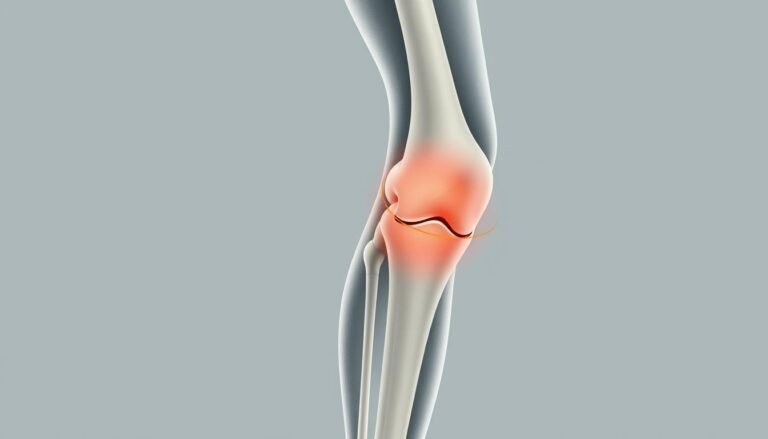
Understanding your specific procedure is crucial. There are two primary types of joint arthroplasty. A total knee replacement resurfaces the entire joint with an artificial implant.
A partial replacement surgery addresses only the damaged compartment. The table below highlights key differences to guide your understanding.
| Aspect | Total Knee Arthroplasty | Partial Knee Arthroplasty |
| Scope of Procedure | Entire joint surface is replaced | Only one damaged compartment is replaced |
| Incision Size | Typically larger | Generally smaller |
| Hospital Stay (Typical) | 1-3 days | Often 1 day |
| Rehabilitation Pace | Can be more structured initially | May allow for quicker initial mobility |
| Ideal Candidate | Advanced arthritis in multiple compartments | Localized disease in one compartment |
You will learn to set realistic goals with your surgeon. Open communication with your care team is vital. This ensures your expectations align with a typical outcome.
Mental and physical preparation empowers you. Taking an active role in your own healing journey leads to long-term success. We are with you every step of the way.
Day One – Immediate Post-Surgery Recovery
The immediate hours following your operation are dedicated to safety, comfort, and early movement. Our medical team at Ventura Orthopedics guides you through this vital phase.

immediate post-surgery recovery
Steps in the Hospital and Initial Rehabilitation
We start your healing journey within the first 24 hours. Our physical therapists help your new joint begin moving correctly.
Your vital signs are monitored closely during your 1 to 3 days in the hospital. We assess pain and nausea to ensure you are stable.
This early mobilization prevents stiffness and improves blood flow. It is a critical step for your long-term success.
Using Assistive Devices and Getting Up
You will learn to use walkers or crutches right away. These tools protect the surgical site while maintaining your mobility.
Our therapists guide your first steps out of bed. They assist with transferring to a bedside commode safely.
We prioritize safety by ensuring you can navigate short distances. You must perform basic movements before going home.
| Activity | Primary Purpose | Assisted By |
| Vital Sign Monitoring | Ensure Stability | Nursing Team |
| Initial PT Session | Prevent Joint Stiffness | Physical Therapist |
| Assistive Device Training | Enable Safe Mobility | Rehabilitation Specialist |
| Pain Level Assessment | Manage Comfort | Healthcare Team |
The First Week – Beginning Rehabilitation and Pain Management
Managing discomfort and starting gentle movement are the dual priorities in this critical week. We guide your transition from hospital to home, establishing a foundation for healing.
Pain Management Strategies and Care Guidelines
We prioritize effective pain management to keep your discomfort manageable. Utilizing ice packs and elevation reduces swelling and pain, following best practices.
Our team monitors your incision closely for excessive redness or drainage. You will receive specific instructions on caring for the wound.
According to the AAHKS, wait 5 to 7 days before showering if your dressings are not waterproof. Always follow your surgeon’s precise guidance.
Early Mobility Exercises and Gait Training
Your physical therapist introduces gentle exercises to improve your range of motion and restore a normal gait. A key early goal is achieving full knee extension within 48 hours of your surgery.
You begin a tailored home exercise plan. It builds strength safely without aggressive training that causes soreness.
We help you balance necessary rest with prescribed activity. This prevents pushing your body beyond its current capabilities. For a comprehensive week-by-week recovery timeline, explore our detailed resource.
Advancing Through Week Three – Gaining Independence and Mobility
This stage is characterized by a growing sense of autonomy as physical capabilities expand. You begin to feel more in control of your daily routine during this recovery journey.
Most individuals transition from a walker to a cane or no aid around two to three weeks. Standing and walking for over ten minutes becomes comfortable, marking a major boost in mobility.
Continue your prescribed exercises to maintain your range of motion. When using a cane, avoid leaning away from your new knee to ensure proper walking mechanics. You will notice daily activities like dressing and showering become significantly easier.
Prescription pain medication is typically unnecessary now. We help you add movement to your day to avoid the knee stiffness that comes from sitting too long. This active approach is key for the next recovery phase.
Knee Replacement Recovery Week by Week – Detailed Timeline
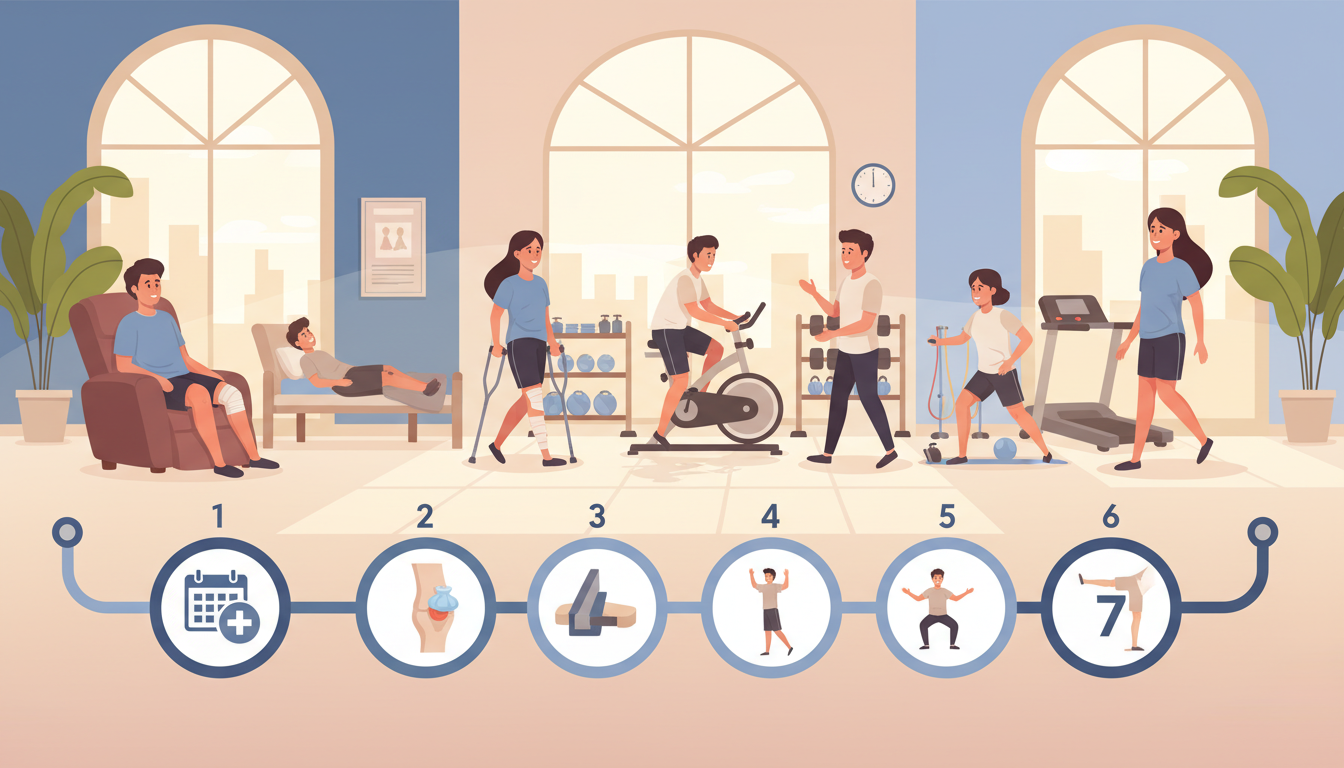
Knowing what milestones lie ahead provides both motivation and a realistic framework for your progress. We provide this detailed recovery timeline to help you visualize the achievements over your first three months.
This schedule is a general guide. Your personal healing journey may vary based on your health and age. Rehabilitation starts immediately after your surgery to ensure the best outcome for your new joint.
The table below outlines the expected progression. It shows how your activity level increases from the first day through the 12-week mark.
| Recovery Phase | Typical Timeframe | Primary Focus & Milestones |
| Initial Healing & Mobility | Weeks 1-3 | Pain control, walking with aid, achieving basic range of motion |
| Building Strength & Function | Weeks 4-8 | Transitioning off walking aids, returning to light daily tasks and work |
| Enhancing Endurance & Activity | Weeks 9-12 | Resuming driving, more advanced strength exercises, low-impact activities |
| Long-Term Integration | 3+ Months | Full return to recreational sports and favorite hobbies |
Your personal progress may be faster or slower than this average. Adjust your expectations based on your specific surgical type and pre-operative condition.
Having this clear view of the weeks ahead helps you stay motivated and committed to your rehabilitation plan. It turns the unknown into a manageable path forward.
Weeks 4 to 6 – Regaining Strength and Increasing Range of Motion
The month following your procedure marks a significant shift toward rebuilding your physical capabilities. You will build upon the early mobility gains from the initial healing phase.

regaining strength and range of motion exercises
Key Rehabilitation Exercises and Techniques
We focus on increasing your joint strength and range of motion through targeted physical therapy. Your regimen now includes more demanding exercises.
Toe raises, heel raises, and hip abductions are recommended during this stage. These movements improve stability and function around your new joint.
Transitioning to Daily Activities and Work
You will begin to reintroduce light household chores as inflammation subsides. Your daily activities become easier and more independent.
Our team advises consulting your surgeon before driving, especially if taking certain medications. We suggest practicing in an empty parking lot first.
Most people no longer need a cane for daily movement by the end of week six. Many can return to desk work within four to six weeks after the operation.
Discuss your return-to-work plan with your therapist if your job involves lifting. Continuing your prescribed exercises is vital for long-term strength.
Weeks 7 to 11 – Enhancing Functionality and Endurance
This period focuses on transforming basic mobility into confident, enduring capability. You build upon the strength gains from earlier phases.
A primary goal is often achieving a 120-degree range of motion. We guide you through more demanding activities to reach this milestone.
Targeted Exercises for Strength and Balance
Your regimen now includes movements like mini squats and step-ups. These are effective for building endurance and improving your stability.
We integrate endurance training, such as using a stationary bike. This strengthens the muscles surrounding your joint.
You may begin low-impact activities like swimming or recreational walking. Consistency in your rehabilitation during these weeks is crucial for long-term success.
Leg balance work becomes important to reduce fall risk. We modify your plan as you improve to keep you progressing safely.
| Exercise Type | Primary Benefit | Sample Activity |
| Strength & Stability | Builds joint support and confidence | Mini Squats, Step-Ups |
| Endurance Training | Improves muscular stamina | Stationary Cycling |
| Low-Impact Aerobic | Enhances overall function with minimal stress | Swimming, Brisk Walking |
| Balance & Proprioception | Reduces risk of falls | Single-Leg Stances |
With committed effort, you should experience significantly less stiffness. For a broader view of this process, see this detailed rehabilitation timeline.
Week 12 and Beyond – Transitioning to Long-Term Recovery
With the most demanding part of healing behind you, attention turns to protecting your investment for decades to come. We celebrate your progress at this three-month phase.

long term knee replacement recovery activities
You now shift from active rehabilitation to a focus on long-term maintenance and injury prevention. Your joint will keep improving gradually for many months.
Returning to Recreational Activities Safely
Most people receive clearance for low-impact activities like golf, dancing, and cycling around this time. Always get your surgeon’s final approval before starting any new sport.
It is crucial to continue avoiding high-impact movements. Running or skiing could potentially damage the artificial implants over time.
| Activity Type | Examples | Guidance |
| Recommended & Safe | Walking, Stationary Bike, Swimming | Excellent for lifelong strength and joint health. |
| Proceed with Caution | Doubles Tennis, Hiking on Even Terrain | May be possible after 6-12 months with doctor’s okay. |
| Not Recommended | Running, Basketball, Skiing | High stress can shorten the implant’s lifespan. |
Statistics are very encouraging. There is a 90-95% chance your knee replacement will last 10 years, and an 80-85% chance for 20 years.
Full resilience often takes 6 months to a year to fully achieve. Maintain your strength through regular walking and stationary bike use.
Keep in touch with your medical team for checkups. You should now experience little to no pain during daily activities.
Essential Exercises, Pain Relief, and Rehabilitation Tips
Effective healing after joint surgery integrates disciplined exercise with smart pain control. We provide a comprehensive approach to managing your symptoms.
Your pain management plan may include ice machines, compression wraps, and medications like acetaminophen. These tools help reduce swelling and discomfort during the first 12 weeks.
Consistency in your physical therapy exercises is the most important factor for speeding up your healing. However, you must stop any movement that causes severe pain and consult your therapist immediately.
| Method | Primary Purpose | Example |
| Ice Therapy | Reduce inflammation and numb pain | Using a cold pack for 20-minute intervals |
| Compression | Minimize swelling and provide support | Wearing an elastic bandage during the day |
| Medication | Manage moderate to severe discomfort | Taking prescribed NSAIDs as directed |
| Elevation | Improve fluid drainage from the limb | Propping your leg above heart level when resting |
Following the guidance of your healthcare team is essential for protecting your new joint. We suggest modifying your home to make daily tasks safer.
Avoid activities involving twisting or heavy lifting until your surgeon gives approval. This protects the implant and supports your long-term rehabilitation success.
Emotional and Mental Readiness for a Successful Recovery
Feeling nervous before a major medical procedure is a completely normal and human response. We believe that emotional preparation is just as important as physical preparation for your total knee replacement surgery. Your mindset can significantly influence your healing journey.
Preparing Mentally and Building a Support Network
You should reflect on your expectations. Communicate openly with your orthopedic surgeon about your desired outcomes. This dialogue helps align your goals with a realistic timeline.
We encourage you to build a strong support network. Family and friends can assist you with daily tasks during your initial healing. This practical help reduces stress and allows you to focus on getting better.
You will learn that acknowledging feelings of fear or anticipation is incredibly beneficial. We provide resources to help you stay positive. Focus on the long-term benefits of your new, pain-free lifestyle.
Our team at Personalized Orthopedics of the Palm Beaches is available to support you. You can reach out to our healthcare professionals at (561) 733-5888, Ext. 9 to discuss any concerns before your procedure.
Conclusion
As you move forward, remember that the success of your new joint hinges on consistent care and dedication. We hope this resource has offered clear guidance for your journey after surgery.
Commit to your prescribed physical therapy and follow your healthcare team’s advice. This partnership is vital for a strong outcome. Your healing is a marathon, not a sprint.
Patience is essential as you regain mobility. Once you pass the three-month mark, stay active with low-impact options like swimming or cycling. You now have the tools to manage discomfort and perform key exercises.
We are proud to support your return to favorite daily activities. Continue consulting your medical providers to keep your implant healthy for years. Regaining independence improves your quality of life.