unnamed

Piriformis Syndrome Is a Pain in the Butt: Understand the Causes, Symptoms, and Stretches to Get Rid of It Fast – ACL Strong

Piriformis syndrome is a common but often misunderstood condition that causes pain, numbness, and tingling in the buttocks and legs. This syndrome occurs when the piriformis muscle, located deep in the buttocks, compresses or irritates the sciatic nerve. Understanding the anatomy, causes, aggravating activities, and effective stretches is crucial to effectively treating this condition.

Anatomy:

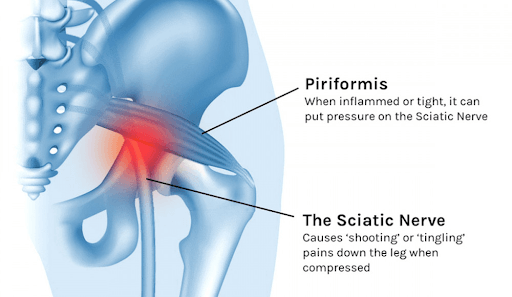
The piriformis muscle is a small, pear-shaped muscle located in the buttocks, beneath the gluteal muscles. Its primary function is to assist in the rotation of the hip joint. The sciatic nerve, the largest nerve in the body, runs directly under or sometimes through the piriformis muscle. When the piriformis muscle spasms or becomes tight, it can compress the sciatic nerve, causing pain and discomfort.

unnamed

Causes:

There are several factors that can contribute to the development of Piriformis syndrome:

1. Muscle imbalance: Weakness or stiffness in the surrounding muscles can lead to compensatory changes in the piriformis muscle.

2. Excessive use or repetitive activities: Activities that involve repetitive motions or prolonged sitting can strain the piriformis muscle.

3. Trauma: Damage to the piriformis muscle or surrounding structures can lead to inflammation and compression of the sciatic nerve.

4. Anatomical variationsSome people may have abnormalities in the anatomy of the piriformis muscle or the sciatic nerve that make them more susceptible to this condition.

Aggravating activities:

Certain activities can aggravate the symptoms of piriformis syndrome:

1. Sitting for long periods of time: Sitting for long periods of time, especially on hard surfaces, can worsen symptoms by putting pressure on the piriformis muscle and sciatic nerve.

2. Running or climbing stairs: Activities that involve repetitive hip movements can strain the piriformis muscle.

3. Lifting heavy objects: Improper lifting techniques or lifting heavy objects can strain the muscles in the lower back and buttocks, including the piriformis muscle.

In order for the inflammation to subside and healing to occur, it is important to stop aggravating the area. Once you have determined what activity is contributing to your symptoms, be cautious about that activity until your body can begin to heal.

Relief:

Performing a specific stretching technique can help relieve piriformis syndrome symptoms by releasing tension in the piriformis muscle and reducing compression on the sciatic nerve. One of the most effective stretches is the contract-relax stretch.

The Best Stretch for Piriformis Syndrome: The “Contract-Relax Stretch”

Starting position: Lie on your back with both knees bent and your feet flat on the floor.

Action: Cross the affected leg over the opposite knee, creating a figure four. Then, gently push the knee of the affected leg away from your body using your hand to resist your leg for 5-10 seconds. Release the contraction and gently pull the knee toward your chest, feeling a gentle stretch in the buttock and outer hip. Hold the stretch for 15-30 seconds, breathing deeply and focusing on relaxing the muscles.

Representatives: Perform 2-3 sets of the stretch, gradually increasing the intensity depending on what you can tolerate.

3

Please note that there should be NO increase in symptoms after the stretch. If symptoms increase, decrease the intensity of the stretch.

The piriformis stretch is so important that we include it as a foundational stretch in the ACL Strong program. While this stretch can put you on the right path to pain relief, it’s also essential for restoring strength and muscle balance so that pain doesn’t return. ACL Strong can guide you through the exact exercises to improve flexibility, strength, and balance for long-term success. Become a member by taking one of our classes to learn more foundational stretches and strengthening exercises. You can also start with our FREE webinar and get 7 actionable tips right away.

In conclusion, piriformis syndrome can cause significant discomfort and impact daily activities, but with proper understanding and management, symptoms can be effectively relieved. By addressing muscle imbalances, avoiding aggravating activities, and incorporating stretching exercises such as the contract-relax stretch into your routine, you can reduce pain and improve your mobility. If symptoms persist or worsen, consult a healthcare provider for further evaluation and treatment options.


Source link

Similar Posts

  • 2024-2025 Orthopedic Value-Based Healthcare Research Fellowship

      The Fellow will collaborate with department faculty on research projects related to the design, implementation and dissemination of value-based care models, outcome measurement (including the effect of interventions on patient-reported outcomes), costs of care, impact of psychosocial aspects in conditions to the musculoskeletal system, advances in shared decision-making and patient and caregiver engagement, and…

  • Biogennix’s DirectCell Advanced Bone Grafting System Used in 1000th Case – Biogennix

      Irvine-based Biogennix, a leader in advanced bone regeneration technology, today announced that its DirectCell® As of this quarter, the Advanced Bone Grafting System has been used in more than 1,000 cases. “It was rewarding to see our DirectCell system so well received in the surgical community” tweet this The DirectCell System includes an advanced…

  • Dr. Brown’s crystal ball predictions for 2023

    Muscle testing will become as important as bone density testing as doctors understand the intertwined aging loss of both bone and muscle. “Everything is energy” will become a well-known concept and the popularity of energy medicines will increase enormously. You’ll see more homeopathy, acupuncture, Qi Gong, Reiki and many other treatments including Chakra balancing and…

  • |

    Knee replacement rehab timeline

    What if the most critical part of your joint procedure happens after you leave the operating room? We understand that navigating the path to healing can feel overwhelming. Our guide is here to provide the clarity you need for a successful journey. knee replacement rehab timeline Data shows that movement often starts very quickly. Physical therapy typically begins within 24 hours after your procedure. This early step is vital for promoting faster healing and restoring mobility. For most people, the complete process of regaining strength spans several months. It’s a journey from the initial post-operative phase to full recovery, often taking between six and twelve months. We aim to help you manage expectations about the time required to return to the activities you love. While every patient’s experience is unique, understanding the general phases can significantly reduce anxiety. By following a structured plan, you can improve function and regain the independence you enjoyed before joint pain began. Your commitment to rehabilitation directly influences the long-term success of your new joint and overall health. Key Takeaways Physical activity often starts within a day of your procedure to aid healing. The full recovery process generally takes between six months and a year. Your personal journey is unique, but knowing common stages reduces worry. A structured plan is crucial for regaining function and independence. Your dedication to the process directly impacts your long-term results. This guide provides clarity to navigate each stage with confidence. Understanding Knee Replacement Surgery We believe informed patients are empowered patients, starting with the details of the operation itself. Knowing which procedure is right for you is a crucial first step in preparing for your healing journey. Differences Between Total and Partial Knee Replacement A total knee replacement involves resurfacing the entire joint with an artificial structure. Surgeons cut away worn cartilage and bone to create a new surface. In contrast, a partial knee replacement focuses only on the damaged compartment. This targeted approach often leads to a quicker recovery process with less discomfort. What to Expect During Surgery and Initial Recovery During your replacement surgery, the medical team precisely aligns the new components. This careful work is done to restore smooth movement and function. Your personal recovery timeline is influenced by factors like your age and general health. Understanding these differences helps you set realistic goals for after your knee surgery. The ultimate goal of this joint procedure is to provide lasting relief from chronic pain and improve your mobility. Immediate Post-Surgery Recovery The journey to regain your mobility starts the moment you wake from anesthesia. Your active participation is vital from these first hours. immediate post surgery recovery We emphasize that structured support begins almost immediately. This early phase sets the foundation for your entire healing process. Day 1: Initiating Rehabilitation and Mobility Physical therapy often starts within 24 hours of your procedure. Your physical therapist will help you take those first, crucial steps. They guide you in standing and walking with a walker or crutches. These initial sessions focus on basic, safe movements. You’ll practice sitting at the bedside and transferring your weight. This early activity promotes circulation and helps prevent complications. Transitioning from Hospital to Home Your medical team must see you meet specific safety criteria before discharge. You need to manage pain well and demonstrate independent movement. Key goals include standing from a chair and using the bathroom alone. Navigating a short flight of stairs is also a common requirement. Some individuals may leave the hospital on the same day as their operation. This is possible if all safety boxes are checked. Your care team will provide clear instructions for protecting your new joint. They will also give you simple exercises to continue at home. The First Week: Early Rehabilitation Steps Navigating the initial week after your operation requires a clear focus on gentle movement and symptom management. We guide you through this period where your routine prioritizes restoring a natural walking pattern and improving joint flexibility. early rehabilitation steps Guided Physical Therapy Exercises for Range of Motion During the first 48 hours, the primary goal is achieving full extension and increasing flexion. Your physical therapist will recommend specific movements to help. These early exercises are designed to prevent stiffness and promote circulation. Your daily routine is crucial for maintaining flexibility in this joint. Managing Pain, Swelling, and Initial Activity Controlling discomfort is a priority. Your doctor may advise using ice packs, elevating your leg, and taking medication as directed. You must monitor your incision site closely. The American Association of Hip and Knee Surgeons suggests waiting 5 to 7 days before showering if non-waterproof dressings are used. We encourage gentle activity, like using a stationary bike. This helps the area regain strength without overexertion. If you experience severe pain or excessive swelling, stop and consult your physical therapist or surgeon immediately. Following a structured rehabilitation timeline is key for a successful recovery….

Leave a Reply

Your email address will not be published. Required fields are marked *