Regenerative medicine is taking a leap forward with cartilage grafts derived from nasal cartilage
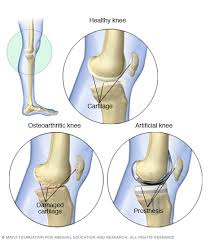
The Department of Biomedicine at the University of Basel and the University Hospital Basel announced today that they have delivered the first surgical procedure for the treatment of osteoarthritis in humans. The procedure called Nasal Chondrocyte Tissue-Engineered Cartilage, or N-TEC, offers an innovative alternative for healing limited knee cartilage lesions and addressing degenerative OA cases that have previously required knee joint replacements – prostheses that must be routinely performed. replaced after 15 years. 20 years.
The team in Basel is leading the next generation of human clinical trials that will take place in multiple locations across Europe, including Switzerland, Germany, Italy, Croatia, Sweden, Austria and Poland. The Swiss government and the EU have awarded the N-TEC program $13.1 million in funding for these osteoarthritis clinical trials – and the team continues to seek additional funding to expand these trials and bring this promising regenerative osteoarthritis treatment to other joints then deliver the knees. These clinical trials are open to qualified patients from around the world, including the United States.
According to the U.S. government, 2.5 million joint replacement surgeries take place in the United States each year, and even more patients are looking for alternatives to delay or avoid a prosthesis. Chondrocytes are the cell building blocks for cartilage and the team at the University of Basel uses them to grow new cartilage. Implantation of this tissue-engineered cartilage graft in cartilage defects of the knee could be an alternative for all patients who need more than simple pain relief, but do not want a prosthesis. N-TEC is not suitable for the treatment of rheumatoid arthritis. N-TEC’s current studies will focus exclusively on patellafemeral osteoarthritis, rather than complete knee osteoarthritis.
The N-TEC procedure was developed by an interdisciplinary research team led by biomedical engineer Professor Ivan Martin, PhD, director of the Department of Biomedicine, and Dr. Marcus Mumme, MD, senior orthopedic physician at the University Children’s Hospital Basel.
Regenerative medicine is really in the clinic today
N-TEC goes beyond laboratory and animal testing and has already taken regenerative medicine in the treatment of cartilage damage from a laboratory concept to real clinical success in humans. The University of Basel team is leading an international clinical trial with five centers in Europe and has successfully treated more than 100 patients for focal lesions – 2 to 8 cm2 dimensions – in the knee since 2012, and these patients have already returned to robust sporting activities, including skiing and running half marathons. Six years ago, the University of Basel team reached beyond focal lesions and treated two patients with advanced knee osteoarthritis – patients who had planned knee joint replacement. These patients, treated with N-TEC and correction of the leg axis, have reported favorable results (standardized, self-assessed questionnaires) and are still able to perform daily activities six years after surgery, without the need to resort to artificial joint replacement.
To tackle osteoarthritis and cartilage defects in other joints, the University of Basel team is conducting human clinical trials targeting patella-femoral osteoarthritis (PFOA) in the knee and cartilage lesions in the ankle and shoulder joints. They will start trials in the elbow joint in 2024.
“I have always been a very active and sporty person,” says 56-year-old Marlies Ruckstuhl from Basel, Switzerland. “A fall on ice damaged the cartilage in my left knee and left me with significant knee pain – and a reduced quality of life. Exercise was out of the question – and even sitting in my office chair was torture. I was told I needed a knee replacement In May 2017 I underwent the N-TEC procedure, after a year of structured physiotherapy I was able to run again and in the winter of 2018 I started skiing. Today I am back to my old self, pain free and unlimited – enjoying half marathons and trail running. Life is pure enjoyment again. Many thanks to the Basel – Bravo team!”
Nasal cartilage – extracting, growing and attributes
N-TEC is an autologous procedure that uses cartilage cells from each patient’s own body to grow new cartilage grafts that are surgically implanted to repair damaged cartilage in the patient’s joints. The team extracts a 7×7 mm segment of cartilage from the patient’s nasal septum, isolates and expands the cells, and then grows the cells on a collagen membrane in the laboratory to create a newly developed nasal cartilage graft of up to 40 cm.2. It takes four weeks to grow the cartilage grafts in the laboratory. The cartilage harvested from the nasal septum does not damage the patient’s nose.
Importantly, the nasal cartilage is made up of cells derived from the neural crest – the type of cells that create better functioning organs, such as the brain and eyes. These cells are superior to cells from other parts of the body in terms of regenerative capacity and so-called environmental plasticity – namely the ability to adapt to different environments and conditions. In particular, nasal chondrocytes, even from older donors, can be reproducibly used to develop N-TEC cartilage patches that possess structural and mechanical properties typical of articular cartilage tissue.
Although replacing damaged cartilage in a joint is remarkable, it is not sufficient to repair degenerative joint conditions such as osteoarthritis. Osteoarthritis is associated with wear and tear on the joint, as well as a significant amount of inflammation in damaged joints. This inflammation is a risk factor for the breakdown of new cartilage, just like with the original cartilage. Laboratory and animal experiments have shown that N-TEC nasal cartilage possesses anti-inflammatory properties that resist harmful inflammation in repaired joints. N-TEC has also proven its durability in the treatment of osteoarthritis knee cartilage, which was performed six years ago.
Surgical procedure
The N-TEC graft is placed in the joint during open surgery – and the team tailors the new cartilage graft in the operating room to the shape and size of the cartilage defect. The surgeons attach the graft to the surrounding cartilage tissue. The cartilage then integrates with the surrounding cartilage and subchondral bone. Patients are hospitalized for three to five days and the leg is immobilized for the first week after surgery. The patients then walk with crutches for another six weeks, during which the leg is mobilized and freedom of movement is increased. After another week, patients put their full weight on the leg and continue physical therapy to strengthen the leg. The patient can return to light sports (non-impact sports), such as swimming and cycling, after three months, and return to full robust exercise, including sports, after a year.
N-TEC has shown overwhelming success in human clinical trials to date. Thanks to generous government funding and collaboration with other excellent teams, we will now expand clinical trials to investigate N-TEC under more challenging conditions so that it may one day become a regular bedside procedure for many patients suffering from joint pain caused by cartilage loss. .”
Ivan Martin, PhD, professor of tissue engineering at the Department of Biomedicine, University of Basel and University Hospital Basel
“The amazing N-TEC procedure is funded by grants from the Swiss National Science Foundation and the European Union – and private donors can step up to donate and accelerate N-TEC’s path to the bedside,” said Steve O Keeffe, founder of Angry @Arthritis, a nonprofit organization focused on attacking and eliminating osteoarthritis, headquartered in Alexandria, Virginia, in the United States. “When the doctor told me I had arthritis, it felt like my life, as I knew it, was over. The team at the University of Basel is giving new hope to people like us. They actually inspired me to start Angry@Arthritis – and begin my journey to finding and financing treatments for osteoarthritis.”
Listen to Professor Ivan Martin’s story about N-TEC on the Angry@Arthritis podcast – https://www.angryarthritis.org/podcasts/. Also available on the major streaming platforms – Spotify, Apple, etc. You can donate to expand N-TEC’s clinical trials at https://www.angryatarthritis.org/.