download

Research shows that the number of consumer product-related traumatic brain injuries in children has increased significantly since 2000


Traumatic brain injury, a major public health problem, is the leading cause of death and disability in children aged 0 to 4 years and 15 to 19 years. With an average of 308,000 cases per year in the United States, such accidents are common among school-age children participating in sports and play activities involving equipment (e.g., cycling, soccer, basketball, and football).

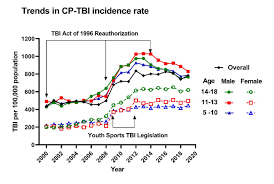
New research in the American Journal of Preventive Medicine, published by Elsevier, examines consumer product-related traumatic brain injury (CP-TBI) in school-age children over a 20-year period by differentiating age groups, education levels and gender and evaluating trends with the time-point regression method. Their findings reveal insights that have implications for effective preventive strategies and policies.

This serial cross-sectional study used National Electronic Injury Surveillance System – All Injury Program (NEISS-AIP) data for initial emergency department (ED) visits for CP/TBI from January 2000 to December 2019 for 6.2 million children under the age of 5. 18 years.

The study documents a significant increase in CP-TBI incidents since 2000, accounting for more than 12% of all US hospital emergency room visits by school-age children in 2019, up from 4.5% in 2000. The rate of increase stabilized overall, after peaking in 2012, to an annual level of 3.6% over the entire study period. This may be partly due to widespread media attention and public health policies that have resulted in greater risk awareness regarding contact sports, increased reporting of incidents, and more effective prevention and treatment.

The incidence of CP-TBI was higher in boys than in girls. However, annual percentage increases since 2013 have been significantly greatest among girls, especially among high school-age girls.

While it appears that efforts to reduce TBI in children’s sports have been effective, our findings suggest that more targeted efforts are needed among girls,” said lead investigator Tuan D. Le, MD, DrPH, Department of Epidemiology and Biostatistics, School of Community and Rural Health, The University of Texas at Tyler Health Science Center, Tyler; and Research Directorate, US Army Institute of Surgical Research, JBSA-Fort Sam Houston, TX, USA.

CP-TBI has a negative impact not only on affected individuals, but also on their families, schools and healthcare systems. “Parents, sports and activities staff and coaches, educators, caregivers and support members, and the children themselves all need more awareness and training about screening and when to seek care for mild and more severe TBI in children. Improved point-of-care screening should be developed and promoted to identify and treat injuries that are not always immediately visible,” explains Dr. Le.

He added: “Since inactivity in children is also a serious problem, we are faced with a difficult balancing act: how do we develop awareness of how to avoid risky activities without discouraging children from participating in healthy and fun exercise?


Source link

Similar Posts

  • |

    Knee Hurt When Straightening

    Knee pain can be a frustrating and debilitating issue for many people. One common symptom is difficulty straightening the knee, which can be caused by a variety of factors. In this article, we will explore the causes of knee pain when straightening the leg, as well as potential treatments and prevention strategies. Understanding knee pain…

  • Stratasys is collaborating with Siemens Healthineers in a Landmark Research Project to advance medical imaging

      The use of 3D printing can improve outcomes by providing 3D modeling to physicians with real-world scenarios to practice and reference. EDEN PRAIRIE, Minnesota & REHOVOT, Israel, November 27, 2023–(BUSINESS WIRE)–Stratasys Ltd. (NASDAQ: SSYS), a leader in polymer 3D printing and additive manufacturing solutions, today announced it is partnering with Siemens Healthineers to conduct…

  • Expanding Innovations, Inc. Announces Commercial Launch of X-PAC Expandable Lateral Cage System

      LOS ANGELES, Oct. 19, 2023 /PRNewswire/ — Expanding Innovations, Inc. (EI), an emerging technology leader in the expandable interbody cage sector of the spine industry, has announced the full commercial launch of the X-PAC Expandable Lateral Cage System (X-PAC LLIF). Some of the first procedures using the cage were performed by Dr. Brandon K….

  • Best ice machine for knee surgery (Game Ready, Polar Care)

    What if you could recover from knee surgery with less pain and fewer medications? This question is at the heart of modern post-operative care. Managing discomfort and swelling is a major challenge after an orthopedic procedure. cold therapy system Cold therapy offers a powerful, drug-free solution. It is a non-invasive method to control inflammation and pain directly at the source. Specialized units deliver consistent cooling to the affected area. This can significantly reduce the need for strong painkillers during the critical healing phase. We have thoroughly examined the market of recovery tools. Our guide focuses on leading systems, including various Breg Polar Care models and the Game Ready unit. Our goal is to help you navigate your options. You can find a system that fits your needs and supports a smoother, more comfortable recovery at home. Key Takeaways Cold therapy is a proven, drug-free method to manage pain and swelling after surgery. Using a dedicated cooling unit can help reduce reliance on narcotic pain medication. Popular systems like the Breg Polar Care line come in several models, such as the Cube, Kodiak, Glacier, and Wave. Game Ready is a leading unit that combines cold therapy with adjustable compression. Always consult your healthcare provider to ensure this therapy is right for your specific procedure. Selecting the right device involves considering your budget and recovery goals. Effective, consistent cooling can greatly improve comfort and outcomes during the healing process. Introduction to Knee Surgery Recovery and Cold Therapy Successfully navigating the first weeks post-surgery hinges on a structured recovery strategy. This plan must prioritize managing two key issues: discomfort and inflammation. This is where cold therapy, also called cryotherapy, becomes essential. It involves applying controlled cooling to the surgical area to reduce inflammation. After a procedure, fluid often accumulates in the joint. This swelling, known as edema, increases pressure and causes significant pain. The therapy works by constricting blood vessels. This action helps limit the amount of fluid and blood pooling at the injury site. Many surgeons now recommend a dedicated cooling device. These units provide consistent, targeted cold therapy that is far more effective than basic ice packs. Reducing swelling early is crucial. It directly supports efforts to regain a full range of motion in the knee during rehabilitation. Healthcare providers often prescribe this therapy as a safe alternative to stronger pain medications. Patients should always combine its use with specific exercise advice from a physiotherapist. This promotes healthy blood flow and ensures optimal healing. How Cold Therapy Works in Reducing Swelling and Pain Cold therapy targets the root causes of post-operative discomfort through a simple yet powerful process. It directly addresses the inflammation and pain that hinder healing. Mechanism of Action in Cold Therapy The primary mechanism involves using cold water to constrict blood vessels. This reduces blood flow and inflammation in the affected area. A dedicated unit provides a continuous, even distribution of this chilled liquid. It maintains a steady cold temperature for many hours. cold therapy mechanism Advantages Over Traditional Ice Packs Basic ice packs warm up quickly due to body heat. Their effectiveness diminishes within minutes. In contrast, a motorized therapy system eliminates frequent trips to the freezer. Its large, insulated reservoir ensures prolonged cooling. Specialized pads are designed for specific body parts. They deliver targeted cold therapy exactly where needed. This approach prevents the condensation issues of melting ice packs. It keeps the surgical site clean and dry, enhancing comfort and hygiene. Overview of Cold Therapy Devices for Post-Surgical Recovery The market offers two primary types of cold therapy units, each with distinct mechanisms and benefits. Selecting the right one depends on your mobility, budget, and recovery goals. We categorize these devices into gravity-fed and motorized systems. This helps you understand which technology best suits your specific needs. Types of Devices: Motorized and Gravity-Fed Systems Gravity-fed devices, like the Aircast Cryo/Cuff, use elevation to circulate water without a motor. They are cost-effective and portable. The simple physics of elevation moves chilled liquid through the pad. Motorized systems provide constant recirculation of cold water between a cooler and the pad. This is ideal for patients with limited mobility after a procedure. Brands like Breg Polar Care circulate water directly for efficient cooling. The DonJoy IceMan series uses dual pump technology for a comfortable temperature. Some advanced therapy units, such as the Ossur Cold Rush, feature an adjustable flow dial. This allows patients to customize their experience. Understanding these mechanical differences is key before making a purchase. Both types deliver effective cold therapy, but their operation varies. Key Features to Consider When Purchasing an Ice Machine Several practical factors determine how well a cold therapy machine will serve you at home. The right features enhance both effectiveness and convenience during your healing period. Consistency, Coverage, and Temperature Control Look for a unit that maintains a steady cold temperature. Consistent cooling is vital for safe, prolonged sessions. Good coverage means the pad fits your joint properly. This ensures the therapy reaches all affected areas. Adjustable controls let you fine-tune the intensity. This prevents skin irritation while maximizing comfort. cold therapy…

  • |

    Knee Injury Recovery Time

    Knee Injury Recovery Time: What You Need to Know Knee injuries can be painful and debilitating, affecting daily activities such as walking, running, and even standing. Recovery time for knee injuries can vary depending on the severity of the injury, the type of injury, and the treatment received. Understanding the recovery process is essential to…

  • | |

    Cerapedics Reinforces Commitment to Level 1 Evidence with Long-Term Results from Six-Year Central IDE Cervix Study Showing 98.6% of Spinal Fusions Occurring in Patients Treated with i-FACTOR®

    WESTMINSTER, Colo., Oct. 17, 2023 /PRNewswire/ — Cerapedics Inc., a commercial-stage orthopedic company committed to redefining the standard of care for bone repair, today announced long-term follow-up data from its pivotal IDE study of i-FACTOR Peptide-Enhanced Bone Graft. Published data demonstrated single-level anterior cervical discectomy and fusion (ACDF) fusion rates of 98.6% after six years…

One Comment

Leave a Reply

Your email address will not be published. Required fields are marked *