Swollen Knee Relief Tips – Manage Pain & Swelling
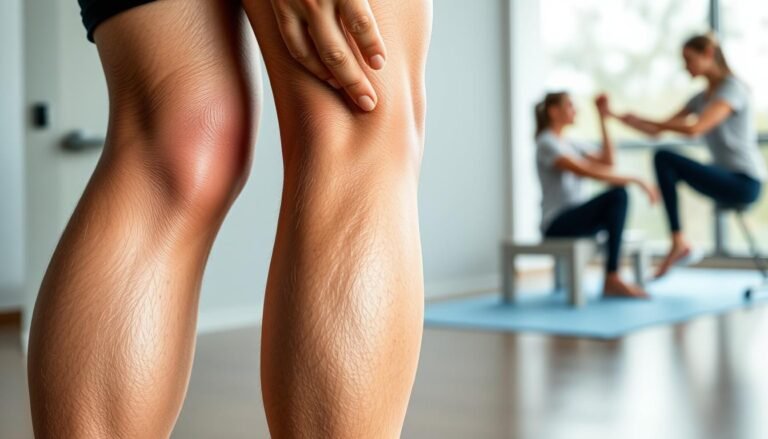
If you’re experiencing knee swelling, you’re not alone. Many individuals deal with swollen knees due to various reasons, such as injury, overuse, or underlying health conditions. The good news is that there are steps you can take to manage the pain and reduce the swelling. While it’s important to seek medical advice if the knee swelling persists or is accompanied by severe pain, there are several remedies that can provide relief and promote healing.
Key Takeaways
- Rest, ice, compression, elevation, anti-inflammatory medications, heat, massage, and knee exercises can help reduce knee swelling.
- Knee swelling can be caused by injury, overuse, or underlying conditions like arthritis or infections.
- If the knee swelling persists for more than three days, worsens, or is accompanied by severe pain, it’s important to seek medical attention.
- Medical interventions for knee swelling may include medications, physical therapy, injections, or surgical procedures.
- By following these tips and seeking appropriate care, individuals can effectively manage knee swelling and improve their overall knee health.
What Causes Knee Swelling?
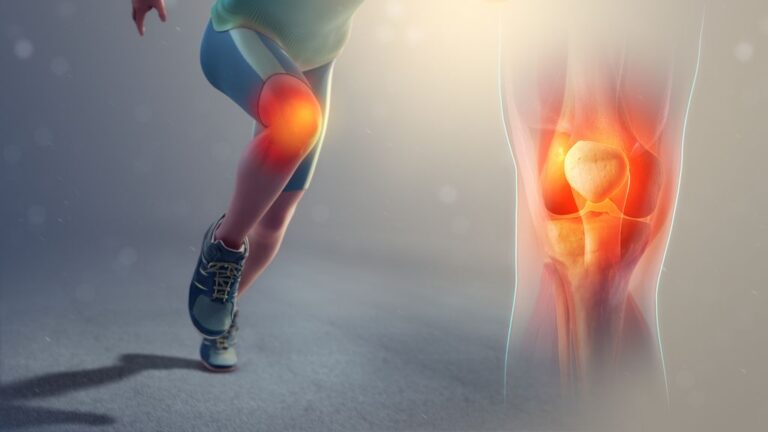
Knee swelling, also known as knee effusion or water on the knee, is a common symptom that occurs as a result of damage within the knee or an underlying condition. Understanding the causes of knee swelling is crucial for effective treatment and management. Some of the common factors that contribute to knee swelling include:
- Inflammation from overuse
- Torn ligaments or broken bones caused by major injuries
- Medical conditions such as osteoarthritis and rheumatoid arthritis
- Infections
- Gout
- Tumors
- Bursitis
- Cysts
Identifying the underlying cause of knee swelling is essential for devising an appropriate treatment plan and ensuring effective management. By determining the root cause, healthcare professionals can provide targeted interventions that address the specific issue, leading to improved outcomes and relief for individuals experiencing knee swelling.
Common Causes of Knee Swelling:
| Cause | Description |
|---|---|
| Inflammation from overuse | Repetitive movements or activities that place excessive strain on the knee joint can lead to inflammation, resulting in knee swelling. |
| Major injuries | Torn ligaments or broken bones caused by accidents, falls, or sports-related incidents can cause significant inflammation and fluid buildup in the knee. |
| Osteoarthritis | A degenerative joint disease that causes the cartilage in the knee to deteriorate over time, leading to inflammation and swelling. |
| Rheumatoid arthritis | An autoimmune condition that affects the joints, causing inflammation, pain, and stiffness in the knee and other areas of the body. |
| Infections | Bacterial or viral infections that target the knee joint can result in swelling, redness, warmth, and pain. |
| Gout | A type of arthritis caused by the buildup of uric acid crystals in the joints, which often affects the big toe but can also involve the knee. |
| Tumors | Abnormal growths in or around the knee joint can cause fluid accumulation and subsequent swelling. |
| Bursitis | Inflammation of the bursae (small fluid-filled sacs that cushion the knee joint) can lead to swelling and discomfort. |
| Cysts | Fluid-filled sacs that develop within the knee joint or behind the knee can cause swelling and pain. |
Home Remedies for Knee Swelling
When it comes to reducing knee swelling at home, there are several effective remedies that can provide relief and promote healing. Here are some methods you can try:
- Rest: Resting the knee is crucial to allow it to heal. Avoid activities that put weight on the knee, but maintaining gentle movement can prevent stiffness.
- Ice: Applying ice to the knee for 15-20 minutes every 2-4 hours can help control pain and reduce swelling. Wrap the ice pack in a thin towel or cloth to protect the skin.
- Compression: Applying compression with an elastic bandage or sleeve can prevent fluid buildup in the knee. Make sure the compression is snug but not too tight.
- Elevation: Elevating the leg above heart level can help reduce inflammation and fluid buildup in the knee. Use a pillow or cushion to support the leg while lying down.
- Anti-inflammatory medications: Taking over-the-counter medications like acetaminophen or ibuprofen can provide pain relief and help reduce knee swelling. Follow the recommended dosage and consult a healthcare professional if you have any concerns.
- Heat: After 72 hours of using ice, you can switch to applying heat to the knee. Heat can help promote blood flow and relax the muscles. Use a heating pad or warm towel, but ensure it’s not too hot to avoid burns.
- Massage: Gentle massage around the swollen knee can help improve blood circulation and reduce fluid accumulation. Use circular motions with your fingertips and apply light pressure.
- Knee exercises: Engaging in specific knee exercises can strengthen the muscles around the knee and reduce fluid accumulation. Some recommended exercises include flexibility training, weight training, and low-impact exercises like swimming or cycling. Talk to a physical therapist or healthcare professional for guidance.
Remember:
These home remedies can help alleviate knee swelling, but it’s important to consult a healthcare professional if the swelling persists, worsens, or is accompanied by severe pain. Proper diagnosis and treatment are essential to address the underlying cause of the swelling and ensure proper care and management.
| Home Remedies for Knee Swelling | Description |
|---|---|
| Rest | Avoid activities that put weight on the knee, but maintain gentle movement to prevent stiffness. |
| Ice | Apply ice to the knee for 15-20 minutes every 2-4 hours to control pain and reduce swelling. |
| Compression | Use an elastic bandage or sleeve to compress the knee and prevent fluid buildup. |
| Elevation | Elevate the leg above heart level to reduce inflammation and fluid accumulation in the knee. |
| Anti-inflammatory medications | Take medications like acetaminophen or ibuprofen to relieve pain and reduce knee swelling. |
| Heat | Switch to applying heat after 72 hours of using ice to promote blood flow and relax the muscles. |
| Massage | Gently massage the swollen knee to improve blood circulation and reduce fluid accumulation. |
| Knee exercises | Engage in specific exercises to strengthen the knee and reduce fluid accumulation. |

When to Seek Medical Attention
While most cases of knee swelling can be managed at home, it’s important to know when to seek medical attention. If you experience any of the following signs or symptoms, it’s advisable to consult a doctor:
- The knee swelling persists for more than three days.
- The knee swelling worsens over time.
- The knee swelling is accompanied by severe pain.
- You are unable to fully straighten or flex the knee.
- You have a fever.
- You notice redness and warmth around the knee.
- You are unable to bear weight on the affected knee.
- You experience sharp pain during certain movements.
These symptoms may indicate a more severe injury or an underlying medical condition that requires professional evaluation to ensure proper diagnosis and treatment. Seeking medical attention in these cases can help prevent further complications and promote optimal recovery.
Quote:
“When it comes to knee swelling, it’s better to err on the side of caution. Consulting a doctor can provide a comprehensive evaluation, leading to a timely diagnosis and appropriate treatment.” – Dr. Emily Johnson, Orthopedic Surgeon
In some instances, knee swelling may be a sign of a serious condition that requires immediate medical attention. If you experience sudden and severe pain in your knee, inability to move or bear weight on the affected leg, or any other emergent symptoms, seek medical help right away.
| When to Seek Medical Attention | When to Manage at Home |
|---|---|
| Persistent knee swelling for more than three days | Mild knee swelling with gradual improvement |
| Worsening knee swelling over time | Temporary knee swelling due to minor injury |
| Knee swelling accompanied by severe pain | Mild to moderate knee pain with manageable discomfort |
| Inability to fully straighten or flex the knee | Mild restriction in knee movement with gradual improvement |
| Presence of fever | No fever or other signs of infection |
| Redness and warmth around the knee | No visible signs of inflammation |
| Inability to bear weight on the affected knee | Mild difficulty walking or moving the knee |
| Sharp pain during certain movements | Mild discomfort during regular activities |
Medical Interventions for Knee Swelling
In some cases, medical interventions may be necessary to address knee swelling. Depending on the specific cause and severity of the swelling, various treatment options are available. Here, we explore the different medical treatments for knee swelling, including medications, physical therapy, injections, and surgical interventions.
Medications
One common method of treating knee swelling is through the use of medications. Nonsteroidal anti-inflammatory drugs (NSAIDs) can help reduce swelling, relieve pain, and treat underlying conditions such as arthritis. These medications work by reducing inflammation in the knee joint, providing relief and improving mobility.
Physical Therapy and Exercises
Physical therapy and exercises play a crucial role in managing knee swelling. These interventions focus on strengthening the knee muscles and providing support to the joint. Physical therapists can design personalized exercise programs to improve flexibility, range of motion, and stability. By following a structured physical therapy program, individuals can reduce knee swelling and enhance overall knee function.
Injections
In certain situations, injections may be recommended to treat knee swelling. Corticosteroid injections can provide quick relief from swelling and pain by reducing inflammation in the knee joint. Hyaluronic acid injections, also known as viscosupplementation, can provide lubrication to the knee joint, improving mobility and reducing swelling. Platelet-rich plasma (PRP) injections utilize a concentrated form of the patient’s blood platelets to promote healing and reduce inflammation in the knee.

Surgical Interventions
In more severe cases or when knee swelling is caused by structural issues, surgical interventions may be necessary. Arthroscopic surgery involves making small incisions and using specialized instruments to remove damaged tissue or repair the knee joint. Partial knee replacement replaces only the damaged portion of the knee joint, while total knee replacement involves replacing the entire joint with artificial components. Osteotomy, a surgical procedure that involves repositioning the bones, can help correct alignment issues and alleviate knee swelling.
When considering surgical interventions, it’s important to consult with a qualified orthopedic surgeon to evaluate the specific needs and risks associated with each procedure.
Conclusion
Managing knee swelling is crucial for finding relief and promoting healing. By implementing a combination of home remedies and medical interventions, individuals can effectively address swollen knees and improve their overall knee health.
Resting the affected knee, applying ice, and using compression techniques can help reduce swelling and alleviate pain. Elevating the leg above heart level can further aid in reducing inflammation.
In addition, taking anti-inflammatory medications can provide relief from knee swelling. When home remedies do not provide sufficient relief, it is advisable to consult a medical professional. They can assess the severity of the swelling, identify any underlying causes, and offer appropriate treatment options such as medication, physical therapy, injections, or surgical interventions.
Remember, persistent or severe knee swelling should not be ignored. With proper care and treatment, individuals can effectively manage knee swelling and improve their overall quality of life.
FAQ
What are some tips for relieving a swollen knee and managing pain and swelling?
Some tips for relieving a swollen knee and managing pain and swelling include resting the knee, applying ice, using compression, elevating the leg, taking anti-inflammatory medications, using heat after 72 hours, and performing massage and knee exercises.
What are the common causes of knee swelling?
Knee swelling can be caused by various factors, including overuse, injuries such as torn ligaments or broken bones, and medical conditions like osteoarthritis, rheumatoid arthritis, infections, gout, tumors, bursitis, and cysts.
What are some home remedies for reducing knee swelling?
Some effective home remedies for reducing knee swelling include resting the knee, applying ice for 15-20 minutes every 2-4 hours, using compression with an elastic bandage or sleeve, elevating the leg above heart level, taking anti-inflammatory medications, using heat after 72 hours, and performing massage and knee exercises.
When should I seek medical attention for knee swelling?
It is important to seek medical attention if the knee swelling persists for more than three days, worsens, or is accompanied by severe pain. Other signs that require medical attention include inability to fully straighten or flex the knee, presence of a fever, redness and warmth around the knee, inability to bear weight, and sharp pain during certain movements.
What are the medical interventions available for knee swelling?
Depending on the specific cause and severity of the knee swelling, medical interventions may include medications such as nonsteroidal anti-inflammatory drugs (NSAIDs), physical therapy and exercises, injections of corticosteroids, hyaluronic acid, or platelet-rich plasma (PRP), and surgical interventions like arthroscopic surgery, partial knee replacement, total knee replacement, or osteotomy.
Source Links
- https://www.healthline.com/health/how-to-reduce-swelling-in-knee-quickly
- https://www.medicalnewstoday.com/articles/how-to-reduce-swelling-in-knee-quickly
- https://www.mayoclinic.org/diseases-conditions/knee-pain/diagnosis-treatment/drc-20350855