Understanding Patella: What is the Meaning?
Did you know that the patella, also known as the kneecap, is the largest sesamoid bone in the human body? It’s true! This small bone, starting as soft cartilage before ossifying into bone, has a significant impact on our knee joint health. Let’s delve deeper into the meaning, anatomy, function, and common conditions of the patella to gain a better understanding of its importance.
Before we explore the fascinating world of the patella, let’s define this crucial bone. The patella is a flat, rounded triangular bone that articulates with the femur and covers and protects the anterior articular surface of the knee joint.
Anatomy of the Patella
The patella, also known as the kneecap, is a sesamoid bone with a roughly triangular shape. It plays an essential role in supporting the knee joint and facilitating movement. Let’s explore the intricate anatomy of the patella, understanding its structure and key features.
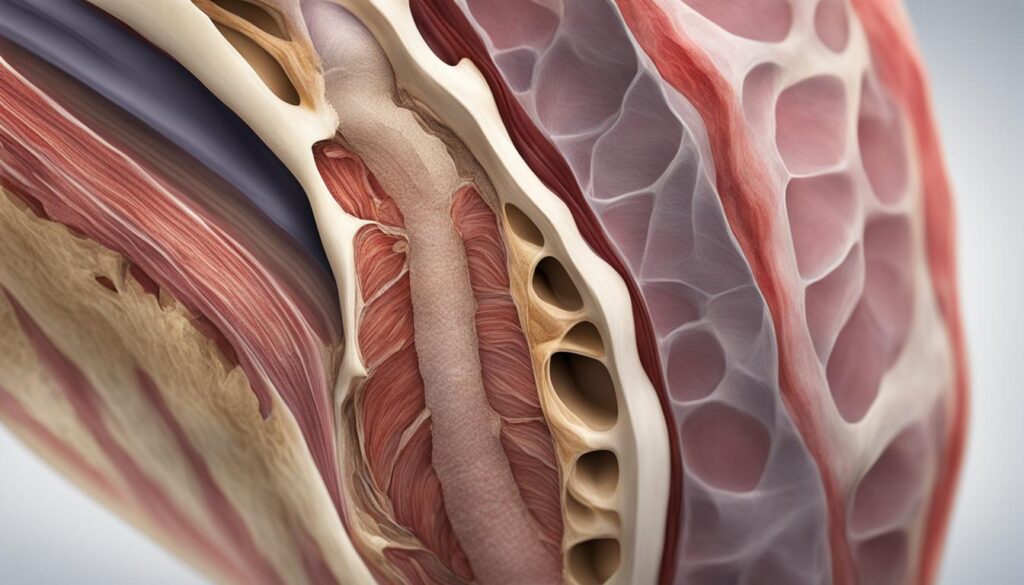
The patella has distinct surfaces and margins that contribute to its overall shape and function. The front and back surfaces of the patella are connected by thin and thick margins. The upper third of the front surface is coarse and rough, serving as the attachment point for the quadriceps tendon. This tendon connects the patella to the powerful muscles of the thigh, enabling movements such as walking, running, and jumping.
The middle third of the front surface contains vascular canaliculi, which provide nourishment to the bone tissue. The lower third culminates in the apex of the patella, which serves as the origin of the patellar ligament. This ligament connects the patella to the tuberosity of the tibia, further reinforcing the knee joint.
Moving to the posterior surface of the patella, it is divided into two parts. The upper three-quarters of the posterior surface articulate with the femur, forming a connection between the patella and the thigh bone. This articulation takes place through medial and lateral facets, allowing for smooth movement and stability. The articular surface of the patella is covered by thick cartilage, which helps reduce friction and absorb shock during joint movements.
Overall, the anatomical structure of the patella is remarkable, enabling it to fulfill its crucial role in knee joint function. Its triangular shape, attachment points, ligaments, and articular surfaces all contribute to the stability and mobility of the knee.
Key Features of the Patella
- Triangular Shape: The patella has a roughly triangular shape, with an apex and base.
- Attachment Points: The patella serves as the attachment point for the quadriceps tendon and the patellar ligament.
- Articular Surfaces: The patella articulates with the femur through medial and lateral facets, covered with thick cartilage.
- Function: The patella plays a vital role in knee extension and provides leverage to the quadriceps tendon for powerful leg movements.
Understanding the intricate anatomy of the patella helps us appreciate its importance in knee joint health and function. In the next section, we will explore the specific functions of the patella and its contribution to overall leg strength and mobility.
Function of the Patella
The patella, also known as the kneecap, serves a vital function in the knee joint. Its primary role is to facilitate knee extension, allowing us to straighten our legs and engage in activities like walking, running, and jumping. The patella achieves this function by increasing the leverage that the quadriceps tendon can exert on the femur.
The quadriceps tendon, a strong, fibrous tissue, is attached to the patella and contracts to extend or straighten the knee. As the quadriceps muscles contract, they pull on the quadriceps tendon, which, in turn, pulls on the patella. This action creates a mechanical advantage by increasing the angle at which the quadriceps tendon acts, enhancing the force of knee extension.
The patella is also supported and stabilized by various structures. The horizontal fibers of the vastus medialis muscle insert into the patella, helping to anchor it in place. Additionally, the prominence of the lateral femoral condyle aids in patellar stability. The retinacular fibers surrounding the patella further contribute to its stability during exercise and movement.
Overall, the function of the patella is crucial in ensuring proper knee joint function and allowing for efficient movement. By increasing leverage and providing stability, the patella enables us to perform essential activities that involve knee extension.
| Function of the Patella |
|---|
| Facilitating knee extension |
| Increasing leverage of the quadriceps tendon |
| Providing stability to the knee joint |
Common Conditions and Disorders of the Patella
Several conditions and disorders can affect the patella, leading to pain and discomfort. It is essential to recognize and understand these conditions to provide adequate care and treatment. Some common patella disorders and conditions include:
Patellar Dislocation
Patellar dislocation occurs when the patella is fully displaced from its normal position within the knee joint. This displacement can result in severe pain, swelling, and instability. The patella can usually be realigned by extending the knee, but it may require medical intervention to prevent recurrent dislocations.
Patellar Subluxation
Patellar subluxation is a partial dislocation of the patella, where it remains in its groove but is unstable. This condition can cause frequent episodes of the patella slipping out of place, leading to pain and difficulty with knee movements. Physical therapy and strengthening exercises are often recommended to improve patellar stability.
Osteoporosis and Patella
Osteoporosis is a bone condition characterized by a decrease in bone density and strength. It can affect the patella, making it weaker and more susceptible to fractures. Individuals with osteoporosis may experience patella pain and other symptoms related to bone fragility. Proper management of osteoporosis, including lifestyle modifications and medication, can help mitigate the risk of patellar fractures.
Knee Pain and Patella
Knee pain, especially around the patella, can have various causes. It may result from repetitive stress on the patella, injuries, or underlying conditions affecting the knee joint. Damage to the patella itself or the surrounding structures, such as the tendons and ligaments, can contribute to knee pain. A comprehensive evaluation is necessary to determine the exact cause and provide appropriate treatment.
It is crucial to seek medical attention if you experience persistent patella pain, instability, or limitations in knee function. Proper diagnosis and treatment can help manage patella disorders, alleviate pain, and restore optimal knee joint health.
Tests and Treatments for Patella Conditions
When it comes to diagnosing and treating patella conditions, healthcare providers have a range of options available. These include:
1. Patella Reflex Test
The patella reflex test is a commonly used diagnostic exam for patella conditions. During this test, the healthcare provider taps the knee to elicit an involuntary reflex response. This test helps in assessing the function and integrity of the patellar reflex.
2. Imaging Tests
In some cases, imaging tests may be necessary to evaluate patella injuries or fractures. X-rays are commonly used to obtain detailed images of the patella and surrounding structures. These tests can provide valuable information to aid in accurate diagnosis and treatment planning.
3. Treatment Options
Treatment options for patella conditions vary depending on the severity of the condition. Common treatment approaches include:
- Wearing a brace or immobilizing device to provide support and stability to the patella.
- Resting and avoiding activities that worsen the condition to allow for healing and recovery.
- Physical therapy to strengthen the muscles around the knee and improve overall joint function.
- At-home treatments such as icing the affected area and using over-the-counter pain relievers to manage pain and inflammation.
For more serious cases, additional interventions may be necessary:
- In the case of a patella fracture, immobilization through splints or casts may be required to facilitate healing.
- If a patella fracture is severe or displaced, surgery may be necessary to realign the bone and promote proper healing.
In addition to patella-specific treatments, managing underlying conditions like osteoporosis is crucial. Osteoporosis treatment often includes a combination of exercise, vitamin and mineral supplementation, and prescription medications to improve bone density and reduce fracture risk.
It’s essential to consult with a healthcare professional for an accurate diagnosis and appropriate treatment plan tailored to individual needs.
| Treatment | Description |
|---|---|
| Bracing or Immobilization | Provides support and stability to the patella to aid in healing and prevent further damage. |
| Rest and Activity Modification | Gives the patella time to heal by avoiding activities that exacerbate the condition. |
| Physical Therapy | Strengthens the muscles around the knee, improving joint stability and function. |
| At-Home Treatments | Includes icing the affected area and using over-the-counter pain relievers to manage pain and inflammation. |
| Immobilization for Patella Fracture | May involve the use of splints or casts to facilitate healing in cases of patella fractures. |
| Surgery | Required for severe or displaced patella fractures to realign the bone and promote proper healing. |
| Osteoporosis Management | Includes exercise, vitamin and mineral supplementation, and prescription medications to improve bone density and reduce fracture risk. |
Patella Dislocations and Fractures
Patella dislocations and fractures are common knee injuries that can cause significant pain and impact knee stability and function. Understanding these conditions and their treatments is essential for proper management and recovery.
Patella Dislocation:
Patella dislocation occurs when the patella slides out of its normal position on the knee joint, usually towards the side (laterally). This can happen due to a sudden change in direction or a traumatic impact to the knee. The dislocation can cause severe pain, swelling, and an inability to continue weight-bearing activities.
Patella Fracture:
Patella fractures are breaks or cracks that occur in the patella bone. They often result from a direct blow to the knee, such as a fall or a high-impact collision. Patella fractures can lead to swelling, intense pain, and restriction of knee movement, making it difficult to fully extend the knee.
When a patella dislocation or fracture occurs, prompt medical attention is crucial. Proper diagnosis and treatment help in restoring stability and function to the knee, reducing pain, and preventing long-term complications.
Treatment Options:
1. Immobilization: In some cases, the knee may be immobilized using a brace or a splint to prevent further movement and allow the patella to heal.
2. Surgical Intervention: Surgery may be necessary to realign the patella back into its proper location and repair any damaged structures, such as ligaments or tendons. Internal fixation devices, such as pins, screws, or wires, may be used to stabilize the fractured patella during the healing process.
3. Rehabilitation Therapy: Physical therapy plays a crucial role in the recovery process. It focuses on strengthening the muscles around the knee, improving range of motion, and restoring stability and function. Rehabilitation may include exercises, manual therapy, and modalities such as heat or ice application.
Table:
| Condition | Treatment |
|---|---|
| Patella Dislocation | Immobilization, surgical realignment, rehabilitation therapy |
| Patella Fracture | Immobilization, surgical fixation, rehabilitation therapy |
Recovering from patella dislocations and fractures can take time, and adherence to the prescribed treatment plan is essential for successful outcomes. It is important to consult a healthcare professional for an accurate diagnosis and appropriate treatment based on the severity of the injury.
The image above illustrates the different types of patella dislocations and fractures.
Conclusion
In conclusion, the patella, also known as the kneecap, is a vital bone that plays a crucial role in knee joint health. Understanding the anatomy and function of the patella is essential for promoting proper care and treatment. By maintaining a healthy weight and regularly engaging in exercise, we can support the overall health and well-being of the patella and the knee joint as a whole.
Proper knee joint health is important for maintaining an active lifestyle and preventing conditions such as patellar dislocation, fractures, and osteoporosis. By taking steps to avoid excessive stress on the knee joint, we can reduce the risk of patella-related injuries and promote long-term joint health.
Remember, if you experience any knee pain or discomfort, it is essential to seek medical attention for a proper diagnosis and treatment. Taking care of your patella and prioritizing knee joint health will contribute to your overall well-being and allow you to continue enjoying an active and fulfilling life.
FAQ
What is the patella?
The patella, also known as the kneecap, is a flat, rounded triangular bone that articulates with the femur and covers and protects the anterior articular surface of the knee joint.
What is the anatomy of the patella?
The patella is a sesamoid bone that is roughly triangular in shape. It has an apex that faces downwards and gives attachment to the patellar ligament. The front and back surfaces of the patella are joined by thin and thick margins. The upper third of the front of the patella is rough and serves as an attachment point for the quadriceps tendon. The middle third contains vascular canaliculi, while the lower third culminates in the apex, which serves as the origin of the patellar ligament. The posterior surface is divided into two parts and articulates with the femur through its upper three-quarters.
What is the function of the patella?
The primary functional role of the patella is knee extension. It increases the leverage that the quadriceps tendon can exert on the femur by increasing the angle at which it acts. The patella is attached to the quadriceps tendon, which contracts to extend or straighten the knee. It is stabilized by the insertion of the horizontal fibers of vastus medialis and the prominence of the lateral femoral condyle.
What are some common conditions and disorders of the patella?
Some common conditions and disorders of the patella include patellar dislocation, patellar subluxation, and osteoporosis. These conditions can cause pain and discomfort in the patella and surrounding area.
How are patella conditions diagnosed and treated?
Healthcare providers often perform the patella reflex test to diagnose patella conditions. Imaging tests, such as X-rays, may be necessary to assess patella injuries or fractures. Treatment options may include wearing a brace or immobilizing device, resting, physical therapy, and at-home treatments like icing and pain relievers.
What are patella dislocations and fractures?
Patella dislocations occur when the patella slides out of its position on the knee, often laterally. Patella fractures are injuries that cause swelling, pain, and an inability to extend the knee. Treatment for these conditions often involves immobilization, surgery, and rehabilitation therapy to restore stability and function to the knee.
Why is the patella important?
The patella plays a crucial role in knee joint health. Understanding its anatomy, function, and common conditions helps promote proper care and treatment. Keeping the patella and the knee joint healthy contributes to overall well-being and mobility.
Source Links
- https://en.wikipedia.org/wiki/Patella
- https://my.clevelandclinic.org/health/body/25038-patella
- https://www.merriam-webster.com/dictionary/patella