Osgood-Schlatter disease in teens: symptoms, causes, treatment, and when to see a doctor in 2026
If your teen has knee pain that flares during sports, here is a reassuring number: about 10% of children ages 12–15 experience Osgood-Schlatter disease, which means it is a common reason for persistent knee hurt around the front of the leg.
Key Takeaways
| What families want to know | Practical answer for Osgood-Schlatter disease in teens |
|---|---|
| Where does it hurt? | Usually at the tibial tubercle, the bony bump just below the kneecap, often described as knee pain with kneeling, jumping, or running. |
| Is it “just growing pains”? | Osgood-Schlatter disease in teens is related to growth and tendon traction, so it is common during growth spurts, but it still deserves smart care. |
| What helps most in 2026? | Load management plus a targeted rehab plan. Some teens also benefit from a knee brace for comfort during activity. For broader guidance, see our knee pain resources. |
| When should we worry? | Escalate evaluation if pain is severe, affects walking, involves significant swelling, or does not improve with conservative steps. |
| How long does it last? | It is often self-limiting, but healing can take months, so a plan that supports school, sports, and recovery matters. |
| Could it be something else? | Yes. If symptoms look different, consider other knee causes like chondromalacia, tendon injuries, or ligament problems. Helpful comparisons start with chondromalacia and kneecap pain. |
- Osgood-Schlatter disease in teens commonly causes knee hurt at the front of the knee where the patellar tendon attaches.
- Most teens do well with activity modification, rehab focused on strength and flexibility, and symptom-guided progression.
- Because adolescent knee pain can mimic other injuries, we advise getting assessed when the story does not match typical Osgood-Schlatter patterns.
- Bracing and protective strategies may reduce aggravation, but they work best alongside movement and strength work.
- Readers often ask whether using a knee brace is worth it, so we cover that angle later with practical selection tips for 2026.
What Osgood-Schlatter disease in teens is, and why it shows up during growth
Osgood-Schlatter disease in teens is a traction-related condition. As adolescents grow, the structures around the kneecap and patellar tendon can experience increased stress during running, jumping, sprint training, and abrupt changes of direction.
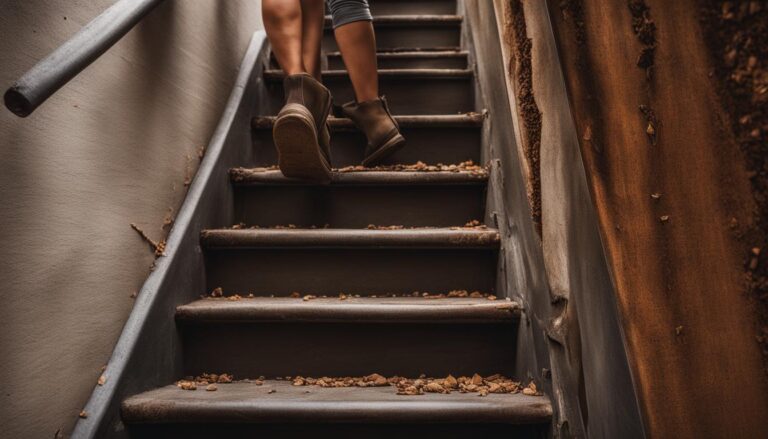
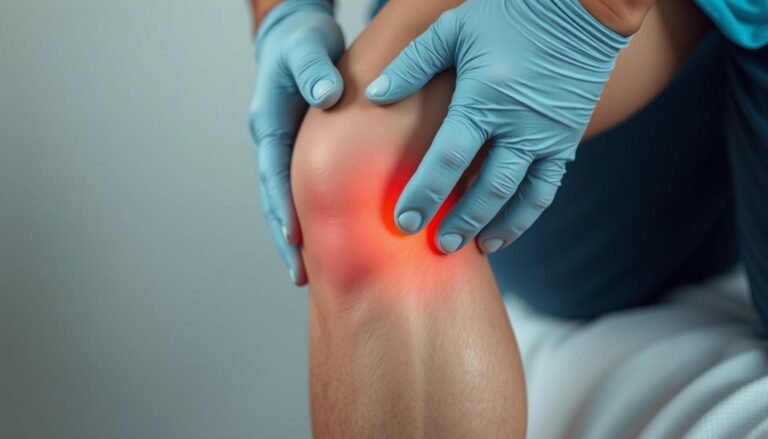
The pain is usually localized to the tibial tubercle, a bony prominence just below the kneecap. That is why teens often describe knee pain when they kneel, climb stairs, or push hard through sports.
It is especially common during the teenage growth spurt, when tissues may temporarily lag behind the speed of bone growth. Our goal in 2026 is to help families connect the timing of symptoms with the teen’s training load and developmental stage, rather than assuming every knee hurt episode is a “sprain.”
It can also help to understand broader patella development. In many children, the kneecap begins as cartilage and gradually develops into bone over years, which is one reason pediatric alignment and tendon stresses matter. If you want the age-based background, our guide on patella development stages by age explained is a useful starting point.
Common symptoms of Osgood-Schlatter disease in teens (and what knee pain may feel like)
When you are trying to recognize Osgood-Schlatter disease in teens, look for a pattern rather than a single moment of pain. The most typical complaints involve knee pain centered at the front of the knee and triggered by activities that stretch or load the patellar tendon.
Common symptoms include:
- Localized knee pain or tenderness below the kneecap
- Knee hurt with jumping, running, lunges, squats, or rising from kneeling
- A visible or palpable bump at the tibial tubercle
- Stiffness after a training session or after sitting with bent knees
Many teens describe discomfort that ramps up during sports practices and eases with rest. However, if pain starts to disrupt basic walking or escalates quickly, we recommend medical evaluation to rule out other causes.
Because adolescent knee pain has many possible sources, it is worth comparing the story to other conditions. For example, if symptoms sound more like kneecap tracking or anterior knee grinding, you may also see overlap with patellofemoral issues. Our overview of chondromalacia patella knees can help you think through those differences.
How common is it in teens in 2026? (and which athletes are most affected)
In 2026, we still see Osgood-Schlatter disease in teens as one of the most frequent causes of anterior (front-of-knee) pain during adolescence, especially among active kids. The reason is straightforward: repetitive traction forces happen during the same years when the skeleton is changing quickly.
Research-backed estimates also suggest Osgood-Schlatter may affect up to 20% of adolescent athletes. That is why we often see it in sports like soccer, basketball, gymnastics, track, and any training that combines sprinting and jumping.
Another useful point for families is timing. Symptoms often appear between ages 9 and 15, during or after the teenage growth spurt. When you notice knee pain starting around that developmental window, Osgood-Schlatter becomes a more likely explanation.
Is it Osgood-Schlatter disease in teens, or could it be another injury?
We tell families to treat diagnosis as a “match the story” process. Osgood-Schlatter disease in teens typically causes knee hurt at the tibial tubercle, triggered by kneeling and impact, with no major acute event required.
That said, adolescent knee pain is a crowded field. Some problems can look similar at first, especially if a teen trains hard and then suddenly has a different movement pattern.
Consider other possibilities when these red flags show up:
- Major swelling soon after an event (especially with an obvious twist)
- Instability, giving way, or inability to bear weight
- Pain that is more diffuse rather than focused on the tibial tubercle bump
- Symptoms that persist or worsen despite a reasonable activity modification period
If you want a broader overview of how different knee injuries present, our guide to different knee injuries can help you organize symptoms by structure.
For families who suspect a ligament mechanism (for example after a planted-foot twist), it may help to compare patterns with resources like ligament knee injury and ACL injury knee brace guidance.
Treatment for Osgood-Schlatter disease in teens: what we recommend in 2026
Treatment in 2026 focuses on reducing painful traction while maintaining healthy activity. We usually start with conservative care, then progress based on symptoms and functional recovery rather than the calendar alone.
Because Osgood-Schlatter disease in teens is described as self-limiting but can take months to resolve, we plan for a gradual return to sports. That approach reduces the risk of repeated flare-ups that prolong recovery.
Our practical treatment framework typically includes:
- Activity modification: temporarily reduce jumping volume, sprint intervals, or deep knee-bending drills that trigger symptoms.
- Symptom-guided pain control: use pain as information. If pain rises during a session and worsens afterward, we scale the load.
- Rehab for strength and flexibility: focus on quadriceps control, hamstring and hip mobility, and gradual tendon loading.
- Sports-specific return-to-play: reintroduce impact only when the teen can train without escalating knee pain.
- Bracing or padding for comfort during activity when appropriate.
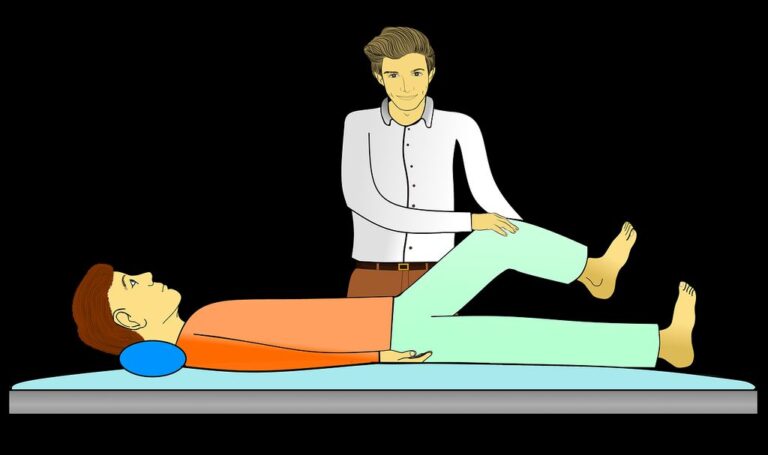
Some families also ask about “is there a lot we can do at home?” Our recommendation is yes, but with structure. For example, measuring knee range of motion can help track progress, and our piece on how to measure knee range of motion at home explains how home tracking can support recovery.
If your teen is dealing with broader persistent symptoms, we also encourage reviewing managing and overcoming knee pain to keep the plan consistent across school, training, and recovery days.
When a knee brace or patellar strap helps (and how to choose in 2026)
In many cases, a brace does not “cure” Osgood-Schlatter disease in teens, but it can reduce discomfort and help a teen participate while rehab continues. When we talk about knee support in 2026, we emphasize comfort, correct fit, and matching the brace to the problem.
Not every brace is the same. For anterior knee pain patterns, some designs aim to support patellar tracking or decrease local tendon irritation. For general knee support during return to activity, hinged or stabilizing braces may help with perceived confidence, but they should not replace strength work.
We recommend choosing based on these questions:
- Does the brace provide targeted compression or support where the pain is felt?
- Can your teen wear it during training without skin irritation or slipping?
- Does it reduce knee hurt enough to complete a rehab session or practice warm-up?
- Is it safe for the sport environment (rules, movement demands, and heat)?
For general brace types and use cases, our guide to patella brace guide: what it is and how it helps explains slip-on, hinged, custom, and wrap-around options.
And if you want a broader explanation of when bracing helps and why, read knee brace uses, support, and relief.
Important note: if your teen has true instability (for example, a ligament injury), brace selection changes and the plan must reflect the underlying structure. If that scenario fits, our resources on PCL injury, torn meniscus, or traumatic knee can help you understand symptom differences.
Recovery timeline and outcomes for Osgood-Schlatter disease in teens
For many teens, the goal is steady improvement rather than a quick disappearance of pain. A key mindset shift is planning for months of healing while keeping the teen active in a safe way.
While Osgood-Schlatter disease in teens can feel frustrating during an active season, outcomes are often good with appropriate conservative care. We advise families to focus on milestones like improved tolerance for stairs, less tenderness at the bump, and a return to sport-specific training without flare-ups that linger into the next day.
In 2026, we also encourage a “less guesswork, more feedback” approach. Instead of pushing through increasing knee pain, use simple criteria like daily pain scores and how the knee behaves after practice, then adjust training with your clinician or physical therapist.
Tips for teens, parents, and coaches to manage knee pain during sports
Osgood-Schlatter disease in teens often affects athletes most during peak training blocks. That is when a small adjustment can make the difference between prolonged flare-ups and steady progress.
Here are evidence-informed, practical steps we recommend:
- Warm up longer: increased blood flow and gentle activation can reduce early-session discomfort.
- Reduce high-load drills: temporarily lower jumping volume, heavy squats, and sprint intensity if symptoms flare.
- Choose pain-informed substitutes: swap out painful impact days with low-impact conditioning (for example, cycling) while rehab continues.
- Track progression: if knee hurt increases after training, scale back and reassess technique and dose.
- Strengthen consistently: tendon recovery improves when rehab is steady, not sporadic.
- Protect skin with braces: if bracing is used, ensure it fits and does not rub in hot practice settings.
Because training load and mechanics matter, it can also help to understand other common knee pain patterns in young athletes. For example, knee pain during downhill running or stairs often relates to load on the quadriceps and tendon structures. Our resource on knee pain walking down stairs, not up provides a helpful framework for thinking about aggravating positions.
When teens are stuck, families often ask “why does it hurt more here?” In many cases, the answer is load and tendon tension. That is why our plan aims to reduce the aggravator while still teaching the body to handle controlled stress.
Finally, if your teen is building strength after an injury or surgery, it helps to know that some recovery experiences can be normal during rehab. For example, our guide on why the knee makes strange noises after ACL surgery explains that some noises occur during rehabilitation, while pain and instability still require assessment.
Related knee conditions that can overlap with Osgood-Schlatter disease in teens
It is common for adolescents to have more than one “knee pain” contributor at the same time, especially if they train year-round. In 2026, we encourage families to avoid framing the problem as only one diagnosis when symptoms do not fit the classic pattern.
Possible overlaps include:
- Patellar tracking issues that present as anterior knee pain and discomfort around the kneecap.
- Tendon irritation from high training volume or poor tolerance to rapid load changes.
- Meniscus or ligament injuries when pain comes with instability, swelling, or a clear event.
- Inflammatory flare patterns where symptoms vary with fatigue and training cycles.
If you are comparing explanations, our library includes sudden knee pain without injury, 7 possible causes, which can help you understand why “no injury” does not always mean “no cause.”
Conclusion
Osgood-Schlatter disease in teens is a common, traction-related cause of knee pain that typically centers on the tibial tubercle and flares with jumping, running, and kneeling. In 2026, we recommend managing it with activity modification, targeted rehab, and symptom-guided progression, because healing can take months even when outcomes are generally favorable.
If your teen’s knee hurt is severe, involves instability, or does not respond to a conservative plan, we encourage a medical evaluation to confirm the diagnosis and rule out other knee injuries.
Frequently Asked Questions
How can I tell if my teen’s knee hurt is Osgood-Schlatter disease in teens or something more serious?
Osgood-Schlatter disease in teens usually causes localized tenderness below the kneecap and knee pain triggered by jumping, kneeling, or impact. If there is major swelling, instability, or inability to bear weight, we recommend prompt evaluation to rule out other knee injuries.
Does a knee brace help for Osgood-Schlatter disease in teens in 2026, or is it just a temporary fix?
A brace can help reduce knee hurt during activity by improving comfort and sometimes decreasing local irritation. In 2026, we treat bracing as a supportive tool, not a replacement for strengthening and load management.
What should we change first when Osgood-Schlatter disease in teens flares during sports practice?
Start with activity modification, reducing jumping volume, sprint intensity, and deep knee-bending drills that reproduce knee pain. Then match rehab progression to symptoms, so the teen improves without repeated flare-ups.
Is Osgood-Schlatter disease in teens self-limiting, and how long does recovery usually take?
Osgood-Schlatter disease in teens is often described as self-limiting, but time to resolution can take months. Families can plan around milestones, including many teens improving substantially within months when care is consistent.
Can Osgood-Schlatter disease in teens affect both knees, and does that change treatment?
Yes, it can involve one side or both sides, especially in teens who train with high repetitive load. Treatment usually focuses on the same principles, symptom-guided load reduction, and rehab, but the pace may be slower when both knees flare.
What exercises are safest for a teen with Osgood-Schlatter disease in teens?
The safest exercises typically emphasize controlled quadriceps function and hip strength while avoiding positions that spike tendon traction. In practice, we help teens select rehab progressions that keep knee pain manageable and prevent lingering next-day flare-ups.