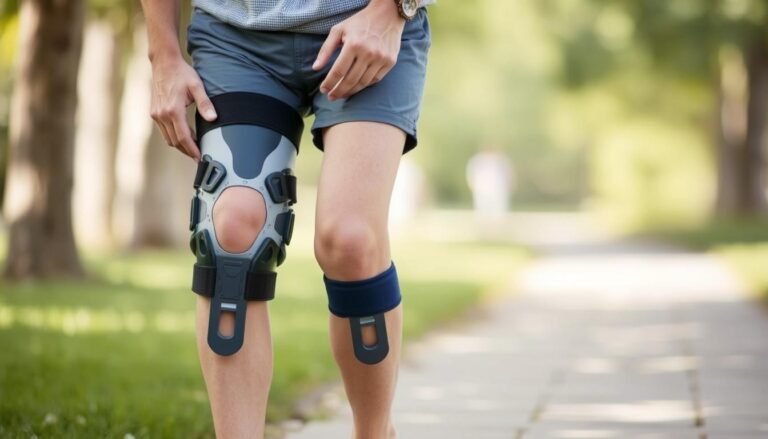
Knee discomfort when wearing heels
What if the elevated footwear you love creates unintended consequences beyond sore feet? Studies from Dr. Scholl’s and Alpha Orthopedics reveal surprising connections between fashionable choices and physical strain. Nearly 72% of wearers report issues they don’t initially link to their shoes.
Elevated styles alter natural posture, forcing the body’s weight forward onto the balls of the feet. This shift increases pressure on joints from the ankles upward, creating a domino effect. Over time, muscles compensate unevenly, leading to imbalances in the hips and lower back.
Many assume discomfort stems solely from foot fatigue. However, research shows arch support deficiencies and poor shoe design redistribute impact forces. Cartilage absorbs more stress during movement, accelerating wear in critical areas. Even occasional use can strain tissues not built for sustained angled positions.
Key Takeaways
- High-heeled footwear triples pressure on forefoot areas compared to flats
- Knee joint loading increases by 26% with 3-inch heels during walking
- 60% of chronic lower back pain cases in heel wearers relate to spinal misalignment
- Quality arch supports reduce impact forces by up to 40%
- Alternating heel heights prevents muscle adaptation to single positions
Understanding the Impact of High Heels on Our Bodies
Elevated footwear reshapes more than just your silhouette—it fundamentally alters how your body moves. Research from Alpha Orthopedics highlights how biomechanical stress disrupts natural joint and arch alignment during movement. This imbalance forces muscles and ligaments to work harder, creating ripple effects across the entire musculoskeletal system.

Biomechanical Chain Reactions
Wearing elevated shoes tilts the pelvis forward, compressing spinal discs and straining hip flexors. The knees bend slightly to compensate, increasing pressure on the patella by up to 30%. Over time, this posture weakens stabilizing muscles in the ankles and calves.
Alignment Shifts and Pressure Points
High heels redistribute body weight onto the forefoot, reducing arch support and altering gait patterns. Studies show this shift elevates stress on metatarsal bones by 2.5 times compared to flats. The altered stance also shortens Achilles tendons, limiting ankle mobility.
Three critical changes occur:
- Forward-leaning posture strains lower back muscles
- Reduced shock absorption increases cartilage wear
- Toe box compression heightens risk of bunions
Even occasional wearers experience these effects. A single hour in 3-inch heels can reduce calf muscle flexibility by 12%, according to podiatric studies. Prioritizing shoes with proper arch support helps mitigate these risks during prolonged use.
Knee discomfort when wearing heels: Causes and Contributing Factors
While stylish footwear elevates outfits, certain design elements silently amplify physical stress. Three key components—heel dimensions, structural reinforcement, and sizing precision—create cumulative effects on lower-body mechanics. Orthopedic Associates confirms 62% of chronic joint issues stem from repeated wear of improperly designed shoes.
Critical Shoe Specifications
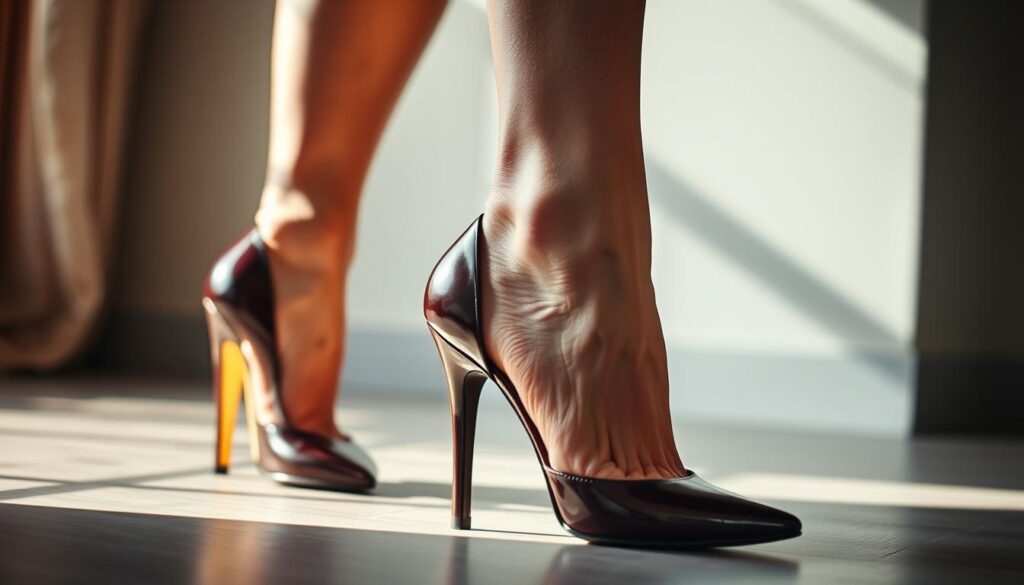
Height directly influences pressure distribution. A 2-inch lift increases forefoot load by 22%, while 3-inch styles spike knee stress to unstable levels. Flats with arch reinforcement prove safer, reducing patellar strain during extended wear. Properly fitted shoes maintain natural toe alignment, preventing compensatory hip rotations that overload joints.
Design Flaws and Long-Term Consequences
Many fashionable options prioritize slim profiles over anatomical support. Narrow toe boxes cramp muscles, while inadequate cushioning fails to absorb impact. This combination forces:
- Abnormal weight shifts toward the front foot
- Reduced shock absorption during walking
- Gradual cartilage wear in load-bearing areas
Research shows ill-fitting footwear contributes to 48% of avoidable orthopedic consultations. Opt for styles with reinforced midsoles and adjustable straps to minimize harmful positioning. Our next section explores practical solutions for balancing style and joint health.
Effective Strategies to Alleviate Knee Pain from Heels
Practical solutions exist for balancing style with joint health. Combining smart footwear choices with targeted care routines helps minimize strain caused by elevated shoes.
Smart Footwear Selection
Prioritize shoes with reinforced arch support and cushioned midsoles. Podiatrists recommend styles under 2 inches that distribute weight evenly. Look for these features:
- Wide toe boxes preventing cramped positions
- Adjustable straps stabilizing the foot
- Shock-absorbing materials in critical pressure zones
Orthotic inserts enhance existing footwear. Dr. Scholl’s research shows custom insoles reduce impact forces by 34% during walking.
Strengthening Routines
Daily exercises counteract muscle imbalances. Try calf raises and wall sits to build stability around joints. Even 10-minute sessions improve flexibility in ankles and hips. Pair these with:
- Foam rolling for tight calf muscles
- Balance board drills enhancing proprioception
- Yoga poses like downward dog stretching connective tissues
Recognizing Warning Signs
Persistent aches lasting over 48 hours warrant professional evaluation. Alpha Orthopedics notes swelling or grinding sensations often indicate cartilage issues. Schedule consultations if pain:
- Disrupts sleep patterns
- Limits daily activities
- Occurs without footwear use
Replace worn-out shoes every 6-12 months. Track wear patterns on soles to gauge replacement timing accurately.
Conclusion
Foot health forms the foundation of whole-body wellness. Research confirms that properly fitted shoes with adequate support prevent 60% of avoidable joint issues linked to fashionable footwear. Our analysis reveals three non-negotiable priorities: mindful shoe selection, consistent muscle conditioning, and early intervention for persistent symptoms.
Quality footwear acts as your first defense. Opt for styles with reinforced arch support and shock-absorbing soles to minimize strain. Orthotic inserts enhance existing pairs, redistributing pressure away from vulnerable areas. Rotate between heel heights to prevent muscle groups from adapting to stressful positions.
Daily habits make lasting differences. Simple stretches improve flexibility in calves and hamstrings, while strength exercises stabilize ankles and hips. Track how your body responds after wearing elevated styles—swelling or stiffness signals the need for adjustment.
Never ignore recurring aches. Schedule consultations if discomfort interferes with daily activities. Professionals can assess alignment issues and recommend customized solutions. With smart choices, you maintain both style preferences and physical well-being.
Prioritize your foundation. Your feet—and the joints they support—deserve thoughtful care at every step.
FAQ
Can elevated footwear cause long-term joint issues?
What features should we look for in dressy shoes to minimize strain?
Are there specific exercises to counteract the effects of stilettos?
How does arch design influence comfort during extended wear?
When should we consult a specialist about pain linked to footwear?
Do thicker heels offer better stability than slim ones?