download 39

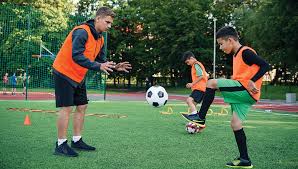
Sports such as football and basketball are better for the bone health of young athletes than running alone


Young athletes who participate in multi-directional sports, rather than specializing in a uni-directional sport like running, can build stronger bones that may be at less risk of bone injuries as adults, according to a new study from researchers at Indiana University.

The study, published in the American College of Sports Medicine’s Medicine and Science in Sports and Exercise, examined Division I and II female cross-country runners, who often suffer from bone stress injuries such as stress fractures. The researchers found that athletes who ran at a younger age and participated in sports that require movement in many directions – such as basketball or football – had better bone structure and strength than those who only walked, swam or cycled.

As a result, the study’s findings support recommendations that athletes delay specialization in running and practice multi-directional sports when they are younger, to build a more robust skeleton – and possibly prevent bone stress injuries.

“Our data shows that playing multi-directional sports at a younger age rather than specializing in one sport, such as running, reduces a person’s risk of bone injuries by developing a larger, stronger skeleton,” said Stuart Warden, associate dean for research and Chancellor’s Professor at the IU School. of Health and Human Sciences at IUPUI. “There is a common misconception that children need to specialize in a single sport to succeed at the next level. However, recent data indicate that athletes who specialize at a young age are at greater risk of an overuse injury and are less likely to progress to another sport. higher levels of competition.”

Historically, Warden said, researchers have examined bone mass — how much bone a person has — to determine how healthy their skeleton will be throughout life. But in previous studies, Warden and his colleagues found that as a person ages, both mass and size are equally important.

In the current study, the researchers used high-resolution imaging to assess the tibia near the ankle and the bones in the feet, where bone strain injuries are common in runners. They found that the athletes who participated in both running and multi-directional sports at a younger age had 10 to 20 percent more bone strength than athletes who only ran.

“Our research shows that the runners who participated in multi-directional sports at a younger age had stronger bones than collegiate athletes, putting them at lower risk for bone stress injuries, including stress fractures,” Warden said. “We want to ensure that people have better, stronger bones as they grow, become adolescents and go through life. If they specialize in one sport at too young an age, they are more likely to get injured and not make it to collegiate and professional level.”

Warden said anyone supervising a junior athlete or team — whether parents, coaches or trainers — should think twice about forcing them to specialize in one area too early. To allow for proper growth and development, he recommends that young athletes not specialize until their freshman year of high school. For athletes who already play multi-directional sports, he said it’s important that they take time off during the year for rest and recovery, which can improve both bone strength and performance.

Other authors of the study included Austin Sventeckis, Ph.D. student, and Robyn Fuchs, associate professor, from the IU School of Health and Human Sciences at IUPUI, and Rachel Surowiec from the School of Engineering and Technology at IUPUI.
Source link

Similar Posts

  • |

    Carriers of HLA-DRB1*04:05 have a better clinical response to abatacept in rheumatoid arthritis

      In this study, we showed that among the SE alleles, HLA-DRB1*04:05 in particular was strongly associated with the prognosis of ABT treatment. The allele frequency of HLA-DRB1*04:05 in Japanese patients with ACPA-positive RA is reported to be approximately 28%. Because each individual carries two HLA-DRB1 alleles, approximately half of ACPA-positive RA patients have at…

  • |

    Best knee scooter post-surgery

    Is hopping around on one leg or battling clumsy crutches the only way to get through recovery after a foot or ankle procedure? For many, traditional crutches are a source of frustration and fatigue. They demand considerable arm strength and often lead to instability. This can make you feel trapped and dependent on others. best knee scooter post-surgery There is a more comfortable and popular solution. Studies show that 90 percent of patients prefer using a knee scooter over crutches during their healing period. Occupational therapists highlight a key benefit: these aids keep your injured foot correctly elevated and non-weight bearing. This proper positioning is vital for a smooth recovery. We’ve done the research for you. Our analysis of the current market identifies devices that provide superior mobility and comfort compared to old-fashioned methods. Selecting the right walker helps you maintain your independence. It allows for safer movement around your home and community. A sturdy, well-designed walker is a much more stable alternative to risky hopping. Our expert-driven guide reviews the leading models available. The goal is to help you find reliable equipment that protects your leg while letting you continue with daily life. Key Takeaways The vast majority of patients prefer knee scooters to traditional crutches for recovery. These devices properly elevate the leg, which is essential for non-weight bearing healing. They promote greater independence and reduce reliance on others during your recovery. Choosing a high-quality model significantly improves safety and overall comfort. Our guide provides an expert analysis of the top mobility aids on the market today. A stable walker minimizes the risk of falls and accidental weight-bearing. Informed selection helps you navigate your environment with confidence and ease. Understanding Knee Scooters in Post-Surgery Recovery Patients seeking a stable alternative to crutches frequently turn to rolling walkers with a knee platform. This device, often called a knee scooter or knee walker, has two to five wheels and a padded rest for your leg. It is designed to keep your injured foot correctly elevated. This positioning is completely non-weight bearing, which is vital for healing. Unlike traditional crutches, a knee walker does not demand much arm strength. You simply rest your leg on the cushioned platform and propel yourself forward. This reduces physical exertion dramatically during daily movement. Occupational therapists note an overwhelming patient preference for this mobility aid. We have found that nearly 90 percent of users prefer it over other options. The design helps prevent reinjury caused by balance struggles. Feature Knee Scooter/Walker Traditional Crutches Weight-Bearing Non-weight bearing, leg elevated Partial weight on arms and shoulders Upper Body Strain Minimal; uses leg for support High; requires arm strength Hands-Free Operation Yes; handlebars for steering No; hands occupied Stability on Flat Surfaces Very stable with multiple wheels Less stable; two points of contact Risk of Reinjury Low; proper leg positioning Higher; balance challenges These devices are essential for maintaining independence. They allow you to perform household tasks while your injury heals. By keeping your hands free, a knee scooter lets you carry items and engage in daily life more effectively. Benefits of Using Knee Scooters Over Crutches The journey to regain mobility after surgery doesn’t have to be a struggle against discomfort and instability. While traditional crutches are less expensive, they frequently cause pain and balance issues for active individuals. A knee walker provides a stable base for movement. It allows you to navigate both indoors and outdoors without the constant fatigue linked to crutches. benefits of knee scooter over crutches Occupational therapists emphasize that a knee scooter is a superior choice if you lack upper body strength. Using this device greatly lowers your chance of a fall compared to balancing on underarm crutches. These aids offer a level of freedom that lets you spend time outside. This activity is proven to speed up the healing process. Choosing the right knee walker ensures you can maintain your daily routine. You avoid the physical limits imposed by standard crutches. A quality knee scooter supports your injured leg correctly, promoting safer recovery….

  • Ortho Development® announces launch of the BKS® Uni partial knee system

      BKS Uni Knee System DRAPER, Utah, Oct. 31, 2023 /PRNewswire/ — Ortho Development Corporation, a designer and manufacturer of orthopedic implants and instruments for hip and knee joint replacement surgery, today announced the launch of BKS® Uni, the latest addition to its portfolio of Balanced Knee® implant systems. BKS Uni is a partial knee…

  • |

    Dr. Abbasi from Inspired Spine brings OLLIF’s expertise to Orlando, where he meets Dr. Jose Jimenez-Almonte trains

      Inspired Spine CMO Dr. Hamid Abbasi performs one of more than 1,500 OLLIF procedures BURNSVILLE, Minn., Oct. 25, 2023 /PRNewswire/ — Inspired Spine, a leader in innovative minimally invasive spine surgery, is pleased to announce that Dr. Abbasi, a renowned pioneer in the field of orthopedic and neurosurgery, will travel to Orlando, Florida to…

  • |

    Tennis Elbow: What It Is and How to Treat It | Foothills Physical Therapy and Sports Medicine

      by Adam Halseth PT, DPT, SCS | Northeast Scottsdale Tennis elbow or golfer’s elbow is an uncommon condition. It just has an impact about 1 to 3 percent of adults every year. But your chances of developing it increase as you get older. Although the name suggests it is a condition exclusive to these…

  • Psychological stress hinders performance, even for Olympic athletes

      The 2020 Tokyo Olympics were unique not only because they took place during the COVID-19 pandemic, but also because they were the first athletics event to measure and broadcast competitors’ heart rates as world-class archers made a bid for Olympic gold. Analysis of these biometric data by Yunfeng Lu (Nanjing University) and Songfa Zhong…

Leave a Reply

Your email address will not be published. Required fields are marked *