download 18

Breathe to Win: Scientists show it’s important to screen breathing patterns in athletic populations


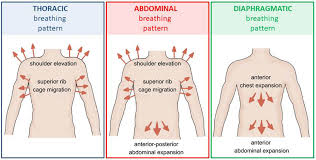
Breathing patterns are an important indicator of an individual’s health. A healthy individual breathes naturally using primary respiratory muscles (e.g., the diaphragm muscle) that produce a rhythmic observable movement of the upper rib cage, lower rib cage, and abdomen. This is known as the diaphragmatic breathing pattern, which is associated with improvements in posture, core stability and functional performance, as well as reductions in musculoskeletal injuries, pain and stress.

In contrast, individuals with altered or dysfunctional biomechanical breathing patterns are unable to contract their diaphragm to the desired extent and begin to rely on accessory respiratory muscles to breathe. They exhibit superior rib cage movements and shoulder elevation, decreased abdominal movements, and lateral expansion of the rib cage.

Previous research suggests a strong link between altered biomechanical breathing patterns and the development of musculoskeletal disorders such as low back pain, neck pain, chronic ankle instability and temporomandibular joint disorders.

Superior physical performance and the prevention of musculoskeletal injuries are critical for athletes to perform their best in competitive sports. Evidence from previous studies suggests that athletes with diaphragmatic breathing patterns exhibit improved physical and psychological performance. But since athletes with altered breathing patterns may be at greater risk of developing musculoskeletal injuries, identifying the prevalence of altered breathing patterns is of paramount importance to prevent them from developing injuries.

Now a team of researchers led by Dr. Terada of Ritsumeikan University in Japan conducted a new study, published in The Journal of Strength and Conditioning Researchto investigate the prevalence of dysfunctional and diaphragmatic breathing patterns in an athletic population, and to determine the biomechanical dimensions of these breathing patterns.

The team tested 1,933 competitive athletes from schools in Japan, across multiple sports and ages, in 2017 and 2020 using a Hi-Lo test – a test that identifies an individual’s breathing pattern. Scores for the Hi-Lo test were determined based on the presence or absence of abdominal excursion, anterior-posterior chest expansion, superior rib cage migration, and shoulder elevation. The team further classified these participants into thoracic dominant and abdominal-only breathers based on the presence of abdominal excursion.

Findings show that an alarmingly high percentage (91%) of athletes showed dysfunctional breathing patterns, while only 9.4% of them showed diaphragmatic breathing patterns. In fact, among athletes who played baseball, there was a higher rate of diaphragmatic breathing pauses than among those who played tennis, basketball, badminton and volleyball. This indicates that athletes’ breathing patterns vary depending on the type of sport they practice, as each sport has different energy needs and limitations.

Additionally, the team found that the majority of dysfunctional breathers were high school student athletes, followed by elementary school student athletes and high school student athletes. The proportion of collegiate athletes with dysfunctional breathing patterns was slightly lower in comparison.

Furthermore, among the population identified as having dysfunctional breathers, 61% of athletes were thoracic-dominant breathers, compared to the 39% who performed only abdominal breathing.

These findings suggest an overall high prevalence of dysfunctional breathing patterns in the athletic population across all age groups, which should be immediately addressed as an important sports medicine problem.

When asked about the implications of these findings, Dr. Terada: “Clinicians should consider screening breathing patterns and implementing corrective approaches that target specific components of dysfunctional breathing patterns. They should also consider evaluating sport-specific breathing adjustments and implementing sport-specific modifications. breathing training protocols.”

The findings also highlight the importance of the Hi-Lo test in recognizing the differences between subcategories (thoracic dominant and abdominal only) of breathing patterns. An understanding of these breathing patterns can help develop individualized intervention plans. Dr. Terada says: “Integrating diaphragmatic breathing exercises and techniques may have beneficial effects on restoring optimal recruitment and motor control patterns of respiratory muscles, improving the efficiency of breathing biomechanics, and reducing psychological stress in athletes with dysfunctional breathing patterns.”


Source link

Similar Posts

  • Attending live sports improves well-being: study

      New scientific research has found that attending live sporting events improves levels of wellbeing and reduces feelings of loneliness. Published in the magazine Frontiers in public healthThe study is the first large-scale study to examine the benefits of attending any type of live sporting event. The research, conducted by academics from Anglia Ruskin University’s…

  • |

    Mercy Medical Center now offers a new smart implant for the knee with benefits for patient and surgeon

      BALTIMORE , Oct. 26, 2023 /PRNewswire-PRWeb/ — Orthopedic surgeons Marc W. Hungerford, MD, Chief of Orthopedics at Mercy Medical Center, and Philip Neubauer, R.Ph., MD, Orthopedics and Joint Replacement at Mercy, are among the first surgeons in Maryland that offered “smart implant” technology during knee replacement surgeries. Developed by ZIMMER BIOMET, the Persona IQ®…

  • |

    Knee replacement complications

    What if the key to a successful recovery isn’t just about the surgery itself, but what you know beforehand? Every year, over 790,000 people in the United States choose this medical procedure to regain their mobility. It’s a major step toward a life with less pain. knee replacement complications We recognize that while this operation is common, understanding what can happen after is vital. This knowledge transforms a patient from a passive recipient into an active partner in their own care. Our goal is to provide clear, empowering information about the possible risks. This helps you approach your healing journey with eyes wide open and confidence high. Modern advancements have made this intervention safer and more effective than ever. Still, being informed allows you to spot any warning signs early and seek help promptly. This guide is your comprehensive resource. We aim to support you in taking charge of your long-term joint health and overall well-being. Key Takeaways Over three-quarters of a million knee replacement surgeries are performed annually in the U.S. Being informed about potential issues is a crucial part of patient preparation and empowerment. Knowledge of risks helps in early identification of any post-operative warning signs. Modern surgical techniques and care have significantly improved the safety profile of this procedure. An active understanding of your care plan contributes greatly to a successful long-term outcome. This information is designed to build confidence as you move forward with your medical decision. Understanding Knee Replacement Surgery Before diving into the details, let’s build a clear picture of what this surgical process entails. Over 790,000 of these operations happen each year in the United States alone. understanding knee replacement surgery What Is a Knee Replacement? This common operation replaces all three compartments of a damaged joint. Surgeons remove worn bone and cartilage. They then fit precise metal and plastic implants. This creates a new, smooth gliding surface. Aspect Detail Primary Goal Relieve chronic pain and restore joint function Artificial Components Metal and medical-grade plastic Typical Anesthesia General or spinal Average Hospital Stay 1 to 3 days Initial Recovery Period 6 to 12 weeks The Overall Procedure and Its Benefits This intervention is designed to help people regain independence. Most patients report a major improvement in their quality of life. The main benefit is lasting relief from persistent pain. Many return to daily activities and hobbies they love. Understanding the mechanics helps set realistic expectations for recovery and long-term performance. Key Knee Replacement Complications Statistics offer great comfort, but a complete picture includes understanding what could go wrong, even if it’s unlikely. Research confirms a very high success rate for this operation. Over 95% of people recover without any major issues. This statistic highlights the overall safety of the procedure. key knee replacement complications Overview of Common Risks Every medical intervention carries some inherent risks. These can include infection, blood clots, or stiffness. Your surgical team is trained to both prevent and manage these known challenges. They are a standard part of the pre-operative discussion. Why Awareness Matters We believe knowledge is power. Understanding potential warning signs allows you to partner with your care team. You can seek help promptly if something doesn’t feel right. This proactive approach helps prevent minor concerns from becoming serious problems. It’s crucial to discuss your personal health history with your doctor. This conversation helps assess your individual risk profile before surgery….

  • Your meniscus is probably not affected by your ACL reconstruction

      Meniscus procedures do not increase with delayed ACL reconstruction and rehabilitation: results from a randomized controlled trial. van der Graaff SJA, Reijman M, van Es EM, Bierma-Zeinstra SMA, Verhaar JAN, Meuffels DE. The British Journal of Sports Medicine, 2023; 57:78-82. Full text freely available Take home message People who initially receive rehabilitation with optional…

  • Influence of the 2000-meter ergometer test on indirect markers of intestinal injury in competitive elite rowers in different training phases BMC Sports sciences, medicine and rehabilitation

      Attendees Eighteen male members of the National Polish Rowing Team (heavyweight rowers) were recruited, but only 10 met the inclusion criteria and participated in the study; all participants completed the two ergometer tests of 2000 meters. Before each test, anthropometric parameters were assessed using an electronic scale to the nearest 0.05 kg (Tanita BC-980…

  • Rising star footballers among young athletes benefit from new screening tool

      Young elite athletes will benefit from a new screening tool with the potential to change clinical practice by ruling out serious heart disease that is often misdiagnosed. The research is thanks to a jointly led study between the Universities of Exeter and Bristol, working with emerging athletes from around the world. Cardiomyopathy, a form…

Leave a Reply

Your email address will not be published. Required fields are marked *