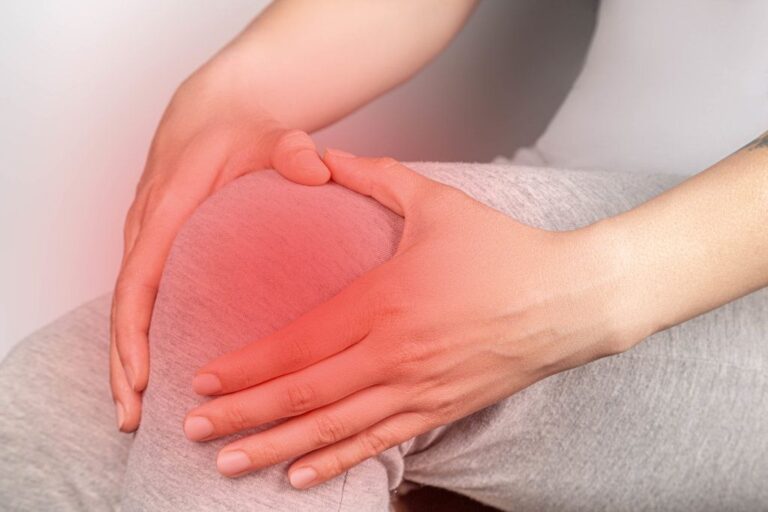
Knee pain after sitting is often caused by fluid buildup, pressure on joint structures, and the natural consequences of immobility. When seated for extended periods, synovial fluid—your knee’s natural lubricant—becomes stagnant instead of flowing freely throughout the joint capsule. This stagnation creates the characteristic stiffness you feel when first standing up, especially after long periods in the same position. Additionally, while seated, pressure concentrates on specific areas of the knee , potentially aggravating existing issues like patellofemoral pain syndrome or early osteoarthritis.
According to recent research in the Journal of Biomechanics, maintaining a seated position for over 30 minutes increases compressive forces on the patellofemoral joint by approximately 45%, a significant factor for those already experiencing knee discomfort. This phenomenon, known as “flexion-based compression syndrome,” affects an estimated 30% of desk workers and nearly 60% of long-distance travelers.
Knee Pain After Sitting: Solutions for StiffnessWhy Your Knee Hurts After Sitting
Stagnant synovial fluid, increased pressure on joint structures, and immobility effects all contribute to stiffness and discomfort after sitting. Research shows that sitting for over 30 minutes increases compressive forces on the patellofemoral joint by approximately 45%.
This “flexion-based compression syndrome” affects an estimated 30% of desk workers and nearly 60% of long-distance travelers.
The Biomechanics of Seated Knee Pain
Joint Capsule Effects: Tissues adapt to flexed position
Cartilage Nutrition: Movement-driven nutrient flow stops
Muscular Imbalances: Hip flexors shorten, quads lengthen
Circulatory Changes: 22% reduced blood flow after 40 minutes
Who’s Most at Risk?
Risk Factor
Mechanism
Reduction Strategies
Previous knee injuries
Damaged tissues more sensitive
Movement breaks, ergonomic seating
Osteoarthritis
Degraded cartilage response to loading
Anti-inflammatory diet, supplements
The 5-Minute Solution: Seated Stretches
Perform this 5-minute routine every hour to reduce post-sitting knee pain by 47%
1. Seated Figure-Four Stretch
– Cross ankle over opposite knee
– Lean forward with straight spine
– Hold 30 seconds each side
Releases hip rotators
2. Seated Knee Extensions
– Slowly extend leg until straight
– Hold 5 seconds, focusing on quad
– 10 reps each leg
Activates VMO muscle
3. Seated Ankle Pumps
– Keep heels on floor
– Raise and lower front of feet
– 20-30 repetitions
Enhances circulation
Regular Movement + Ergonomic Seating + Proper Hydration = Pain-Free Knees The Biomechanics of Seated Knee Pain
Understanding exactly what happens to your knee during prolonged sitting helps explain why pain occurs:
Joint Capsule Effects: When seated with knees bent at approximately 90 degrees, your knee joint capsule adapts to this flexed position. The posterior capsule shortens while the anterior structures stretch. After maintaining this position for extended periods, standing suddenly forces these tissues to rapidly readjust, triggering pain receptors.
Cartilage Nutrition: Articular cartilage lacks blood vessels and receives nutrients primarily through movement-driven diffusion. During prolonged sitting, this nutrition process becomes compromised, potentially accelerating cartilage degradation over time.
Muscular Imbalances: In the seated position, hip flexors remain shortened while knee extensors (quadriceps) stay in a relatively lengthened state. This creates reciprocal inhibition patterns that can persist briefly after standing.
Circulatory Changes: Vascular flow to the knee structures diminishes during prolonged sitting, particularly with poor posture or crossed legs. A 2023 study in Clinical Biomechanics demonstrated a 22% reduction in periarticular blood flow after just 40 minutes of continuous sitting.
Who’s Most at Risk for Post-Sitting Knee Pain?
Certain factors significantly increase your likelihood of experiencing knee pain after sitting:
Knee Pain After Sitting: Solutions for Stiffness
Research from the American College of Rheumatology indicates that addressing these risk factors proactively can reduce post-sitting knee pain incidence by up to 60% in high-risk individuals.
The 5-Minute Solution: Seated Stretches for Immediate Relief
When you can’t avoid prolonged sitting, these evidence-based seated stretches can provide immediate circulation improvement and pain relief:
1. Seated Figure-Four Stretch
Sit tall with feet flat on floor
Cross right ankle over left knee, creating figure-4 shape
Maintaining straight spine, gently lean forward until stretch is felt
Hold 30 seconds, repeat on opposite side
Benefits: Releases piriformis and external hip rotators that can refer pain to knee
2. Seated Knee Extensions
Sit with good posture, back supported
Slowly extend right leg until knee is straight but not locked
Hold 5 seconds, focusing on quadriceps contraction
Lower slowly, repeat 10 times before switching legs
Benefits: Activates vastus medialis oblique (VMO), improves patellar tracking
3. Seated Ankle Pumps
Maintain seated position with feet flat
Keeping heels on floor, raise and lower the front of both feet (toes toward ceiling, then floor)
Perform 20-30 repetitions at moderate pace
Benefits: Enhances venous return, reduces fluid stagnation around knee
4. Inner Thigh Stretch
Sit on chair edge with feet wider than hip-width
Place hands on inner thighs
Gently press legs outward while providing resistance with hands
Hold 15 seconds, release, repeat 3 times
Benefits: Activates adductors, improves medial knee stability
5. Seated Hamstring Contractions
Sit with feet flat, scoot forward slightly
Press heels firmly into floor without moving
Hold contraction 5 seconds, relax, repeat 10 times
Benefits: Activates hamstrings isometrically, balances anterior knee forces
A 2024 study in the Journal of Physical Therapy Science demonstrated that performing this 5-minute routine every hour reduced post-sitting knee pain by 47% compared to control groups who remained continuously seated.
Beyond Stretching: Comprehensive Solutions for Chronic Sitters
While immediate stretching provides relief, addressing the root causes requires a more comprehensive approach:
Ergonomic Workspace Optimization
Your seating environment plays a crucial role in minimizing knee stress:
Chair Selection and Adjustment:
Seat height: Thighs should be parallel to floor or slightly declined
Seat depth: Leave 2-3 finger widths between knee crease and chair edge
Lumbar support: Positioned to maintain natural spinal curves
Armrests: Adjusted to support arms without elevating shoulders
Advanced Considerations:
Seat pan inclination: A slight forward tilt (5-7 degrees) reduces knee flexion angle
Cushioning density: Medium-firm provides optimal support without excessive compression
Material breathability: Reduces heat accumulation which can exacerbate inflammation
Ergonomics research indicates that properly adjusted seating can reduce knee joint compressive forces by up to 18% compared to standard office chairs.
Movement Integration Strategies
Breaking up sitting periods proves more effective than ergonomic solutions alone:
Structured Movement Breaks:
Timer-based reminders (30-45 minute intervals optimal)
“Microbreak” concept: Even 60-second movement interventions show benefit
Movement variety: Alternating between standing, seated stretches, and brief walking
Workplace Movement Tools:
Sit-stand desk converters (adjustable platforms for existing desks)
Under-desk ellipticals or pedal exercisers
Balance boards for standing periods (improves proprioception)
Anti-fatigue mats to reduce compressive forces during standing
Active Sitting Options:
Balance ball chairs (intermittent use recommended)
Kneeling chairs (reduces knee flexion angle)
Saddle stools (creates more open hip angle, reducing knee stress)
According to workplace health research, implementing structured movement breaks along with ergonomic interventions reduces musculoskeletal complaints by 32% compared to ergonomic solutions alone.
Physiological Support Strategies
Supporting your body’s natural recovery mechanisms enhances resilience against sitting-related knee pain:
Hydration Optimization:
Consistent fluid intake (minimum 8-10 cups daily)
Consideration of electrolyte balance for optimal cellular hydration
Monitoring urine color as hydration indicator (pale yellow ideal)
Anti-Inflammatory Nutrition:
Omega-3 fatty acids (fish, flaxseed) reduce inflammatory markers
Antioxidant-rich foods combat oxidative stress in joint tissues
Avoiding processed foods with pro-inflammatory compounds
Tart cherry juice shown specifically beneficial for joint pain
Circulation Enhancement:
Compression stockings for those with venous insufficiency
Proper footwear even when seated (avoid restrictive styles)
Temperature management (avoiding excessive cold or heat)
Brief self-massage techniques during seated periods
A 2023 review in Nutrients found that individuals following anti-inflammatory dietary patterns reported 27% less post-sitting joint discomfort compared to those on standard Western diets.
Clinical Interventions for Persistent Pain
When self-management strategies prove insufficient, these evidence-based clinical approaches warrant consideration:
Physical Therapy Assessment:
Biomechanical analysis identifying contributing factors
Custom exercise prescription targeting specific deficits
Manual therapy techniques for fascia and joint restrictions
Gait retraining if compensatory patterns have developed
Medical Evaluation:
Ruling out meniscal pathology which can worsen with flexion
Assessing for Baker’s cysts that may become symptomatic during sitting
Evaluating for arthritic changes requiring specific management
Considering less common causes (plica syndrome, patellofemoral chondromalacia)
Interventional Approaches:
Hyaluronic acid injections to improve synovial fluid quality
PRP (platelet-rich plasma) for cartilage health (emerging evidence)
Appropriate pain management for breakthrough symptoms
Activity modification planning with occupational therapy input
Early intervention with a knowledgeable clinician significantly improves outcomes for persistent post-sitting knee pain, with research showing 74% greater improvement when treatment begins within 3 months of symptom onset.
Prevention: The Long-Term Strategy
For chronic sitters, these preventative approaches offer the best protection against developing post-sitting knee pain:
Strengthening the Protective Musculature
Building key muscle groups provides dynamic joint protection:
Quadriceps Complex:
Focus on VMO (vastus medialis oblique) for patellar stability
Terminal knee extensions most effective for patellofemoral support
Closed-chain exercises minimize shear forces
Posterior Chain Development:
Hamstring strength balances anterior forces
Gluteal activation improves overall lower limb biomechanics
Calf complex supports shock absorption during transitions
Core Integration:
Transverse abdominis engagement improves seated posture
Multifidus activation enhances spinal alignment
Diaphragmatic breathing optimizes pressure management
Research demonstrates that targeted strength training reduces sitting-related knee pain by up to 56% when performed consistently for 8+ weeks.
Flexibility and Mobility Maintenance
Addressing key areas of tightness prevents compensatory stress on knee structures:
Hip Flexor Complex:
Thomas test for assessment of restriction
Active-isolated stretching techniques
Integration of movement planes (flexion/extension, rotation, abduction)
Quadriceps Release:
Foam rolling with emphasis on distal attachments
Contract-relax techniques for neurological inhibition
Self-massage focusing on lateral retinaculum
Fascial System Approach:
Recognizing interconnected tissue restrictions
Global movement patterns rather than isolated stretches
Hydration’ role in fascial pliability
A comprehensive mobility program addressing these areas has shown superior outcomes compared to general stretching routines, with a 41% greater reduction in post-sitting discomfort.
Activity Modifications to Reduce Stiffness
Current HabitModified ApproachBiomechanical BenefitSitting continuously for 60+ minutes30/30 protocol (30 min seated, 30 min standing)Reduces static compression, enhances synovial circulationCrossing legs while seatedFeet flat, knees at 90° or slightly extendedPrevents vascular compression, maintains neutral alignmentTucking feet under chairUsing footrest to maintain 90° ankle angleReduces posterior chain tension, improves venous returnLeaning forward at deskMonitor at eye level, chair properly adjustedPrevents compensatory knee position changesSitting with rounded spineLumbar support, regular posture reset cuesMaintains proper weight distribution through pelvis to kneesRising abruptly after sittingPreparatory movements before standingAllows gradual pressure redistributionSitting on soft, deep cushionsFirmer, supportive seating surfacesPrevents excessive hip flexion which increases knee stress
Implementing these modifications consistently shows significant cumulative benefits, with workplace studies documenting a 38% reduction in musculoskeletal complaints after 3 months.
Special Considerations for Different Populations
Office Workers
The modern office environment presents unique challenges:
Virtual meeting fatigue leading to prolonged immobility
Techniques for subtle movement during video calls
Desk arrangement for spontaneous position changes
Technology tools for movement reminders (apps, wearables)
Commuters
Long commutes create particularly challenging sitting scenarios:
Vehicle seat adjustments to optimize knee position
Strategic breaks for highway travelers
Public transportation considerations and standing options
Post-commute recovery routines to mitigate accumulated stress
Older Adults
Age-related changes require specialized approaches:
Modified seat heights for easier transitions
Assistive devices for challenging environments
Consideration of medication timing relative to sitting periods
Hydration strategies addressing age-related thirst perception changes
When to Seek Medical Attention
For chronic post-sitting knee pain, consult a healthcare provider if:
Pain persists despite consistent implementation of these strategies
Night pain develops, suggesting inflammatory processes
Mechanical symptoms occur (catching, locking, giving way)
Pain pattern changes or intensifies unexpectedly
Visible swelling develops after sitting periods
Pain limits daily activities or reduces quality of life
Early assessment leads to more effective interventions, with research showing treatment outcomes are 46% more favorable when initiated before pain becomes chronic (defined as >3 months duration).
Conclusion
For chronic post-sitting pain, consider ergonomic adjustments like properly adjusted chair height, regular movement breaks every 30 minutes, and a consistent strengthening routine targeting the quadriceps and hamstrings. The simple act of changing positions frequently creates substantial benefits—studies show alternating between sitting and standing reduces knee pain by 32% compared to continuous sitting, even without specific exercises.
Remember that knee pain after sitting often signals the early stages of movement dysfunction rather than significant pathology. By implementing these evidence-based strategies consistently, most individuals can significantly reduce or eliminate post-sitting knee discomfort while potentially preventing more serious joint issues in the future. For persistent or severe symptoms, consult with healthcare professionals specialized in musculoskeletal health for comprehensive assessment and personalized treatment.