MCL Tear Symptoms and Recovery (2026): What Knee Hurt Feels Like, How Long It Takes, and What Helps Heal
MCL tear symptoms and recovery can look surprisingly similar to other knee injuries at first, but one key clue is often where your knee pain shows up and how your knee feels when you step or turn. In 2026, more people are seeking faster, clearer timelines for healing, especially when they keep getting knee hurt during everyday movement.
Key Takeaways
| What to Know | Why It Matters for MCL Tear Symptoms and Recovery |
|---|---|
| Inside-the-knee pain after a direct hit or awkward twist | Helps point toward MCL involvement, guiding treatment choices. |
| Swelling and limited motion can start early | Early management reduces stiffness and supports recovery of function. |
| Many MCL tears heal conservatively | In many cases, bracing, rehab, and gradual loading are enough. |
| Recovery depends on grade and associated injuries | More severe or combined injuries can lengthen timelines. |
| Return-to-activity needs clear milestones | We use strength, motion, and stability checks before progressing. |
| Know when pain is from other knee problems | If your symptoms match other conditions, the plan changes. |
- Is it an MCL tear or just general knee pain? We recommend starting with inside knee pain and stability clues, then confirming with a clinician if your knee hurt persists (see Knee Pain: A Full Overview of Causes and Care).
- Can bracing help? Yes for many injuries, especially when movement needs to be controlled (see Ligament Knee Injury).
- What if my recovery seems stuck? Often it is stiffness, weakness, or a missed associated injury, not “failed healing.”
What an MCL Tear Is (and Why It Shows Up as Knee Pain on the Inside)
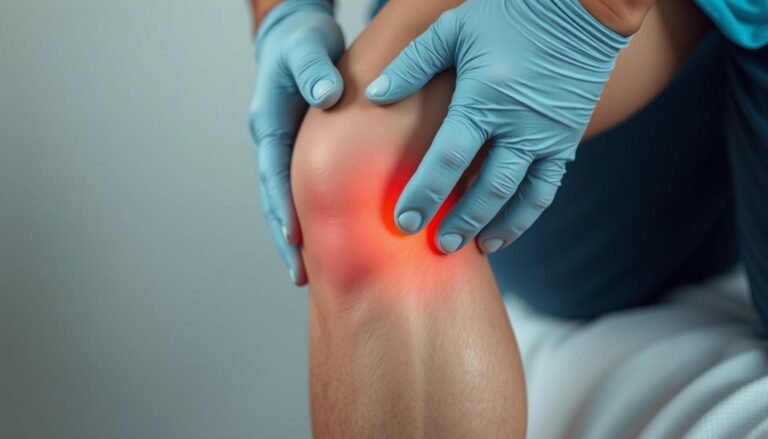
The medial collateral ligament (MCL) is a stabilizing ligament on the inner side of the knee. When it is stretched or partially torn, the knee can feel tender on the inside, and the knee pain may flare with sideways movement, twisting, or a slip.
People often describe MCL tear symptoms and recovery concerns in everyday terms, like “my knee hurts when I turn” or “my knee hurt after a direct hit.” If you feel knee hurt specifically on the inside of the knee, it is one of the most common patterns we see with MCL sprains or tears.
Still, the knee is a team of structures. If you have swelling, instability, or pain that does not match a mild MCL sprain pattern, you may also have an associated issue such as meniscus irritation or a cartilage condition. When that happens, the recovery path changes, even though the initial knee pain felt similar.
MCL Tear Symptoms: The Most Common Signs of Knee Hurt and Knee Pain
When readers ask about MCL tear symptoms and recovery, they usually want to know whether what they feel fits an MCL injury. The most common symptoms include pain on the inner knee, swelling, and discomfort with movements that place stress on the ligament.
In 2026, we also see more people tracking symptoms with short daily check-ins, like pain with stairs, swelling changes, and whether the knee feels stable. That simple tracking can help separate “normal early soreness” from symptoms that need prompt medical evaluation.
Typical MCL tear symptoms
- Knee pain on the inside: tenderness when you press the inner knee or pain during side-to-side motions.
- Swelling: often begins soon after the injury, sometimes increasing over the first day.
- Limited range of motion: stiffness can make it harder to fully bend or straighten the knee.
- Feeling of looseness: some people describe the knee as unstable, especially when they pivot or step awkwardly.
- Pain with turning or sideways stepping: movements that stress the inner knee usually hurt more.
When symptoms may point beyond a simple MCL problem
We encourage caution if knee pain includes locking, catching, or a major loss of motion. Those patterns can suggest additional injuries. For example, if your symptoms include mechanical “catching” or persistent joint line pain, you may want to review Torn Meniscus: Symptoms, Diagnosis, and Treatment Options.
Similarly, some people confuse inner knee discomfort with other causes. If your overall knee pain seems more complex, read Understanding, Managing, and Overcoming Knee Pain: Your Comprehensive Guide to compare symptom patterns.
How Doctors Think About Severity: Grades, Conservative Care, and Recovery Timelines
MCL tear symptoms and recovery are often discussed using “grades,” which reflect how much the ligament is injured. The grade matters because it affects stability, swelling, and how quickly you can safely return to controlled movement.
For many people in 2026, the most helpful thing is knowing that conservative management is common when the MCL injury pattern matches mild to moderate damage. If there are no more serious associated injuries, recovery frequently focuses on restoring motion, reducing swelling, and gradually rebuilding strength.
We use these timelines as planning anchors, not rigid rules. Your knee pain, swelling level, and whether other structures were injured can shift the recovery curve.
General expectations for mild injuries
- Grade I injuries typically return within ~10 to 14 days when symptoms follow a predictable mild pattern.
- Grade I–II injuries are often managed conservatively unless a more severe associated injury changes the plan.
If your injury included a more complex mechanism (like a high-force fall), you may need a broader assessment. In those cases, it helps to think of MCL tear symptoms and recovery as part of the larger “what happened to my knee” picture, such as Traumatic Knee.
Immediate Care in the First Days: What to Do When Your Knee Hurt Starts
The first days after an MCL injury influence the rest of your MCL tear symptoms and recovery. In 2026, we see better outcomes when people avoid two extremes: pushing too hard early, or resting completely without regaining motion.
Our general approach for early care focuses on calming pain, protecting the ligament, and keeping the knee moving enough to prevent stiffness. Exact recommendations vary based on grade, swelling, and clinician assessment.
Practical steps most people can start with
- Protect the knee: avoid side-to-side twisting and movements that reproduce inside knee pain.
- Support stability: brace use may help control harmful motion when a clinician recommends it.
- Manage swelling and pain: follow clinician guidance on anti-inflammatory strategies and icing routines if appropriate.
- Restore gentle motion: early, pain-limited range of motion helps reduce stiffness.
- Progress loading gradually: you should feel “controlled effort,” not sharp inside knee pain during activity.
If you are unsure whether bracing makes sense for your situation, it can help to compare what braces do in ligament recovery overall. See Ligament Knee Injury for a broader framework.
MCL Tear Recovery Plan: Bracing, Rehab, and Safe Return to Knee Pain Free Movement
Recovery is where “MCL tear symptoms and recovery” becomes real, because you need a plan for what to do week by week. In most cases, the ligament heals, but your knee function improves through targeted strengthening, controlled mobility, and stability training.
We typically recommend a structured progression that matches symptoms. If your knee hurt increases after specific activities, we scale back and adjust the plan until inside knee pain settles and stability improves.
Bracing: when it helps and what to look for
Bracing is often used to limit stress across the injured ligament. The goal is not to “freeze” the knee, it is to allow safe movement while healing improves.
For people with injuries that affect stability, brace planning can also be relevant to other ligament recoveries. If you are comparing brace styles for return-to-activity, you may find context in Anterior Cruciate Ligament (ACL) Injury Knee Brace, since the stability principles and rehab milestones overlap in many knee injuries.
Rehab priorities for MCL tear recovery
- Range of motion: regain knee motion without provoking inside knee pain.
- Strength: rebuild quadriceps and hip strength to reduce stress on the knee joint.
- Stability and control: retrain balance and step mechanics for the activities you want in 2026.
- Gradual return: progress from walking to sport-specific movement only when stability and strength meet your milestones.
If you have multiple knee issues at once, your program may need to address other contributors to knee pain, like cartilage irritation. For that, read Chondromalacia Patella Knees to compare symptom patterns and rehab focus.
How Long Does MCL Tear Recovery Take in 2026?
People ask for an answer because they need to plan work, school, and training. In 2026, the best guidance we can give is that MCL tear symptoms and recovery often depend on grade, but associated injuries can extend healing time.
UCSF Health notes that grade 1 may take from a few days to about 1.5 weeks to heal enough for return to normal activities, and recovery can be longer when related injuries exist.
In practical terms, this means your knee may feel “better” before it is fully ready for pivoting, running, or sport. That is why we emphasize milestones tied to strength, control, and symptom response, not just time.
Signs your recovery timeline may be slower
- Your knee pain keeps increasing after daily activities
- You have persistent swelling or a sense of ongoing looseness
- You cannot regain comfortable knee motion
- You experience clicking, locking, or sharp joint pain that suggests another issue
If you are dealing with an injury setback, this is also a normal part of knee rehab for many people. For example, if your progress stalls, review What to Do If You Have an ACL Setback for the way we think about adjusting plans and rebuilding safe progression. While it is ACL-focused, the rehab logic for setbacks applies broadly to ligament-based recovery.
MCL Tear Symptoms and Recovery: When to Get Checked (and When to Worry)
Most MCL injuries improve with conservative care, but we never want you to ignore red flags. If your knee hurt is severe, or if symptoms suggest more than an isolated sprain, getting evaluated can prevent prolonged issues.
Seek prompt medical evaluation if you have
- Major instability (feels like the knee will give way)
- Rapidly increasing swelling or inability to bear weight
- Locked knee or repeated catching
- Severe pain that does not ease with rest and protection
- New numbness or circulation concerns
In many cases, these symptoms can overlap with other knee injuries. For example, torn meniscus can cause mechanical symptoms, so Torn Meniscus is worth reviewing if your knee pain includes catching or grinding sensations.
Other Knee Conditions That Can Mimic MCL Tear Symptoms and Recovery
Sometimes the biggest challenge in MCL tear symptoms and recovery is knowing whether the pain is truly inside knee ligament stress, or whether another condition is driving the knee pain pattern.
For example, patellofemoral pain (pain around or behind the kneecap) can create discomfort that people interpret as “knee pain” from a ligament injury. If your symptoms are more front-centered, compare with What Is That Pain Under My Kneecap? Understanding Patellofemoral Pain Syndrome.
Common look-alikes
- Meniscus injury that causes catching or joint line pain, see Torn Meniscus
- Cartilage irritation such as chondromalacia, see Chondromalacia Patella Knees
- General ligament injury patterns that involve different stability structures, see Ligament Knee Injury
- Other tendon injuries that change how the knee extends, see Patellar Tendon Injury
Because knee pain can come from multiple sources at once, our goal is to reduce guessing. A clear evaluation helps us match the rehab plan to the real driver of your knee hurt.
Practical Recovery Progression for Everyday Life (and Training) in 2026
When people ask about MCL tear symptoms and recovery, they often want a simple “what’s next” sequence. We build progression around symptom tolerance and stability, with the aim of getting your knee pain under control before you add higher-demand movements.
A simple week-by-week structure
- Early phase: protect from stress, regain pain-limited motion, manage swelling, and walk with safe mechanics.
- Middle phase: increase strength, improve balance, and reintroduce controlled step patterns.
- Later phase: add sport-like tasks (or work-like tasks) only when inside knee pain is controlled and stability feels reliable.
If your knee hurt feels worse after specific movements, that is data. We use it to adjust load and pace, rather than pushing through. Many knee rehab plans fail because people try to force a timeline instead of following what their knee can handle.
For readers who also want a broader injury-prevention angle, our ligament-focused guidance often overlaps with structured prehab and stability thinking. While ACL-specific, 4 Major Types of ACL Prehab Exercises can help you understand how controlled loading and range-of-motion work support ligament recovery overall.
And if you are comparing bracing options, you may find it useful to review hinged-brace guidance that highlights how braces support stability while you recover. You can explore Top 5 Hinged Knee Braces for ACL Support in 2026: Expert Picks for Stability and Recovery for a sense of how return-to-activity bracing is described in 2026.
Conclusion
MCL tear symptoms and recovery usually centers on inside knee pain, swelling, and discomfort with twisting or sideways stepping. In 2026, many MCL injuries improve with conservative care, and timelines can range from about a week for mild cases to longer periods when symptoms or associated injuries extend healing.
We recommend using symptom patterns to guide early protection, then rebuilding motion and strength with a structured progression. If your knee hurt is severe, your knee feels unstable, or you notice mechanical catching or locking, get checked so your MCL tear symptoms and recovery plan matches the real cause of your knee pain.
Frequently Asked Questions
What are the most common MCL tear symptoms?
The most common MCL tear symptoms include knee pain on the inside of the knee, swelling, and discomfort when you twist or step sideways. Many people also describe a sense of looseness, especially when they pivot, which directly shapes MCL tear symptoms and recovery planning.
How long does MCL tear recovery take in 2026?
In 2026, mild MCL (grade 1) injuries often heal enough for normal activities within a few days to about 1.5 weeks, but full return depends on strength and stability. MCL tear symptoms and recovery timelines can be longer if related injuries are present.
Can I walk with an MCL tear?
Often yes, but we expect you to walk with protected mechanics and avoid movements that reproduce sharp inside knee pain. For MCL tear symptoms and recovery, safe walking is a bridge to restoring range of motion and strength.
Should I use a knee brace for an MCL tear?
Many people benefit from bracing when it helps limit stress across the injured ligament and improves stability. In MCL tear symptoms and recovery, the right brace choice supports rehab progression, especially during the early phase.
Is my knee hurt from an MCL tear or something else?
Knee pain that seems “ligament-like” can also come from meniscus irritation, chondromalacia, or patellofemoral pain. If your knee hurts in a different pattern or includes catching or locking, MCL tear symptoms and recovery may require checking for other causes.
What should I do if my MCL tear recovery stalls?
If your knee pain is not improving or you keep getting knee hurt after activities, we adjust the plan by reducing load, restoring motion, and focusing on strength and stability fundamentals. That step-by-step thinking is central to MCL tear symptoms and recovery in 2026.
Do MCL tears heal without surgery?
For many injuries that match mild to moderate patterns, MCL tear symptoms and recovery can progress with conservative management instead of surgery. However, if there is an associated injury that changes stability or healing demands, a clinician may recommend a different approach.